Continually Updated Clinical Reference
 
 
  All Sources     eMedicine     Medscape     Drug Reference     MEDLINE
 
eMedicine - Toxicity, Amphetamine : Article by

Quick Find
Authors & Editors
Introduction
Clinical
Differentials
Workup
Treatment
Medication
Follow-up
Miscellaneous
Multimedia
References

Related Articles
Acute Coronary Syndrome

Alcohol and Substance Abuse Evaluation

Anxiety

Chorea in Adults

Delirium, Dementia, and Amnesia

Encephalitis

Hypercalcemia

Hypocalcemia

Hypoglycemia

Meningitis

Myocardial Infarction

Neuroleptic Malignant Syndrome

Peripheral Vascular Injuries

Rhabdomyolysis

Schizophrenia

Status Epilepticus

Subarachnoid Hemorrhage

Toxicity, Cocaine

Toxicity, Hallucinogen

Toxicity, Medication-Induced Dystonic Reactions

Toxicity, Monoamine Oxidase Inhibitor

Toxicity, Mushroom - Hallucinogens

Toxicity, Sympathomimetic

Withdrawal Syndromes


Patient Education
Poisoning - First Aid and Emergency Center

Mental Health and Behavior Center

Substance Abuse Center

Drug Dependence & Abuse Overview

Drug Dependence & Abuse Causes

Drug Dependence & Abuse Symptoms

Drug Dependence & Abuse Treatment

Poisoning Overview

Club Drugs Introduction

Activated Charcoal

Substance Abuse Overview


Author: Neal Handly, MD, MS, MSc, Associate Research Director, Department of Emergency Medicine, Hahnemann Hospital; Assistant Professor of Emergency Medicine, Drexel University College of Medicine

Neal Handly is a member of the following medical societies: American Academy of Emergency Medicine

Editors: Miguel C Fernandez, MD, FAAEM, FACEP, FACMT, Associate Clinical Professor; Medical and Managing Director, South Texas Poison Center, Department of Surgery/Emergency Medicine and Toxicology, University of Texas Health Science Center at San Antonio; John T VanDeVoort, PharmD, ABAT, Director of Pharmacy, Sacred Heart Hospital; Michael J Burns, MD, Instructor, Department of Emergency Medicine, Harvard University Medical School, Beth Israel Deaconess Medical Center; John D Halamka, MD, MS, Associate Professor of Medicine, Harvard Medical School, Beth Israel Deaconess Medical Center; Chief Information Officer, CareGroup Healthcare System and Harvard Medical School; Attending Physician, Division of Emergency Medicine, Beth Israel Deaconess Medical Center; Asim Tarabar, MD, Assistant Professor, Department of Surgery, Section of Emergency Medicine, Yale University School of Medicine; Consulting Staff, Department of Emergency Medicine, Yale-New Haven Hospital

Author and Editor Disclosure

Synonyms and related keywords: amphetamine toxicity, amphetamines, amphetamine overdose, amphetamine intoxification, amphetamine intoxication, biogenic amine, cardiac dysrhythmia, crank, crystal, diet pills, drug overdose, Ecstasy, hypertension, hyperthermia, ice, methamphetamines, meth, movement disorder, prescription medication abuse, methylenedioxymethamphetamine, MDMA, psychosis, seizure, stimulant overdose, stimulant abuse, sudden death, speed, stroke, synthetic amphetamine compounds, tachycardia


Background

Amphetamines are a class of compounds increasingly abused in regions of the world such as the western United States, Australasia, and Europe. Synthetic amphetamine compounds commonly are produced in clandestine laboratories and vary in purity and potency. Other potentials for amphetamine abuse include prescription medications and various over-the-counter diet pills.

Clinical effects of amphetamine abuse are significant and commonly observed in EDs. The ED physician's ability to recognize and treat amphetamine intoxication is very important.

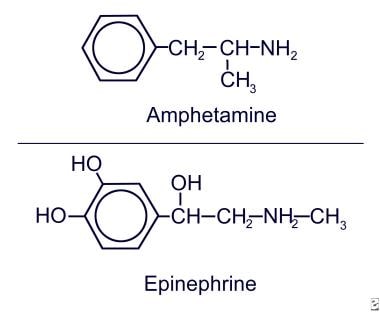
The phenylethylamine structure of amphetamines (see Media file 1) is similar to catecholaminergic, dopaminergic, and serotonergic agonists (biogenic amines), which may explain their actions. The relative activities that amphetamines have to stimulate the receptors of these biogenic amines are dependent on the chemical substituents on the amphetamine molecule; thus, the clinical presentation is dependent on the type of amphetamine used. For example, methamphetamine lacks much of the peripheral stimulant properties of amphetamine while still offering euphoric and hallucinogenic properties. These actions are similar to those of cocaine; however, while effects of cocaine last for 10-20 minutes, duration of amphetamine action is much longer, lasting as long as 10-12 hours.
The routes of amphetamine administration may be oral (ingestion), inhalation (smoke), or injection (intravenous). Oral use is associated with an approximate 1-hour lag time before onset of symptoms, whereas inhaled and intravenous methods yield effects within a few minutes. Peak plasma concentrations occur in 5 minutes with intravenous use, 30 minutes with nasal or intramuscular use, and 2-3 hours postingestion.

Use appears to vary with gender and race. Recent work has found correlations between personality traits (risk taking and reward sensitivity) and responses to amphetamine use.1

Pathophysiology

Amphetamines are a group of structurally related compounds that produce central nervous system (CNS) and peripheral nervous system (PNS) stimulation.

Central nervous system

Amphetamine compounds cause a general efflux of biogenic amines from neuronal synaptic terminals (indirect sympathomimetics). They inhibit specific transporters responsible for reuptake of biogenic amines from the synaptic nerve ending and presynaptic vesicles. Amphetamines also inhibit monoamine oxidase, which degrades biogenic amine neurotransmitters intracellularly. The net effect is an increase of neurotransmitter release into the synapse. Physiological adaptation occurs through receptor or coupling down-regulation; this tolerance and an accompanying psychological tolerance2 can lead to escalating use of the drug and increased toxicity.3 Chronic use can lead to a depletion of biogenic amine stores and a paradoxical reverse effect of the drug—a wash out.

Elevated catecholamine levels usually lead to a state of increased arousal and decreased fatigue. Increased dopamine levels at synapses in the CNS may be responsible for movement disorders4, schizophrenia, and euphoria. Serotonergic signals may play a role in the hallucinogenic and anorexic5 aspects of these drugs.

Other serotonergic and dopaminergic effects may include resetting the thermal regulatory circuits upward in the hypothalamus and causing hyperthermia. The hyperthermia produced by amphetamines is similar to that of the serotonin syndrome.

Laboratory studies reveal that amphetamines interfere with the normal control of the neurohumoral (hypothalamopituitary) axis, affecting secretion of such factors as adrenocorticotropic hormone (ACTH). Amphetamines may alter other neural functions such as complex behavioral and learning patternings; this may be important for understanding effects of amphetamine use during pregnancy.

Animal studies indicate that amphetamines interact with N-methyl-D-aspartate (NMDA) receptors on serotonergic neurons, leading to neuronal destruction. This interaction may contribute to seizure activity.

In vitro, amphetamines have been found to stimulate regulatory molecules, such as the oncogenes c-fos and ras and cyclic adenosine monophosphate (cAMP) response element binding (CREB) protein. These proteins are responsible for signaling long-term changes at the transcriptional level.

Peripheral nervous system

Catecholaminergic (sympathomimetic) effects of amphetamines include inotropic and chronotropic effects on the heart, which can lead to tachycardia and other dysrhythmias. The vasoconstrictive properties of the drugs can lead to hypertension and/or coronary vasospasm.6 

Serotonergic action of amphetamines on peripheral vasculature can lead to vasoconstriction, which is especially problematic in placental vessels. Animal studies have shown that serotonergic actions of amphetamines effect changes in plasma levels of oxytocin, somatostatin, gastrin, and cholecystokinin.7

Cardiovascular

Long-term use of the drugs can lead to myonecrosis and dilated cardiomyopathy.8

Frequency

United States

Accurate estimation of illicit amphetamine use is difficult. An estimated 13 million Americans use these compounds without medical supervision. Random toxicologic screens performed in the ED indicate amphetamine presence in about 2% of patients. Self-reporting among college students indicates an approximate 4% prevalence. An aged-matched survey of fourth-year medical students revealed that about 1.2% use amphetamines.

Locations of amphetamine drug factories may establish the regional nature of amphetamine use.9 Use of these drugs in the United States mostly occurs in the large cities of the southwest. Of all amphetamine drug factory busts, 75% have occurred in California, Texas, and Oregon. At UC Davis's ED in the late 1980s, the prevalence of amphetamine toxicity was found to be 0.69%.

Despite the large focus of use in the western United States during the 1980s, many episodes of methamphetamine complications occurred in Minneapolis and Philadelphia. Importation of amphetamines from the Far East fuels Hawaiian drug use. As of August 1999, amphetamine-producing laboratories have sprung up in Mexico; border city narcotics officers blame the more lucrative street valuation of methamphetamine in the United States compared with cocaine. Amphetamines then are imported through cities along the US-Mexico border for sale at prices up to $26,000 per kilogram (cocaine is approximately $14,000 per kilogram). 

International

Amphetamine use has been found to be increasing in Europe. In 1993, in the Frankfurt area, 9% of reckless driving arrests were associated with amphetamine use. A study among adolescents in Taiwan found a prevalence of 2.7% and an estimated lifetime amphetamine use of about 4%. In the United Kingdom, the number of amphetamine confiscations by law enforcement is only exceeded by that of cannabis.

Ring methoxylated amphetamine compounds have been found in a number of autopsies performed in Europe. Whether these are contaminants or byproducts in the production of methylenedioxymethamphetamine (MDMA) preparations, also known as Ecstasy, is unclear. Neither amphetamine nor methamphetamine was found in the blood of these individuals, suggesting that amphetamines were not deliberately added in the compounding of these Ecstasy tablets.

Mortality/Morbidity

Acute overdose of amphetamines produces seizures, hypertension, tachycardia, hyperthermia, psychosis, hallucinosis, stroke, and fatality.

  • One study at San Francisco General Hospital from 1975-1987 determined that approximately 25% of seizures were secondary to amphetamine use.
  • In few patients, amphetamine use produces long-term paranoid schizophrenia; whether this results from unmasking underlying disease is unclear. Severe psychological depression and prolonged sleep follow chronic use and binges.
  • Habitual amphetamine use produces toxic psychosis resembling paranoid schizophrenia. Hallucinations, delusions, and bizarre violent behavior are common.

Race

Amphetamine use characteristically occurs among single white men.

Sex

Amphetamine use characteristically occurs among single white men aged 20-35 years who are typically unemployed. However, amphetamine use is becoming more common among women and other ethnic groups.

A recent study suggests that the action of estrogen within the CNS might explain why fewer women than men use amphetamines. Women in their late follicular phase (when estrogen levels are high and progesterone levels are low) were more likely to report "unpleasant stimulation" when exposed to amphetamine. This effect was not observed in the early follicular phase, when both hormone levels are low.10


History

  • Patients with amphetamine intoxication often are identified by a change of mental status alone or associated with another injury and/or illness.
  • Central nervous system
    • Change of mental status, disorientation, and headache
    • Dyskinesias
    • Agitation
    • Formication
    • Symptoms of stroke
  • Cardiovascular
    • Chest pain
    • Palpitations
  • Gastrointestinal
    • Dry mouth
    • Nausea and vomiting
    • Diarrhea
  • Genitourinary (GU) - Difficult micturition
  • Skin/cutaneous
    • Diaphoresis
    • Erythematous painful rashes, needle marks
    • Infected deep ulcerations (ecthyma)
  • Ocular - Mydriasis

Physical

Physical examination findings may demonstrate the strong central nervous system and peripheral nervous system stimulation produced by amphetamine compounds. Modification of the basic amphetamine molecule produces compounds with variable effects on target organs. Methamphetamine produces prominent central nervous system effects with minimal cardiovascular stimulation.

Individuals who chronically use amphetamines intravenously are at risk of infection and vascular injury.

  • General
    • Weight loss
    • Hyperactivity, confusion, and agitation (may combine to produce severe hyperthermia, which can be worse in physically restrained individuals)
    • Diaphoresis
    • Mydriasis
    • Anorexia
  • Cardiovascular
    • Alpha- and beta-adrenergic stimulation can lead to systolic and diastolic blood pressure increases.
    • Heart rate may be unchanged or slow in response to hypertension.
    • Increasing doses produce tachycardia and other dysrhythmias, including ventricular tachycardia and fibrillation.
    • Hypertensive crisis or vasospasm may lead to stroke.
  • Respiratory: Persons who smoke amphetamines can develop respiratory distress secondary to pulmonary edema.
  • Central nervous system
    • Increased alertness
    • Euphoria
    • Confusion or agitation
    • Bruxism
    • Stroke caused by acute amphetamine toxicity
  • Cutaneous
    • Skin flushing
    • Infected deep ulcerations (ecthyma) in patients with formication
    • Skin track marks, cellulitis, abscesses, phlebitis, or vasculitis with intravenous use
  • Gastrointestinal - Nausea or vomiting
  • Dental - "Meth mouth," a condition of eroded teeth

Causes

  • Marked tolerance develops after amphetamine use and leads to rapid escalation of drug doses.
  • Increasing the dose produces increasing toxicity and complications in patients with acute and chronic amphetamine use.


Acute Coronary Syndrome
Alcohol and Substance Abuse Evaluation
Anxiety
Chorea in Adults
Delirium, Dementia, and Amnesia
Encephalitis
Hypercalcemia
Hypocalcemia
Hypoglycemia
Meningitis
Myocardial Infarction
Neuroleptic Malignant Syndrome
Peripheral Vascular Injuries
Rhabdomyolysis
Schizophrenia
Status Epilepticus
Subarachnoid Hemorrhage
Toxicity, Cocaine
Toxicity, Hallucinogen
Toxicity, Medication-Induced Dystonic Reactions
Toxicity, Monoamine Oxidase Inhibitor
Toxicity, Mushroom - Hallucinogens
Toxicity, Sympathomimetic
Withdrawal Syndromes

Other Problems to be Considered

Hyperthermia accompanies and complicates significant amphetamine intoxication.11

Trauma often accompanies amphetamine intoxication and should be sought in the evaluation of the patient.


Lab Studies

  • Patients with amphetamine intoxication who present with no life-threatening signs or symptoms may be treated with sedation and observation and may require no laboratory workup.
  • Patients who are experiencing seizures or prolonged mental status changes require glucose and electrolyte testing.
  • Evaluate renal and hepatic function of patients who are demonstrating significant or prolonged hyperthermia and search for infectious causes.

    • When appropriate, evaluation may include urinalysis, urine culture, blood culture, spinal fluid analysis and staining, and culture of material from cutaneous sources.
    • Because hyperthermia may induce disseminated intravascular coagulation (DIC), monitor for DIC and treat appropriately if it occurs.
  • Obtain urine and creatinine kinase levels to monitor for rhabdomyolysis. If the dipstick result is positive for blood but shows few or no red blood cells on microscopic examination, rhabdomyolysis may be present.
  • Urine specimens for drug and toxicologic screens may be collected after Foley catheter placement if the physician believes that these tests will help guide therapy.
  • Usually, the presence of pure sympathomimetic toxidrome precludes the need for drug screening. However, with methamphetamine and other designer amphetamines, peripheral effects may not be observed.

Imaging Studies

  • Patients who are demonstrating only mild symptoms from amphetamine intoxication often respond to sedation and recover rapidly under observation. Such patients require no imaging studies unless trauma is suspected.
  • Obtain a chest radiograph for patients complaining of chest pain or respiratory distress.
  • Obtain a CT scan of the head for patients with recurrent seizures or prolonged mental status changes if no metabolic cause can be quickly found and corrected.
  • Look for infectious causes in patients who are demonstrating significant or prolonged hyperthermia; this may include chest radiography, echocardiography, CT of the head and abdomen, and extremity ultrasonography of suspected abscesses.

Other Tests

  • Perform electrocardiographic testing and monitor patients complaining of chest pain. Obtain appropriate cardiac enzyme testing if pain is prolonged or cardiac injury is suspected.


Prehospital Care

Prehospital care of patients with amphetamine intoxication often requires physical and chemical restraint of the patient and treatment of complications of intoxication, including seizures, loss of competent airway, cardiac dysrhythmias, and trauma.

Emergency Department Care

  • Patients with amphetamine intoxication who present with no life-threatening signs or symptoms may be treated with sedation and observation.
  • Complications may require the physician to perform procedures to establish airway management or fluid resuscitation or to initiate vigorous cooling measures.
  • In patients with acute oral ingestion, GI decontamination is performed by the administration of activated charcoal. Orogastric lavage often is not necessary but may be performed when the patient presents with immediately life-threatening intoxication shortly after ingestion. Whole-bowel irrigation may be indicated in suspected cases of body stuffing or body packing (large quantities of drugs in wrapping for international transport or drug hiding, respectively).
  • Foley catheter placement may be useful to monitor urine output, particularly in situations in which diuretics are administered to manage pulmonary edema. Patients often have decreased urination due to the effects on bladder sphincter muscles to prevent passing urine. Other individuals may be dehydrated after recreational use in raves and club events. Quick assessment of bladder fullness can be performed with bedside ultrasonography.
  • Agitation or persisting seizures in patients with amphetamine toxicity requires generous titration of benzodiazepines and a calm soothing environment. Avoid physical restraints, if possible.
  • Significant cardiac dysrhythmias may require cardioversion, defibrillation, and antidysrhythmics.

    • Use benzodiazepine sedation (nonspecific sympatholysis) to initially manage hypertension, if present. Refractory cases or cases associated with significant end-organ toxicity (eg, cardiovascular accident [CVA], myocardial ischemia) can be managed with intravenous phentolamine, nitroprusside, or nitroglycerin.
    • Pulmonary edema can be managed with nitroglycerin and diuretics.
  • Aggressively cool hyperthermic patients with evaporative cooling and ice packs to the groin and axilla. Patients with severe hyperthermia (temperature >104°F) associated with psychomotor agitation may require immediate neuromuscular paralysis to rapidly decrease temperature.

    • Haloperidol is controversial12 in the treatment of agitation in any patient with the potential to seize or develop hyperthermia because of associations with lowering the seizure threshold and altering thermoregulation.
    • Of all neuroleptic drugs, however, haloperidol rarely is associated with seizures (minimal effects on seizure threshold). In addition, animal studies suggest that haloperidol can antagonize amphetamine-induced hyperthermia. Thus, the use of haloperidol likely is safe and effective when combined with benzodiazepines. Haloperidol is recommended as an adjunct to benzodiazepines for patients with psychomotor agitation that requires chemical restraint.
  • Look for and treat traumatic injuries in patients with amphetamine intoxication.

Consultations

  • A medical toxicologist may be consulted for assistance in the management of amphetamine toxicity cases.
  • Patients who demonstrate focal neural deficits or have CT scans of the head that indicate bleeding may need neurologic or neurosurgical consultations.
  • Patients who show significant cardiac injury may require cardiologic consultation.


Medications available for amphetamine toxicity include gastric decontaminants (charcoal with or without sorbitol), sedatives to control CNS stimulation caused by amphetamines (benzodiazepines, antipsychotics), muscle relaxants (benzodiazepines, dantrolene), and several drugs to control possible hemodynamic cardiovascular disturbances (alpha-adrenergic blockers, nitrates, diuretics).

Drug Category: GI decontaminant

These agents are used to adsorb amphetamine after acute ingestion and to limit absorption into systemic circulation. Limited utility beyond 4 h of ingestion, unless the patient ingested sustained-release formulation or is suspected of being a body packer (ie, ingestion of a large amount of drug in a plastic bag or condom to smuggle or avoid arrest). Charcoal is not beneficial for other routes of exposure (eg, IV, inhalation or injection).

Drug NameActivated charcoal
DescriptionNetwork of pores present in activated charcoal adsorbs 100-1000 mg of drug per gram of charcoal. Does not dissolve in water.
For maximum effect, administer within 30 min of ingestion of poison. May administer as aqueous suspension or combine with cathartic (usually sorbitol 70%) in the presence of active bowel sounds.
Repeat dose, if necessary (without cathartic), to adsorb large pill masses or drug packages.
With superactivated forms, use of doses of 0.5 g/kg PO may be possible.
Adult Dose1 g/kg PO/NGT (with or without cathartic)
Pediatric Dose1 g/kg PO (omit cathartic if <2 y)
ContraindicationsDocumented hypersensitivity; poisoning or overdose of mineral acids and alkalies; unprotected airway; absent gag reflex
InteractionsEffectiveness of other medications decreases with coadministration; do not mix with sherbet, milk, or ice cream (decreases absorptive properties)
PregnancyC - Fetal risk revealed in studies in animals but not established or not studied in humans; may use if benefits outweigh risk to fetus
PrecautionsMonitor for presence of bowel sounds before administration to minimize risk of charcoal ileus (use aqueous solution to prevent bowel distention if bowel sounds are absent or diminished); not very effective in poisonings of ethanol, methanol, and iron salts; induce emesis before administering; after emesis with ipecac, patient may not tolerate activated charcoal for 1-2 h; can administer in early stages of gastric lavage; without sorbitol, gastric lavage returns are black

Drug Category: Benzodiazepines

These agents are important for sedation counteracting the CNS and PNS excitation of amphetamines. A benzodiazepine is generally considered as the first agent of choice for hypertension and agitation, in addition to their utility for treating seizures.

Drug NameLorazepam (Ativan)
DescriptionBeneficial for sedative and anticonvulsant effects. In addition, the calming effects may prove beneficial for the adverse cardiovascular effects (eg, hypertension, tachycardia) of amphetamines.
Adult Dose0.05 mg/kg (2-4 mg) IV, titrate to effect
Status epilepticus: 4 mg IV over 2-5 min; may repeat second dose in 10-15 min, if needed
Pediatric DoseChildren: 0.05 mg/kg IV (range, 0.02-0.1 mg/kg)
Adolescents: Administer as in adults
Status epilepticus:
Neonates: 0.05 mg/kg over 2-5 min; may repeat in 10-15 min, if needed
Infants and children: 0.1 mg/kg over 2-5 min; second dose of 0.05 mg/kg IV at 10-15 min, if needed; maximum single dose 4 mg
Adolescents: 0.7 mg/kg IV slowly over 2-5 min; second dose in 10-15 min, if needed
ContraindicationsDocumented hypersensitivity; preexisting CNS depression; hypotension; narrow-angle glaucoma
InteractionsToxicity in CNS increases when used concurrently with alcohol, phenothiazines, barbiturates, and MAOIs
PregnancyD - Fetal risk shown in humans; use only if benefits outweigh risk to fetus
PrecautionsCaution in renal or hepatic impairment, myasthenia gravis, organic brain syndrome, or Parkinson disease; contains benzyl alcohol, which may be toxic to infants in high doses

Drug NameDiazepam (Valium)
DescriptionDepresses all levels of CNS (eg, limbic and reticular formation), possibly by increasing activity of GABA. Third-line agent for agitation or seizures because of shorter duration of anticonvulsive effects and accumulation of active metabolites that may prolong sedation.
Adult Dose5-10 mg IV q10-15min until symptoms resolve; not to exceed 30 mg
Pediatric Dose30 days to 5 years: 0.2-0.5 mg IV slowly q2-5min until symptoms resolve; not to exceed 5 mg
>5 years: 1 mg IV slowly q2-5min until symptoms resolve; not to exceed 10 mg
ContraindicationsDocumented hypersensitivity; hypotension; acute narrow-angle glaucoma
InteractionsIncreased toxicity in CNS with coadministration of phenothiazines, H1 blockers, barbiturates, alcohols, and MAOIs
PregnancyD - Fetal risk shown in humans; use only if benefits outweigh risk to fetus
PrecautionsCaution with other CNS depressants, low albumin levels, or renal and hepatic disease (may increase toxicity); monitor for respiratory depression with high or repeated doses

Drug NameMidazolam (Versed)
DescriptionUsed as alternative in termination of refractory status epilepticus. Because water soluble, takes approximately 3 times longer than diazepam to peak EEG effects. Thus, clinician must wait 2-3 min to evaluate sedative effects fully before initiating procedure or repeating dose. Has twice the affinity for benzodiazepine receptors than diazepam. May be administered IM if unable to obtain vascular access.
Adult Dose0.01-0.05 mg/kg (usually 0.5-4 mg, up to 10 mg) IV slowly over several min; may repeat q10-15min until adequate response achieved
Pediatric Dose<32 weeks: 0.5 mcg/kg/min IV infusion
>32 weeks: 1 mcg/kg/min IV infusion
Children: 0.05-0.2 mg/kg IV over 2-3 min, followed by 1-2 mcg/kg/min continuous infusion
Status epilepticus (refractory to standard therapy), >2 months and children: 0.15 mg/kg followed by continuous infusion of 1 mcg/kg/min, titrating dose upward q5min until seizures controlled
ContraindicationsDocumented hypersensitivity; preexisting hypotension; narrow-angle glaucoma; sensitivity to propylene glycol (diluent)
InteractionsSedative effects may be antagonized by theophyllines; narcotics, cimetidine, ethanol, and erythromycin may accentuate sedative effects because of decreased clearance; reduce dose of thiopental by 15% when using together
PregnancyC - Fetal risk revealed in studies in animals but not established or not studied in humans; may use if benefits outweigh risk to fetus
PrecautionsCaution in congestive heart failure, pulmonary disease, renal impairment, hepatic failure, neuromuscular disease, hypotension, and patients >60 y; monitor for respiratory depression with high or repeated doses; consider lower dosages in patients with organic brain syndrome and patients who may have inhibition of benzodiazepine metabolism and clearance (eg, using nicotine, taking cimetidine)

Drug Category: Neuroleptics

Antipsychotics are used to manage psychosis, agitation, and hyperthermia that may result from amphetamine use.

Drug NameHaloperidol (Haldol)
DescriptionDOC for patients with acute psychosis when no contraindications exist. Noted for high potency and low potential for causing orthostasis. Downside is the high potential for EPS (dystonia) and lowering the seizure threshold.
Use in acute amphetamine toxicity is controversial.12 If haloperidol is being considered, administer a benzodiazepine first. May then be used as adjunctive therapy to control agitation.
Parenteral dosage form may be admixed in syringe with 2 mg lorazepam for better anxiolytic effects.
Adult Dose5 mg IV/IM; titrate to effect; may double initial dose after 20-30 min
Pediatric DoseNot established
ContraindicationsDocumented hypersensitivity; narrow-angle glaucoma; bone marrow suppression; severe cardiac or liver disease; severe hypotension; subcortical brain damage
InteractionsMay increase tricyclic antidepressant serum concentrations and hypotensive action of antihypertensive agents; phenobarbital or carbamazepine may decrease effects; coadministration with anticholinergics may increase intraocular pressure; encephalopathylike syndrome associated with concurrent administration with lithium
PregnancyD - Fetal risk shown in humans; use only if benefits outweigh risk to fetus
PrecautionsSevere neurotoxicity manifesting as rigidity or inability to walk or talk may occur in patients with thyrotoxicosis; if IV/IM, watch for hypotension; caution in diagnosed CNS depression or cardiac disease; if history of seizures, benefits must outweigh risks; significant increase in body temperature may indicate intolerance to antipsychotics (discontinue use)

Drug Category: Skeletal muscle relaxants

These agents are used to control or reverse hyperthermic effects. Most hyperthermia is mediated by neuromuscular agitation.

Drug NameDantrolene (Dantrium)
DescriptionHas been used successfully in isolated case reports to control hyperthermia; however, efficacy has not been established for amphetamine-associated hyperthermia. Reverse of hyperthermic effects may take several hours. Because morbidity and mortality from hyperthermia is closely correlated with severity and duration of hyperthermia, agents that work more readily to reverse hyperthermia are preferred over dantrolene.
Adult Dose0.8-3 mg/kg IV q6h
Pediatric DoseAdminister as in adults
ContraindicationsDocumented hypersensitivity; active hepatic disease (hepatitis, cirrhosis)
InteractionsToxicity may increase with the coadministration of clofibrate and warfarin; coadministration with estrogen may increase hepatotoxicity in women >35 y; hyperkalemia and bradycardia may occur with coadministration of verapamil
PregnancyC - Fetal risk revealed in studies in animals but not established or not studied in humans; may use if benefits outweigh risk to fetus
PrecautionsMay cause hepatotoxicity (use only for recommended indications); caution in impaired pulmonary function and severe cardiac insufficiency; may cause photosensitivity with exposure to sunlight

Drug Category: Cardiovascular agents

Alpha-adrenergic antagonists control peripheral vasoconstriction that results from sympathetic stimulation due to amphetamines. Treating with a beta-blocker to control the heart rate will leave unopposed alpha activity that causes vasoconstriction. Alpha-adrenergic antagonists specifically may be used to treat severe headache, SAH, cardiac ischemia, and hypertension associated with amphetamines. Use nitrates to control vasoconstriction and hypertensive emergency.

Drug NamePhentolamine (Regitine)
DescriptionAlpha1- and alpha2-adrenergic blocking agent that blocks circulating epinephrine and norepinephrine action, reducing hypertension that results from catecholamine effects on the alpha-adrenergic receptors.
Adult Dose1-2 mg IV initial, then 0.05 mg/kg IV; not to exceed 5 mg
Pediatric Dose0.1 mg/kg IV/IM; not to exceed 1 mg
ContraindicationsDocumented hypersensitivity; coronary or cerebral arteriosclerosis; renal impairment
InteractionsConcurrent administration of epinephrine, phenylephrine, or ephedrine may decrease effects; ethanol increases toxicity
PregnancyC - Fetal risk revealed in studies in animals but not established or not studied in humans; may use if benefits outweigh risk to fetus
PrecautionsCaution in tachycardia, non–drug-induced angina, coronary artery insufficiency, peptic ulcer, and gastritis; cerebrovascular occlusions and myocardial infarctions can occur following administration

Drug NameNitroprusside (Nitropress)
DescriptionProduces vasodilation and increases inotropic activity of the heart. May exacerbate myocardial ischemia at higher doses by increasing heart rate.
Adult Dose0.1-8 mcg/kg/min IV; titrate to effect
Pediatric DoseAdminister as in adults
ContraindicationsDocumented hypersensitivity; idiopathic hypertrophic subaortic stenosis, atrial fibrillation, atrial flutter; hypovolemia; sildenafil (Viagra) use within 24 h
InteractionsCoadministration with DHE may decrease antianginal effects; coadministration with indomethacin may increase nitrate serum concentrations; sildenafil (Viagra) coadministration causes severe hypotension
PregnancyC - Fetal risk revealed in studies in animals but not established or not studied in humans; may use if benefits outweigh risk to fetus
PrecautionsCaution in increased intracranial pressure, hepatic failure, severe renal impairment, and hypothyroidism; nitroprusside levels may increase in renal or hepatic insufficiency and can cause cyanide toxicity; monitor for thiocyanate and cyanide or limit use to <24 h (risk of cyanide toxicity is increased with infusions >2 mcg/kg/min); cyanide toxicity can be prevented with prolonged nitroprusside infusions by adding 1 g sodium thiosulfate to each 250-mL bag of nitroprusside for infusion; has ability to lower blood pressure, and, thus should be used only in patients with mean arterial pressures >70 mm Hg; not a first-line drug for use in pregnant women unless hypertensive emergency

Drug NameNitroglycerin (Deponit, Nitro-bid, Nitrostat)
DescriptionCauses relaxation of vascular smooth muscle by stimulating intracellular cyclic guanosine monophosphate production. The result is a decrease in blood pressure. Valuable for controlling cardiac pain and pulmonary edema.
May administer bolus of 12.5-25 mcg or give a 400-mcg tab SL as a bolus before continuous infusion.
Initial infusion rate of 10-20 mcg/min may be increased 5-10 mcg/min q5-10min until desired clinical or hemodynamic response is achieved. Infusion rates of 500 mcg/min occasionally have been required.
Adult Dose400 mcg SL or 5 mcg/min IV; titrate to effect
Pediatric DoseNot established
ContraindicationsDocumented hypersensitivity; severe anemia; shock; postural hypotension; head trauma; closed-angle glaucoma; cerebral hemorrhage; hypovolemia; constrictive pericarditis, pericardial effusion; hypertrophic cardiomyopathy; sildenafil (Viagra) use within 24 h
InteractionsCoadministration with DHE may decrease antianginal effects; coadministration with indomethacin may increase nitrate serum concentrations; sildenafil coadministration causes severe hypotension; marked symptomatic orthostatic hypotension may occur with coadministration of calcium channel blockers (dose adjustment of either agent may be necessary)
PregnancyC - Fetal risk revealed in studies in animals but not established or not studied in humans; may use if benefits outweigh risk to fetus
PrecautionsCaution in coronary artery disease, low systolic blood pressure, recent AMI, glaucoma, hepatic disease, and hyperthyroidism

Drug Category: Diuretics

These agents are used to control and treat pulmonary edema and could be beneficial in a hypertensive crisis.

Drug NameFurosemide (Lasix)
DescriptionIncreases excretion of water by interfering with chloride-binding cotransport system that, in turn, inhibits sodium and chloride reabsorption in ascending loop of Henle and distal renal tubule.
Adult DosePulmonary edema: 40 mg IV slowly over 1-2 min, repeat as 80 mg in 1 h, if needed, or sooner if no significant diuresis has occurred
Hypertensive crisis: 40-80 mg IV slowly over 1-2 min
Pulmonary edema and hypertensive crisis: 100-200 mg IV slowly over 1-2 min
Pediatric Dose1 mg/kg IV slowly over 1-2 min; may increase by 1 mg/kg at 2-h intervals prn; not to exceed 6 mg/kg
ContraindicationsDocumented hypersensitivity; hepatic coma; anuria; severe electrolyte depletion
InteractionsMetformin decreases concentrations; interferes with hypoglycemic effect of antidiabetic agents and antagonizes muscle-relaxing effect of tubocurarine; auditory toxicity appears to be increased with coadministration of aminoglycosides; hearing loss of varying degrees may occur; anticoagulant activity of warfarin may be enhanced when taken concurrently with this medication; increased plasma lithium levels and toxicity are possible when taken concurrently with this medication
PregnancyC - Fetal risk revealed in studies in animals but not established or not studied in humans; may use if benefits outweigh risk to fetus
PrecautionsPerform frequent serum electrolyte, carbon dioxide, glucose, creatinine, uric acid, calcium, and BUN determinations during first few months of therapy and periodically thereafter


Further Inpatient Care

  • Admission is appropriate for monitoring and treatment of the following severe sequelae of amphetamine use:

    • Unstable vital signs (eg, hypertension, hyperthermia) and tachycardia or other dysrhythmias
    • Chest pain, to rule out myocardial infarct
    • Respiratory distress, pulmonary edema
    • Neurologic and neurosurgical complications, status epilepticus, coma, and cerebral hemorrhage or ischemic stroke
    • Psychiatric intervention for persistent toxic psychosis or drug detoxification program entry

Further Outpatient Care

  • Patients may need referral for outpatient detoxification centers or for management of addictive behaviors.

Transfer

  • A patient with stable vital signs who exhibits paranoid psychosis and has no evidence of cardiac, cerebral, renal, hepatic, or pulmonary complications of amphetamine use may need to be transferred to a psychiatric hospital for observation and treatment.

Complications

  • Hyperthermia accompanies and complicates significant amphetamine intoxication.
  • Liver damage apparently is linked to elevated body temperature and consumption of reduced glutathione in metabolism of amphetamines.
  • Because amphetamines often are synthesized in poorly controlled settings, individuals with amphetamine intoxication may experience concomitant toxic exposures.
  • Lead, other metals, organic solvents, and precursor molecules all have been found in amphetamine samples and blood of individuals with amphetamine toxicity.
  • Treat rhabdomyolysis with generous intravenous fluids alkalinized with sodium bicarbonate, control of agitation, and temperature normalization.

Prognosis

  • Patients without signs or symptoms of end-organ failure or infections may do well with sedation and reassurance.
  • No established modalities exist for treatment of amphetamine addiction.

Patient Education


Medical/Legal Pitfalls

  • Failure to recognize and treat signs or symptoms of end-organ toxicity
  • Administration of beta-blockers while leaving alpha-adrenergic activity unopposed
  • Failure to control agitation, leading to hyperthermia complications and/or rhabdomyolysis and potential renal failure
  • Administration of epileptogenic drugs

Special Concerns

  • Pregnancy13

    • Amphetamines can cross the placental-fetal blood barrier.
    • It is unknown how much of an effect the metabolism of amphetamines by the human placenta may have in protecting the human fetus from amphetamine effects compared to observations in laboratory animals.
    • The serotonergic effects of amphetamines can disturb neuronal and other developmentally important cellular migration and influence synaptic density; this may lead to defects that may not be detectable at birth.


Media file 1:  Amphetamine and epinephrine.
Click to see larger pictureClick to see detailView Full Size Image
Media type:  Image


  1. White TL, Lott DC, de Wit H. Personality and the subjective effects of acute amphetamine in healthy volunteers. Neuropsychopharmacology. May 2006;31(5):1064-74. [Medline].
  2. Murray JB. Psychophysiological aspects of amphetamine-methamphetamine abuse. J Psychol. Mar 1998;132(2):227-37. [Medline].
  3. Karch S. The problem of methamphetamine toxicity. West J Med. Apr 1999;170(4):232. [Medline].
  4. Downes MA, Whyte IM. Amphetamine-induced movement disorder. Emerg Med Australas. Jun 2005;17(3):277-80. [Medline].
  5. Wappler F, Roewer N, Kochling A, Scholz J, Loscher W, Steinfath M. Effects of the serotonin2 receptor agonist DOI on skeletal muscle specimens from malignant hyperthermia-susceptible patients. Anesthesiology. Jun 1996;84(6):1280-7. [Medline].
  6. Richards CF, Clark RF, Holbrook T, Hoyt DB. The effect of cocaine and amphetamines on vital signs in trauma patients. J Emerg Med. Jan-Feb 1995;13(1):59-63. [Medline].
  7. Uvnas-Moberg K, Hillegaart V, Alster P, Ahlenius S. Effects of 5-HT agonists, selective for different receptor subtypes, on oxytocin, CCK, gastrin and somatostatin plasma levels in the rat. Neuropharmacology. 1996;35(11):1635-40. [Medline].
  8. Jacobs W. Fatal amphetamine-associated cardiotoxicity and its medicolegal implications. Am J Forensic Med Pathol. Jun 2006;27(2):156-60. [Medline].
  9. Irvine GD, Chin L. The environmental impact and adverse health effects of the clandestine manufacture of methamphetamine. NIDA Res Monogr. 1991;115:33-46. [Medline].
  10. Justice AJ, De Wit H. Acute effects of d-amphetamine during the early and late follicular phases of the menstrual cycle in women. Pharmacol Biochem Behav. Jul 2000;66(3):509-15. [Medline].
  11. Carvalho F, Remiao F, Soares ME, Catarino R, Queiroz G, Bastos ML. d-Amphetamine-induced hepatotoxicity: possible contribution of catecholamines and hyperthermia to the effect studied in isolated rat hepatocytes. Arch Toxicol. 1997;71(7):429-36. [Medline].
  12. Derlet RW, Albertson TE, Rice P. The effect of haloperidol in cocaine and amphetamine intoxication. J Emerg Med. Nov-Dec 1989;7(6):633-7. [Medline].
  13. Plessinger MA. Prenatal exposure to amphetamines. Risks and adverse outcomes in pregnancy. Obstet Gynecol Clin North Am. Mar 1998;25(1):119-38. [Medline].

Toxicity, Amphetamine excerpt

Article Last Updated: Jul 18, 2007