
You are in: eMedicine Specialties >
Emergency Medicine > INFECTIOUS DISEASES
Gonorrhea
Article Last Updated: Apr 27, 2007
AUTHOR AND EDITOR INFORMATION
Section 1 of 10
Author: Amy J Behrman, MD, Associate Professor, Department of Emergency Medicine, Director, Division of Occupational Medicine, University of Pennsylvania School of Medicine
Amy J Behrman is a member of the following medical societies: American College of Occupational and Environmental Medicine, American College of Physicians-American Society of Internal Medicine, American Public Health Association, Phi Beta Kappa, and Sigma Xi
Editors: Edward A Michelson, MD, Program Director, Associate Professor, Department of Emergency Medicine, University Hospital Health Systems in Cleveland; Francisco Talavera, PharmD, PhD, Senior Pharmacy Editor, eMedicine; Barry J Sheridan, DO, Chief, Department of Emergency Medical Services, Brooke Army Medical Center; John Halamka, MD, Chief Information Officer, CareGroup Healthcare System, Assistant Professor of Medicine, Department of Emergency Medicine, Beth Israel Deaconess Medical Center; Assistant Professor of Medicine, Harvard Medical School; Steven C Dronen, MD, FAAEM, Director of Emergency Services, Director of Chest Pain Center, Department of Emergency Medicine, Ft Sanders Sevier Medical Center
Author and Editor Disclosure
Synonyms and related keywords:
Neisseria gonorrhoeae infection, N gonorrhoeae infection, gonorrhea, sexually transmitted disease, STD, gonococcal cervicitis, pelvic inflammatory disease, PID, salpingitis, endometritis, tubo-ovarian abscess, abdominal peritonitis, perihepatitis, Fitz-Hugh-Curtis syndrome, epididymitis, epididymo-orchitis, conjunctivitis, disseminated gonococcal infection, DGI, neonatal eye infection, gonococcal urethritis, endocervicitis, human immunodeficiency virus, HIV, genital infections, arthralgias, migratory polyarthritis, septic arthritis, gonococcal endocarditis, gonococcal meningitis, penicillinase-producing N gonorrhoeae, PPNG, chronic pelvic pain, septic abortion, chorioamnionitis in pregnancy, infertility, ectopic pregnancy, child sexual abuse, viral hepatitis, pharyngitis, secondary gonococcal bacterial conjunctivitis, bilateral conjunctivitis, purulent conjunctivitis, ophthalmianeonatorum, neonatal gonococcal infection, purulent gonococcal arthritis, tenosynovitis, collagen vascular disease, systemic lupus erythematosus, vulvovaginitis, hemorrhagic lesions, erythema nodosum, urticaria, erythema multiforme, intrauterine device, IUD
Background
Gonorrhea is a purulent inflammation of mucous membrane surfaces caused by a sexually transmitted microorganism, Neisseria gonorrhoeae. Virtually any mucous membrane can be infected.
Gonococcal infections following sexual and perinatal transmission are a major source of morbidity worldwide. In the developed world, where prophylaxis for neonatal eye infection is standard, the vast majority of infections follow genitourinary mucosal exposure. More serious clinical syndromes may follow, with ascending involvement of the reproductive tract or systemic spread. Infection is due to N gonorrhoeae, a highly infectious gram-negative diplococcal organism.
The pathophysiology of N gonorrhoeae and the relative virulence of different subtypes depend on the antigenic characteristics of the respective surface proteins. Certain subtypes are able to evade serum immune responses and are more likely to lead to disseminated (systemic) infection.
Well-characterized plasmids commonly carry antibiotic-resistance genes, most notably penicillinase. Plasmid and nonplasmid genes are transmitted freely between different subtypes. The ensuing exchange of surface protein genes results in high host susceptibility to reinfection. The exchange of antibiotic resistance genes has led to extremely high levels of resistance to beta-lactam antibiotics over the last 2 decades. More recently, fluoroquinolone resistance has also been documented on multiple continents and in high-risk populations within the United States.
Pathophysiology
Infection of the lower genital tract, the most common clinical presentation, primarily manifests as male urethritis and female endocervicitis. Infection of the pharynx, rectum, and female urethra occur frequently but are more likely to be asymptomatic or minimally symptomatic. Retrograde spread of the organisms occurs in as many as 20% of women with cervicitis, often resulting in pelvic inflammatory disease (PID), with salpingitis, endometritis, and/or tubo-ovarian abscess. Retrograde spread can lead to frank abdominal peritonitis and to a perihepatitis known as Fitz-Hugh-Curtis syndrome. Epididymitis or epididymo-orchitis may occur in men after gonococcal urethritis. Lower genital infection is a risk factor for the presence of other sexually transmitted diseases (STDs), including human immunodeficiency virus (HIV).
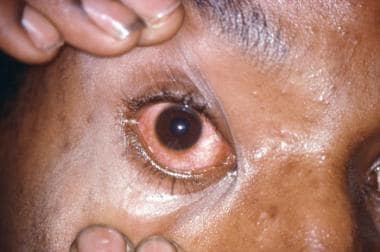
Conjunctivitis can occur in adults as well as in children following direct inoculation of organisms and can lead to blindness.
Disseminated gonococcal infection (DGI) occurs following approximately 1% of genital infections. Patients with DGI may present with symptoms of rash, fever, arthralgias, migratory polyarthritis, septic arthritis, endocarditis, or meningitis. Three fourths of the cases of DGI occur in women; susceptibility is increased if the primary mucosal infection occurs during menstruation or pregnancy. It is believed that changes in the vaginal environment at these times may foster changes in the gonococcal surface features and phenotype that render the organisms more resistant to host defenses in the bloodstream and more likely to disseminate.
Frequency
United States
Public health initiatives in the developed world have resulted in declining incidence of the disease since the mid 1970s, but nearly 800,000 new infections are estimated to occur yearly in the United States, not all of which are recognized or reported. The incidence of antibiotic-resistant strains has been rising since the late 1940s. Of greatest concern historically is the high percentage of cases due to penicillinase-producing N gonorrhoeae (PPNG). However, fluoroquinolone resistance is currently increasing on several continents and in several states within the United States.
International
Approximately 200 million new cases of gonorrhea appear each year.
Mortality/Morbidity
- The most common long-term sequelae of gonorrhea are chronic pelvic pain in women after PID, septic abortion, chorioamnionitis in pregnancy, blindness after neonatal or adult conjunctivitis, and infertility of either sex.
-
- Ectopic pregnancy is a life-threatening complication that may follow scarring of the female upper reproductive tract.
-
- Disseminated infection may lead to meningitis or endocarditis.
Race
- Race has no intrinsic effect, but, in the United States, the disease is most common among the urban poor and minorities.
-
- All sexually active populations are at risk and the level of risk rises with the number of sex partners and the presence of other STDs.
Sex
- Gonococcal infections are 1.5 times more common in men than in women.
-
- Serious sequelae are much more common in women, in whom PID may lead to ectopic pregnancy or infertility and for whom DGI is more likely.
Age
- Gonococcal infections are observed most frequently in adolescents and young adults.
-
- Infection in children is a marker for child sexual abuse and should be reported as such.
History
In all patients presenting with possible STDs, history should include past history of STDs (including HIV and viral hepatitis), known symptoms of STDs in current or past partners, type of contraception, and any history of sexual assault. In women, the history also should include the date of the last menstrual period and the details of parity, including any history of ectopic pregnancies.
Recent travel should be documented for patients (and their partners) with possible gonorrheal infections to assess the risk of drug resistance: Fluoroquinolone resistance is high in Asia, the Pacific Islands (including Hawaii), and California.
- Genitourinary tract, male
-
- Urethral discomfort, dysuria, and discharge due to uncomplicated urethritis are the most common symptoms in men. Degree of discomfort and discharge are variable.
- The classic presentation of epididymitis is of unilateral pain and swelling localized posteriorly within the scrotum. N gonorrhoeae and Chlamydia trachomatis account for most cases of epididymitis in men younger than 35 years.
- Genitourinary tract, female
-
- Vaginal discharge from endocervicitis is the most common presenting symptom. The discharge usually is described as thin, purulent, and mildly odorous. Many patients have minimal symptoms from gonococcal cervicitis.
- Dysuria or a scant urethral discharge may be due to urethritis accompanying cervicitis.
- Pelvic or lower abdominal pain suggests ascending infection of the endometrium, fallopian tubes, ovaries, and peritoneum. Pain may be midline, unilateral, or bilateral. Fever, nausea, and vomiting may be present. The possibility of ectopic pregnancy should always be considered in patients with pelvic or lower abdominal pain.
- Right upper quadrant pain from perihepatitis (Fitz-Hugh-Curtis syndrome) may occur following the spread of organisms upward along peritoneal planes.
- Rectal infection is often asymptomatic, but rectal pain, pruritus, tenesmus, and rectal discharge may be present if the rectal mucosa is infected. Bloody diarrhea also may occur. Rectal infection may occur from anal intercourse, and, in women, by local spread of the organism as well.
-
- A significant percentage of men and women with gonorrhea also have pharyngitis, which usually is asymptomatic but may cause mild to severe dysphagia and discomfort.
-
- Secondary gonococcal bacterial conjunctivitis may follow accidental inoculation by fingers and is usually unilateral.
- In neonates, bilateral conjunctivitis (ophthalmia neonatorum) often follows vaginal delivery by an infected mother. The symptoms of gonococcal conjunctivitis are eye pain, redness, and a purulent discharge. The organism can cause permanent injury to the eye in a very short time; prompt recognition and treatment are essential to avoid blindness. Blindness from neonatal gonococcal infection is a serious problem in developing countries but is uncommon in the United States and other countries where neonatal prophylaxis is routine. Nevertheless, infants of mothers with untreated infections, poor prenatal care, and unmonitored births continue to be at risk.
-
- Disseminated gonorrheal infection
-
- DGI may follow 1-2% of mucosal infections, with symptoms that vary greatly from patient to patient. By the time the symptoms of DGI appear, many patients no longer have any localized symptoms of mucosal infection. DGI can occur in infants born to infected mothers.
- Joint or tendon pain is the most common presenting complaint. About 25% of patients with DGI complain of pain in a single joint, while as many as two thirds describe polyarthralgia, which often is migratory. Severe pain, swelling, and decreased mobility in a single joint suggest a purulent arthritis with effusion. The knee is the most common site of purulent gonococcal arthritis.
- Tenosynovitis also is common, usually affecting the small joints of the hands.
- Fever is common, but the temperature is usually less than 39°C.
- Skin rash is a presenting complaint in approximately 25% of patients, but a careful examination will reveal a rash in the majority of patients with DGI. The rash is usually found below the neck and also may involve the palms and the soles.
- Headache, neck pain and stiffness, fever, and decreased sensorium may indicate gonococcal meningitis. This disease may be clinically indistinguishable from meningococcal meningitis on presentation, although the course of gonococcal meningitis usually is less rapid than that of meningococcal meningitis.
- A subacute onset of fever, chills, sweats, and malaise may indicate the presence of gonococcal endocarditis. Patients with endocarditis may develop atypical chest pain, cough, and dyspnea, as well as the arthralgias and rash typical of DGI. Rarely, gonococcal endocarditis causes severe valvular damage and death if not recognized and treated rapidly.
- Gonococcal endocarditis is more common in men than in women. Patients with collagen vascular disease (especially those with systemic lupus erythematosus) also may be more prone to this complication.
Physical
- N gonorrhoeae infection may be recognized by the typical signs and symptoms of the disease, but it is important to remember that by the time disseminated or upper reproductive tract disease is present, the primary site of mucosal infection may be normal in appearance, and the patient may have no localized signs or symptoms.
-
- Genitourinary tract, male
-
- Mucopurulent or purulent urethral discharge
- Unilateral epididymal tenderness and edema
- Lower genitourinary tract, female
-
- Mucopurulent or purulent cervical discharge
- Vaginal discharge or bleeding; vulvovaginitis in children
- Upper genitourinary tract, female
-
- PID
- Lower abdominal tenderness with or without rebound tenderness
- Cervical motion tenderness
- Adnexal tenderness
- Fever
- Upper right abdominal tenderness (with perihepatitis)
- Rectal - Mucopurulent or purulent discharge
-
- Oropharyngeal - Pharyngitis, usually mild
-
- Eyes - Purulent conjunctivitis is usually bilateral in ophthalmia neonatorum but most often is unilateral when secondary to self-inoculation.
-
- DGI may present with any of the following findings:
-
- Fever (usually <39°C)
- Skin changes: Maculopapular, pustular, necrotic, or vesicular rash, typically occurring on the torso, limbs, palms, and soles may be present. The rash usually spares the face, scalp, and mouth. Hemorrhagic lesions, erythema nodosum, urticaria, and erythema multiforme occur less frequently. Skin lesions are usually in different stages of development at the time of clinical presentation.
- Joints: Most patients may have polyarthralgia with pain, tenderness, decreased range of motion, and erythema. Less often, purulent arthritis may affect a single joint with severe pain, tenderness, edema, erythema, and decreased range of motion. Tenosynovitis presents as erythema and local tenderness along a tendon sheath, with pain on active or passive range of motion. Tenosynovitis most often occurs in the hands but may be found in the tendons of the lower extremities as well.
- Central nervous system: Patients with gonococcal meningitis may present with meningismus or decreased mental status.
- Cardiac: Patients with gonococcal endocarditis may have a new murmur, tachycardia, and fever. Embolic lesions may be present.
- Muscle: DGI can cause abscess formation within the soft tissues, presenting as localized tenderness, edema, and pain with motion.
Causes
- Gonococcal infection usually follows mucosal inoculation during vaginal, anal, or oral sexual contact. It also may be due to inoculation of mucosa by contaminated fingers or other objects.
-
- Neonatal infection may follow conjunctival inoculation during birth or direct infection through the scalp at the sites of fetal monitoring electrodes.
-
- Risk factors
-
- Sexual exposure to an infected individual without barrier protection
- Multiple sexual partners
- Infants - Passage through the infected birth canal of the mother
- Children - Sexual abuse by an infected individual
- PID - Use of an intrauterine device (IUD)
Chlamydia
Endometriosis
Pediatrics, Child Sexual Abuse
Pediatrics, Pharyngitis
Pregnancy, Ectopic
Sexual Assault
Testicular Torsion
Urinary Tract Infection, Female
Urinary Tract Infection, Male
Vaginitis
Other Problems to be Considered
Inflammatory arthritis
Septic arthritis
Herpes simplex urethritis
Mucopurulent cervicitis
Nongonococcal conjunctivitis
Nongonococcal endocarditis
Nongonococcal meningitis
Nongonococcal urethritis
Lab Studies
- Gram stain
-
- Gram stain is a rapid and inexpensive test available in most EDs.
- Sensitivity is high for urethral infection. A Gram stain showing 5 or more WBC per oil immersion field with intracellular gram-negative diplococci within leukocytes has a specificity of 95-100%.
- Sensitivity and specificity of the Gram stain are lower for endocervical specimens and rectal specimens. Gram stains from these sites are not recommended for routine use in the ED.
- The test is not useful for the diagnosis of pharyngeal infection because the oropharynx may be colonized by other Neisseria species that can lead to false-positive results.
- Culture
-
- A specific culture of a swab from the site of infection is the criterion standard for diagnosis at all potential sites of infection and can also guide treatment by providing information about the antibiotic susceptibility of the organism.
- N gonorrhoeae is a fastidious organism that requires moist carbon dioxide-rich atmosphere and must be grown on enriched media, usually chocolate agar containing lysed blood.
- Empiric treatment is often necessary because culture results are not available for 24-48 hours.
- Cultures are particularly useful when the clinical diagnosis is unclear, when a failure of treatment has occurred, when contact tracing is problematic, and when legal questions arise.
- Tests to identify other STDs
-
- Patients with a likely diagnosis of gonorrheal infection should be tested for syphilis and C trachomatis.
- Testing for HIV and syphilis may be indicated.
- Physical examination should always include scrutiny for signs of herpes simplex, syphilis, chancroid, lymphogranuloma venereum, and genital warts.
- Pregnancy test should always be obtained for women of childbearing age who present with gonorrhea or any other STD.
-
- Suspected DGI
-
- When DGI is suspected, blood and joint effusions should be sent for Gram stain and culture, although negative stain results and sterile cultures do not rule out disseminated disease. Cerebrospinal fluid should be stained and cultured if signs or symptoms of meningitis are present.
- Gram stains, cultures, and/or nucleic acid amplification tests (NAATs) of genital, rectal, conjunctival, and pharyngeal secretions should also be obtained when DGI is suspected, even if the patient has no localized symptoms at any of those sites.
- Nucleic acid amplification tests
-
- NAATs are designed to amplify sequences of DNA unique to a given pathogen, such as N gonorrhoeae. These tests are more sensitive and specific than nonamplification techniques.
- Several FDA-approved NAATs are available for the detection of N gonorrhoeae in urethral swab specimens obtained from males, endocervical swabs, and urine specimens obtained from men and women. These tests are more rapid than culture, more specific than immunoassays, and do not require viable organisms.
- NAATs can be used on eye and vaginal secretions, but their performance is less well validated. NAATs are not recommended for rectal and pharyngeal specimens at this time.
Imaging Studies
- Ultrasonography
-
- Pelvic ultrasonography or CT may demonstrate thick, dilated fallopian tubes or abscess formation.
- PID is uncommon in pregnancy. Ultrasonography should be used to rule out ectopic pregnancy whenever a pregnant patient has signs and symptoms of possible PID. See Pregnancy, Ectopic.
Procedures
- Collect specimens from the urethra, endocervix, pharynx, rectum, conjunctiva, or blood; in addition, perform lumbar puncture and joint aspiration if indicated by clinical findings.
-
- Culdocentesis may demonstrate free purulent exudate and provide material for Gram stain and culture.
Emergency Department Care
- Begin appropriate antibiotic therapy as soon as possible. A choice of antibiotics should take into account patient convenience and comfort, cost, the likelihood of patient compliance, and the need for follow-up care.
- Chlamydial infection is found frequently in patients with gonorrhea; thus, empiric antibiotic therapy should be sufficient to treat both infections.
- Treat patients who have positive HIV test results with gonococcal infection with the same regimen used for patients who have negative HIV test results.
-
- Specimens from likely sites of infection should be sent to the lab to be cultured for gonorrhea and chlamydia. NAATs may be used in addition to or in place of culture depending on availability and laboratory preferences. The possibility of other STDs should be evaluated.
-
- Patients should receive information and counseling to help them avoid future STDs and unwanted pregnancies.
-
- Social services should be consulted immediately in cases of suspected sexual assault, child abuse, or elder abuse.
-
- Pain relief may be needed for patients with epididymitis, PID, and DGI.
-
- Repeat aspiration of purulent joint effusions may improve patient comfort and speed recovery.
-
- Encourage the patient to abstain from sexual activity until after full treatment and testing of partners.
Consultations
- A gynecologist should be consulted for patients with severe PID and for any pregnant patient with an STD.
-
- A pediatrician should be consulted for any child with an STD.
-
- An ophthalmologist should be consulted for every patient with gonococcal conjunctivitis, as this disease may progress rapidly and can cause permanent loss of vision.
Medical therapy requires an antibiotic with efficacy against N gonorrhoeae. In the past, the treatment of choice involved oral medication for up to 10 days or an injection. Newer medications allowing in-office/in-ED, directly observed, single-dose oral treatment overcome poor patient compliance. In addition, because gonorrhea is often diagnosed simultaneously with chlamydia, the clinician should treat for both upon diagnosis of either when treating for either beyond the newborn period. Partner diagnosis and treatment is important to prevent reinfection and complications.
In April 2007, the Centers for Disease Control and Prevention (CDC) updated treatment guidelines for gonococcal infection and associated conditions. Fluoroquinolone antibiotics are no longer recommended to treat gonorrhea in the United States. The recommendation was based on analysis of new data from the CDC's Gonococcal Isolate Surveillance Project (GISP). The data from GISP showed the proportion of gonorrhea cases in heterosexual men that were fluoroquinolone-resistant (QRNG) reached 6.7%, an 11-fold increase from 0.6% in 2001. The data were published in the April 13, 2007, issue of the Morbidity and Mortality Weekly Report. This limits treatment of gonorrhea to drugs in the cephalosporin class (eg, ceftriaxone 125 mg IM once as a single dose). Fluoroquinolones may be an alternative treatment option for disseminated gonococcal infection if antimicrobial susceptibility can be documented. For more information see, the CDC's Antibiotic-Resistant Gonorrhea Web site; CDC Updated Gonococcal treatment recommendations (April 2007); or Medscape Medical News on CDC Issues - New Treatment Recommendations for Gonorrhea.
Drug Category: Antibiotics
Therapy must cover all likely pathogens in the context of the clinical setting.
| Drug Name | Cefixime (Suprax) |
| Description | The DOC because of oral efficacy, single dose treatment, and lower cost than parenteral medication. Cefixime inhibits bacterial cell wall synthesis by binding to one or more of the PBPs. After a period of unavailability, oral cefixime has been again FDA-approved in tab and susp forms. However, tablets remain unavailable in United States. |
| Adult Dose | 400 mg PO once for uncomplicated genitourinary or rectal infection |
| Pediatric Dose | <45 kg: 8 mg/kg PO once; not to exceed 400 mg >45 kg: Administer as in adults |
| Contraindications | Documented hypersensitivity |
| Interactions | Coadministration of aminoglycosides increase nephrotoxicity; probenecid may increase effects of cefixime |
| Pregnancy | B - Usually safe but benefits must outweigh the risks.
|
| Precautions | Not effective against pharyngeal gonococcal infection and not recommended for PID Adverse effects, including diarrhea, abdominal pain, nausea, and rashes, occur more commonly with prolonged courses of therapy; single-dose treatment is unlikely to cause ongoing problems Caution in documented hypersensitivity to penicillins or reduced renal function Administer with food to minimize GI adverse effects Adjust dose in renal impairment |
| Drug Name | Ceftriaxone (Rocephin) |
| Description | DOC for DGI. Secondary DOC for uncomplicated genitourinary infections because of higher cost, discomfort, and additional administration expense of injection. Ceftriaxone binds to PBPs inhibiting bacterial cell wall growth. |
| Adult Dose | 125-250 mg IM once; 125 mg if uncomplicated genitourinary, rectal, or pharyngeal infection; 250 mg for PID 1 g IV/IM q24h for DGI 1-2 g IV q12h for gonococcal meningitis or endocarditis |
| Pediatric Dose | 25-50 mg/kg IV/IM as single dose for conjunctival infection (maximum 125 mg); 125 mg IM once for children <45 kg with uncomplicated urethritis, cervicitis, pharyngitis, or rectal infection >45 kg: Administer as in adults |
| Contraindications | Documented hypersensitivity |
| Interactions | Probenecid may increase ceftriaxone levels; coadministration with ethacrynic acid, furosemide, and aminoglycosides may increase nephrotoxicity |
| Pregnancy | B - Usually safe but benefits must outweigh the risks.
|
| Precautions | Local site reactions (redness, pain) in 10-17% of adults (using 1% lidocaine as a diluent may reduce discomfort); caution with history of penicillin allergy or gallbladder, biliary tract, and hepatic disease; nephrotoxicity, similar to cephalosporins, is possible cause of pseudomembranous colitis; adjust dose in renal impairment; caution in breastfeeding women and allergy to penicillin |
| Drug Name | Spectinomycin (Trobicin) |
| Description | Indicated for patients with beta-lactam intolerance, but second line choice due to poor efficacy in pharyngitis. |
| Adult Dose | 2 g IM once |
| Pediatric Dose | 40 mg/kg IM once |
| Contraindications | Documented hypersensitivity |
| Interactions | None reported |
| Pregnancy | B - Usually safe but benefits must outweigh the risks.
|
| Precautions | Benzyl alcohol used as a diluent associated with fatal gasping syndrome in infants; antibiotics may mask or delay symptoms of incubating syphilis; perform a serologic test for syphilis in all patients with gonorrhea at time of diagnosis followed by additional test after 3 months; monitor clinical effectiveness to detect resistance by N gonorrhoeae |
| Drug Name | Silver nitrate |
| Description | Inhibit growth of both gram-positive and gram-negative bacteria. Germicidal effects are attributed to precipitation of bacterial proteins by liberated silver ions. |
| Adult Dose | Not used for this indication |
| Pediatric Dose | 2 gtt OU into conjunctival sac once immediately after birth (no later than 1 h after delivery) |
| Contraindications | Documented hypersensitivity |
| Interactions | Decreases effects of sulfacetamide preparations |
| Pregnancy | C - Safety for use during pregnancy has not been established.
|
| Precautions | Repeated application into eye can cause cauterization of cornea and blindness |
| Drug Name | Erythromycin (Erygel) |
| Description | Indicated for infections caused by susceptible strains of microorganisms and for prevention of corneal and conjunctival infections. |
| Adult Dose | Not used for this indication |
| Pediatric Dose | Apply 0.5-inch (1.25 cm) ribbon OU into conjunctival sac once immediately after birth (no later than 1 h after delivery) |
| Contraindications | Documented hypersensitivity; viral, mycobacterial, fungal infections of eye; patients using steroid combinations after uncomplicated removal of a foreign body from cornea also should avoid using this product |
| Interactions | None reported |
| Pregnancy | B - Usually safe but benefits must outweigh the risks.
|
| Precautions | Do not use topical antibiotics to treat ocular infections that may become systemic; prolonged or repeated antibiotic therapy may result in bacterial or fungal overgrowth of nonsusceptible organisms and may lead to a secondary infection (take appropriate measures if superinfection occurs) |
Further Inpatient Care
- Hospitalization is recommended for initial treatment of DGI (especially for patients who are unlikely to return for follow-up doses of antibiotics), purulent joint infections, meningitis, and endocarditis.
-
- Hospitalization is recommended for initial treatment of PID cases in the presence of the following factors:
-
- Tubo-ovarian abscess
- Pregnancy
- Failure of outpatient treatment
- Severe symptoms, such as severe pain, high fever, or persistent nausea and vomiting
- Immunodeficiency
- Gonococcal conjunctivitis
- Uncertain diagnosis, with any possibility of ectopic pregnancy or appendicitis masquerading as PID
- Abdominal peritonitis or perihepatitis

Further Outpatient Care
- Patients with DGI or PID who are treated on an outpatient basis must receive follow-up care within 72 hours.
-
- Early follow-up care and culture with antibiotic sensitivities is indicated for patients with unresolved or recurrent symptoms.
-
- Follow-up for test of cure is indicated for all pharyngitis cases treated with spectinomycin, as its efficacy is less than 60%.
-
- Instruct patients with uncomplicated cases to follow up with a primary care or public health provider to reduce the risk of future infection.
Deterrence/Prevention
- All patients with gonococcal infection should refer all their sex partners (whether symptomatic or asymptomatic) for evaluation and treatment.
-
- All infants born to mothers with untreated gonococcal infection should be treated prophylactically with a single dose of ceftriaxone 25-50 mg/kg IV or IM, not to exceed 125 mg.
-
- All neonates should undergo prophylaxis for ophthalmia neonatorum with silver nitrate (1%) aqueous solution OU once or erythromycin (0.5%) ophthalmic ointment OU once.
-
- Condoms offer partial protection.
Complications
- Urethral scarring in men possibly leading to decreased fertility or to bladder-outlet obstruction
-
- Scarring of the upper reproductive tract in women with PID possibly leading to infertility, chronic pelvic pain, and ectopic pregnancy
-
- Possible prematurity, neonatal infection, and miscarriage resulting from gonococcal infections in pregnant women
-
- Possible corneal scarring and permanent vision impairment or blindness resulting from gonococcal ophthalmic infection
-
- Possible sepsis in infants following neonatal exposure to maternal gonorrhea
-
- Possible permanent neurologic sequelae resulting from gonococcal meningitis
-
- Destruction of joint articular surfaces
-
- Destruction of cardiac valves
-
- Death from congestive heart failure (CHF) or meningitis
Prognosis
- Most gonococcal infections respond quickly to antibiotic therapy.
-
- Prognosis is excellent if therapy is initiated promptly and completed.
Patient Education
- Patients should be counseled about the risks of complications following gonococcal infection and the risk of other STDs.
-
- Patients always should be instructed to refer any sex partners for prompt evaluation and treatment.
-
- Patients should avoid sexual contact until medication is finished and until their partners are fully evaluated and treated. They should avoid unprotected contact thereafter.
-
- For excellent patient education resources, visit eMedicine's Sexually Transmitted Diseases Center. Also, see eMedicine's patient education articles Sexually Transmitted Diseases and Gonorrhea.
-
- Patient education materials are also available at Centers for Disease Control and Prevention (CDC) Web site and from many local public health departments.
Medical/Legal Pitfalls
- Failure to diagnose surgical emergencies, such as ectopic pregnancy or appendicitis, in patients with a clinical diagnosis of PID
-
- Failure to treat for coinfection with chlamydia
-
- Failure to instruct patients to refer partners for treatment
-
- Failure to evaluate pediatric infections as cases of child sexual abuse
-
- Failure to evaluate the possibility of abuse in cases involving incapacitated or elderly patients
-
- Failure to send cultures to confirm the clinical diagnosis in cases with associated legal issues
-
- Failure to send cultures and begin prophylactic treatment following sexual assault
-
- Failure to recognize those patients who require hospitalization and inpatient therapy
- Brocklehurst P. Antibiotics for gonorrhoea in pregnancy. Cochrane Database Syst Rev. 2005;1.
- CDC, Workowski KA, Berman SM. Sexually transmitted diseases treatment guidelines, 2006. MMWR Recomm Rep. Aug 4 2006;55(RR-11):1-94. [Medline]. [Full Text].
- CDC. Oral alternatives to Cefixime for the treatment of uncomplicated Neisseria Gonorrhoeae urogenital infections [MMWR update on CDC Web site]. April 30, 2004. [Full Text].
- CDC. Increases in fluoroquinolone-resistant Neisseria gonorrhoeae among men who have sex with men--United States, 2003, and revised recommendations for gonorrhea treatment, 2004. MMWR Morb Mortal Wkly Rep. Apr 30 2004;53(16):335-8. [Medline].
- Dan M. The use of fluoroquinolones in gonorrhoea: the increasing problem of resistance. Expert Opin Pharmacother. Apr 2004;5(4):829-54. [Medline].
- Johnson RE, Newhall WJ, Papp JR, et al. Screening tests to detect Chlamydia trachomatis and Neisseria gonorrhoeae infections--2002. MMWR Recomm Rep. Oct 18 2002;51(RR-15):1-38; quiz CE1-4. [Medline].
- Litt IF. Sexually transmitted diseases. In: Nelson's Textbook of Pediatrics. Philadelphia;1996:552-553.
- Peter NG, Clark LR, Jaeger JR. Fitz-Hugh-Curtis syndrome: a diagnosis to consider in women with right upper quadrant pain. Cleve Clin J Med. Mar 2004;71(3):233-9. [Medline].
- Ross JD. Systemic gonococcal infection. Genitourin Med. Dec 1996;72(6):404-7. [Medline].
- Sherrard J. Modern diagnosis and management of gonorrhoea. Br J Hosp Med. Apr 3-16 1996;55(7):394-8. [Medline].
- Simpson T, Oh MK. Urethritis and cervicitis in adolescents. Adolesc Med Clin. Jun 2004;15(2):253-71. [Medline].
- Thompson EC, Brantley D. Gonoccocal endocarditis. J Natl Med Assoc. Jun 1996;88(6):353-6. [Medline].
- CDC. Update to CDC's sexually transmitted diseases treatment guidelines, 2006: fluoroquinolones no longer recommended for treatment of gonococcal infections. MMWR Morb Mortal Wkly Rep. Apr 13 2007;56(14):332-6. [Medline]. [Full Text].
Gonorrhea excerpt Article Last Updated: Apr 27, 2007
|
