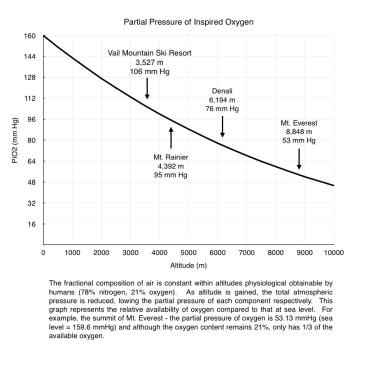
You are in: eMedicine Specialties > Emergency Medicine > ENVIRONMENTAL Altitude Illness - Cerebral SyndromesArticle Last Updated: Apr 16, 2008AUTHOR AND EDITOR INFORMATIONAuthor: N Stuart Harris, MD, Instructor in Surgery, Harvard Medical School, Massachusetts General Hospital; Attending Physician, Massachusetts General Hospital N Stuart Harris is a member of the following medical societies: American Academy of Emergency Medicine, American College of Emergency Physicians, International Society for Mountain Medicine, and Massachusetts Medical Society Coauthor(s): Sara W Nelson, MD, Staff Physician, Harvard Affiliated Emergency Medicine Residency, Brigham and Women's Hospital and Massachusetts General Hospital Editors: Dan Danzl, MD, Chair, Department of Emergency Medicine, Professor, University of Louisville Hospital; Francisco Talavera, PharmD, PhD, Senior Pharmacy Editor, eMedicine; Eddy Lang, MDCM, CCFP (EM), CSPQ, Assistant Professor, Department of Family Medicine, McGill University; Consulting Staff, Department of Emergency Medicine, The Sir Mortimer B Davis-Jewish General Hospital; John D Halamka, MD, MS, Associate Professor of Medicine, Harvard Medical School, Beth Israel Deaconess Medical Center; Chief Information Officer, CareGroup Healthcare System and Harvard Medical School; Attending Physician, Division of Emergency Medicine, Beth Israel Deaconess Medical Center; Jonathan Adler, MD, Attending Physician, Department of Emergency Medicine, Massachusetts General Hospital; Division of Emergency Medicine, Harvard Medical School Author and Editor Disclosure Synonyms and related keywords: altitude illness, cerebral syndromes, hypoxia, acute mountain sickness, AMS, mal de montagne, soroche, high-altitude cerebral edema, HACE, high-altitude pulmonary edema, HAPE INTRODUCTIONBackgroundAltitude illness refers to a group of syndromes that result from hypoxia. Acute mountain sickness (AMS) and high-altitude cerebral edema (HACE) are manifestations of the brain pathophysiology, while high-altitude pulmonary edema (HAPE) is that of the lung. Everyone traveling to altitude is at risk, regardless of age, level of physical fitness, prior medical history, or previous altitude experience. The high-altitude environment generally refers to elevations over 1500 m (4900 ft). Moderate altitude, 2000-3500 m (6600-11,500 ft) includes the elevation of many US ski resorts. Although arterial oxygen saturation is well maintained at these altitudes, low PO2 results in mild tissue hypoxia, and altitude illness is common. Very high altitude refers to elevations of 3500-5500 m (18,000 ft). Arterial oxygen saturation is not maintained in this range, and extreme hypoxemia can occur during sleep, with exercise, or illness. HACE and HAPE are most common at these altitudes. Extreme altitude is over 5500 m; above this altitude, successful long-term acclimatization is not possible and in fact deterioration ensues. Individuals must progressively acclimatize to intermediate altitudes to reach extreme altitude. PathophysiologyAcclimatization Hypoxia is the primary physiological insult on ascent to high altitude. The fraction of oxygen in the atmosphere remains constant (0.21) at all altitudes, but the partial pressure of oxygen decreases along with barometric pressure on ascent to altitude. The inspired partial pressure of oxygen (PiO2) is lower still because of water vapor pressure in the airways. At the altitude of La Paz, Bolivia (4000 m; 13,200 ft), PiO2 is 86.4 mm Hg, which is equivalent to breathing 12% oxygen at sea level. The response to hypoxia depends on both the magnitude and the rate of onset of hypoxia. The process of adjusting to hypoxia, termed acclimatization, is a series of compensatory changes in multiple organ systems over differing time courses from minutes to weeks. While the fundamental process occurs in the metabolic machinery of the cell, acute physiologic responses are essential in allowing the cells time to adjust. The most important immediate response of the body to hypoxia is an increase in minute ventilation, triggered by oxygen sensing cells in the carotid body. Increased ventilation produces a higher alveolar PO2. Concurrently, a lowered alveolar PCO2 produces a respiratory alkalosis, acting as a brake on the respiratory center of the brain and limiting the increase in ventilation. Renal compensation, through excretion of bicarbonate ion, gradually brings the blood pH back toward normal and allows further increase in ventilation. This process, termed ventilatory acclimatization, requires approximately 4 days at a given altitude and is greatly enhanced by acetazolamide. Patients with inadequate carotid body response (genetic or acquired, eg, after surgery or radiation) or pulmonary or renal disease may have an insufficient ventilatory response and thus not adapt well to high altitude. In addition to ventilatory changes, circulatory changes occur that increase the delivery of oxygen to the tissues. Ascent to high altitude initially results in increased sympathetic activity, leading to increased resting heart rate and cardiac output and mildly increased blood pressure. Within minutes of exposure, the pulmonary circulation reacts to hypoxia with vasoconstriction. This may improve ventilation/perfusion matching and gas exchange, but the resulting pulmonary hypertension can lead to a number of pathological syndromes at high altitude, including HAPE and altitude-related right heart failure (see, Altitude Illness - Pulmonary Syndromes). Cerebral blood flow increases immediately on ascent to high altitude, returning toward normal over about a week. The magnitude of the increase varies but averages 24% at 3810 m and more at higher altitude. Whether the headache of AMS is related to this flow increase is not known. Hemoglobin concentration increases after ascent to high altitude, increasing the oxygen-carrying capacity of the blood. Initially, it increases due to hemoconcentration from a reduction in plasma volume secondary to altitude diuresis and fluid shifts. Subsequently, over days to weeks, erythropoietin stimulates increased red cell production. In addition, the marked alkalosis of extreme altitude causes a leftward shift of the oxyhemoglobin dissociation curve, facilitating loading of the hemoglobin with oxygen in the pulmonary capillary. Sleep architecture is altered at high altitude, with frequent arousals and nearly universal subjective reports of disturbed sleep. This generally improves after several nights at a constant altitude, though periodic breathing (Cheyne-Stokes respiration) remains common above 2700 m. Pathophysiology of AMS/HACE The exact pathophysiology of AMS/HACE is unknown. The current hypothesis is that hypoxia elicits neurohumoral and hemodynamic responses in the brain that ultimately result in capillary leakage from microvascular beds and edema. Whether mild AMS or headache alone is actually due to brain edema remains an open question. Susceptibility to AMS demonstrates great individual variability because of genetic differences. Individual susceptibility is reproducible; a past history of AMS is the best predictor. FrequencyUnited StatesThe incidence of AMS varies depending on the rate of ascent and the maximum altitude reached. In moderate altitude (2000-3500 m) ski resorts, the incidence ranges from 10-40%. Rapid ascent to approximately 4000 m has been associated with incidences of 60-70%. InternationalTravelers flying to a high altitude destination such as Lhasa, Tibet (3810 m; 12,500 ft) or La Paz, Bolivia (4000 m; 13,200 ft) can expect an AMS incidence of 25-35%. In those who hike above 4000 m (and so ascend at a moderate pace), 25-50% will suffer from AMS. HACE is estimated to occur in about 1% or less of persons traveling above 4000 m and in 1-3% of those with AMS. Mortality/MorbidityThe natural history of AMS varies with altitude, ascent rate, and other factors. In general, the illness is self-limiting and symptoms improve slowly, with complete resolution in 1-3 days. However, with continued ascent, AMS is very likely to worsen and is more likely to progress to HACE. HACE may progress to stupor and coma over hours to days if untreated. Once coma has developed, death is more likely despite aggressive treatment; death is due to brain herniation. The usual course is rapid, complete recovery if treatment is started promptly. Slower recovery results when treatment is delayed. In rare cases, patients with either severe or prolonged HACE may have persistent neurologic deficits. Ataxia commonly persists for days to weeks and is often the last finding to resolve. RaceNo race predilection exists. SexNo significant difference based on gender exists. The incidence of AMS is not markedly affected by menstrual cycle phase and does not differ in pregnant women versus nonpregnant women. AgeAge has a small effect in adults; younger adults are slightly more susceptible. Children have similar occurrence rates of altitude cerebral syndromes to those of adults. CLINICALHistoryAMS is a syndrome of nonspecific symptoms with a broad spectrum of severity. AMS occurs in nonacclimatized persons in the first 48 h after ascent to altitudes above 2500 m, especially after rapid ascent (1 d or less). Symptoms usually begin a few hours after arrival at the new altitude but may arise as much as a day later, often after the first night's sleep. Headache is the principal symptom, typically frontal and throbbing. Gastrointestinal symptoms (anorexia, nausea, or vomiting), and constitutional symptoms (weakness, lightheadedness, or lassitude) are common. AMS is similar to an alcohol hangover, or to a nonspecific viral infection, but without fever or myalgias. Fluid retention is characteristic of AMS, and persons with AMS often report reduced urination, in contrast to the spontaneous diuresis observed with successful acclimatization. As AMS progresses, the headache worsens, and vomiting, oliguria, and increased lassitude develop. Ataxia and altered level of consciousness herald the onset of clinical HACE. Using the Lake Louise consensus criteria, the diagnosis of AMS requires headache plus at least one of the following symptoms: gastrointestinal (anorexia, nausea, vomiting), constitutional (lightheadedness, dizziness, weakness, fatigue), or insomnia. Most conditions similar to AMS can be excluded by history and physical examination. Onset of symptoms more than 3 days after ascent, lack of headache, or failure to improve with descent, oxygen, or dexamethasone suggests another diagnosis. Dehydration is commonly confused with AMS, as it can cause headache, weakness, nausea, and decreased urine output. The most common history in HACE is a person ascending further despite symptoms of AMS; however, rarely, it may develop in the absence of AMS after a very rapid ascent or at extreme altitude in an apparently acclimatized person. Also, HACE commonly occurs in conjunction with HAPE. Physical
Causes
DIFFERENTIALSAnxiety Brain Abscess Diabetic Ketoacidosis Encephalitis Guillain-Barré Syndrome Headache, Migraine Headache, Tension Herpes Simplex Herpes Simplex Encephalitis Hypoglycemia Hyponatremia Hypothermia Meningitis Neoplasms, Brain Pediatrics, Dehydration Pediatrics, Headache Pediatrics, Meningitis and Encephalitis Pediatrics, Reye Syndrome Sinusitis Stroke, Hemorrhagic Stroke, Ischemic Subarachnoid Hemorrhage Subdural Hematoma Toxicity, Carbon Monoxide Transient Ischemic Attack
| ||||||||||||||||||||||||||||||||||||||||||||||||||||||||||||||||||||||||||||||||||||||||||||||||||||||||||||||||||||||||||||||||||||||||||||||||||||||||||||
| Drug Name | Acetazolamide (Diamox) |
|---|---|
| Description | Carbonic anhydrase inhibitor for accelerating acclimatization to altitude in AMS. Helps prevent AMS in forced rapid ascent or in patients with history of repeated AMS. Improves symptomatic periodic breathing and hypoxia experienced at high altitudes. Not indicated for general prophylaxis of AMS. Treatment of AMS may be discontinued when patient is asymptomatic. |
| Adult Dose | Immediate release dosage form: 250 mg PO q12h Prophylaxis of AMS (if indicated): 125 mg PO q12h beginning 24 h before ascent and continuing during ascent to at least 48 h after arrival at highest altitude (or descent) For periodic breathing: 125 mg PO at bedtime until below the altitude at which periodic breathing began disturbing sleep |
| Pediatric Dose | 5 mg/kg/d PO or 150 mg/m2 PO qd, divided bid |
| Contraindications | Documented hypersensitivity; hepatic disease; severe renal disease; adrenocortical insufficiency; severe pulmonary obstruction |
| Interactions | Can decrease therapeutic levels of lithium; alters excretion of certain drugs (eg, amphetamines, quinidine, phenobarbital, salicylates) by causing alkalinization of the urine |
| Pregnancy | C - Fetal risk revealed in studies in animals but not established or not studied in humans; may use if benefits outweigh risk to fetus |
| Precautions | Contraindicated during the first trimester of pregnancy due to proven animal teratogenicity, and after 36 weeks' gestation due to an increased risk of severe neonatal jaundice Use in patients with impaired hepatic function may result in coma; may cause a substantial increase in blood glucose level in some diabetic patients |
These agents are used for their potent anti-inflammatory activity in vasogenic brain edema.
| Drug Name | Dexamethasone (Decadron, Dexasone) |
|---|---|
| Description | DOC for patients with HACE. May improve AMS and HACE by alleviating vasogenic cerebral edema and improving endothelial integrity; prevents AMS but does not improve acclimatization. Rebound AMS may occur if drug discontinued at altitude. |
| Adult Dose | HACE: 8 mg PO/IM stat, followed by 4 mg PO/IM q6h AMS: 4 mg PO/IM q6h for 2 doses |
| Pediatric Dose | Loading dose: 1-2 mg/kg/dose PO/IM once, followed by a maintenance dose of 1-1.5 mg/kg/d; not to exceed 16 mg/d divided q6h for 5 d; taper dose for 5 d and discontinue use |
| Contraindications | Documented hypersensitivity; active bacterial or fungal infection |
| Interactions | Effects decrease with coadministration of barbiturates, phenytoin, and rifampin; decreases effect of salicylates and vaccines used for immunization |
| Pregnancy | C - Fetal risk revealed in studies in animals but not established or not studied in humans; may use if benefits outweigh risk to fetus |
| Precautions | Increases risk of multiple complications, including severe infections; monitor adrenal insufficiency when tapering drug; abrupt discontinuation of glucocorticoids may cause adrenal crisis; hyperglycemia, edema, osteonecrosis, myopathy, peptic ulcer disease, hypokalemia, osteoporosis, euphoria, psychosis, myasthenia gravis, growth suppression, and infections are possible complications of glucocorticoid use |
These agents are useful in the treatment of symptomatic nausea caused by AMS.
| Drug Name | Prochlorperazine (Compazine, Stemetil) |
|---|---|
| Description | May relieve nausea and vomiting by blocking postsynaptic mesolimbic dopamine receptors through anticholinergic effects and depressing reticular activating system; additionally, has the advantage of augmenting hypoxic ventilatory response, acting as a respiratory stimulant at high altitude. |
| Adult Dose | 5-10 mg PO/IM tid/qid; not to exceed 40 mg/d 2.5-10 mg IV q3-4h prn; not to exceed 10 mg/dose or 40 mg/d 25 mg PR bid |
| Pediatric Dose | 2.5 mg PO/PR q8h or 5 mg q12h prn; not to exceed 15 mg/d IV dosing not recommended 0.1-0.15 mg/kg/dose IM and change to PO as soon as possible |
| Contraindications | Documented hypersensitivity; bone marrow suppression; narrow-angle glaucoma; severe liver or cardiac disease |
| Interactions | Coadministration with other CNS depressants or anticonvulsants may cause additive effects; with epinephrine may cause hypotension |
| Pregnancy | C - Fetal risk revealed in studies in animals but not established or not studied in humans; may use if benefits outweigh risk to fetus |
| Precautions | Drug-induced Parkinson syndrome or pseudoparkinsonism occurs quite frequently; akathisia is most common extrapyramidal reaction in elderly persons; lowers seizure threshold; caution with history of seizures Not recommended in children <2 years or <10 kg |
| Drug Name | Promethazine (Phenergan) |
|---|---|
| Description | Used for the symptomatic treatment of nausea in AMS. |
| Adult Dose | 25 mg PO/PR tid and 25 mg hs 25 mg IV/IM; repeat prn in 2 h; switch to PO as soon as possible |
| Pediatric Dose | <2 years: Contraindicated >2 years: 0.25-1 mg/kg PO/IM/PR q4-6h prn nausea |
| Contraindications | Documented hypersensitivity; children younger than 2 y (incidences of death due to respiratory depression); caution in older children |
| Interactions | May have additive effects when used concurrently with other CNS depressants or anticonvulsants; coadministration with epinephrine may cause hypotension |
| Pregnancy | C - Fetal risk revealed in studies in animals but not established or not studied in humans; may use if benefits outweigh risk to fetus |
| Precautions | Caution in cardiovascular disease, impaired liver function, seizures, sleep apnea, and asthma |
These agents are useful for the nearly-universal sleep difficulties at high altitude.
| Drug Name | Temazepam (Restoril) |
|---|---|
| Description | Depresses all levels of CNS (eg, limbic and reticular formation), possibly by increasing activity of GABA. Appears safe for well persons but should be avoided in those with AMS due to concerns about exaggerated hypoxemia during sleep. |
| Adult Dose | 15-30 mg PO hs |
| Pediatric Dose | Not established |
| Contraindications | Documented hypersensitivity; narrow-angle glaucoma; untreated obstructive sleep apnea; history of substance abuse; severe uncontrolled pain |
| Interactions | Increases toxicity of benzodiazepines in CNS with coadministration of phenothiazines, barbiturates, alcohols, and MAO inhibitors |
| Pregnancy | X - Contraindicated; benefit does not outweigh risk |
| Precautions | Caution with other CNS depressants, low albumin levels, or hepatic disease (may increase toxicity) |
| Drug Name | Zolpidem (Ambien) |
|---|---|
| Description | Structurally dissimilar to benzodiazepine but similar in activity with the exception of having reduced effects on skeletal muscle and seizure threshold. Does not depress ventilation at high altitude. |
| Adult Dose | 10 mg PO qhs |
| Pediatric Dose | Not established |
| Contraindications | Documented hypersensitivity; lactation |
| Interactions | Increases toxicity of alcohol and CNS depressants |
| Pregnancy | B - Fetal risk not confirmed in studies in humans but has been shown in some studies in animals |
| Precautions | Monitor elderly for impaired cognitive or motor performance |
These agents are indicated for the treatment of mild to moderate pain and headache.
| Drug Name | Ibuprofen (Motrin, Advil, Nuprin, Midol) |
|---|---|
| Description | May be used for patients with mild to moderate pain. Inhibits inflammatory reactions and pain by decreasing prostaglandin synthesis. |
| Adult Dose | 200-400 mg PO q4-6h while symptoms persist; not to exceed 3.2 g/d |
| Pediatric Dose | <6 months: Not established 6 months to 12 years: 20-40 mg/kg/d PO divided tid/qid >12 years: Administer as in adults |
| Contraindications | Documented hypersensitivity; peptic ulcer disease; recent GI bleeding or perforation; renal insufficiency; high risk of bleeding |
| Interactions | Coadministration with aspirin increases risk of inducing serious NSAID-related adverse effects; probenecid may increase concentrations and, possibly, toxicity of NSAIDs; may decrease effect of hydralazine, captopril, and beta-blockers; may decrease diuretic effects of furosemide and thiazides; monitor PT closely (instruct patients to watch for signs of bleeding); may increase risk of methotrexate toxicity; phenytoin levels may be increased when administered concurrently |
| Pregnancy | B - Fetal risk not confirmed in studies in humans but has been shown in some studies in animals D - Fetal risk shown in humans; use only if benefits outweigh risk to fetus |
| Precautions | Caution in congestive heart failure, hypertension, and decreased renal and hepatic function; caution in anticoagulation abnormalities or during anticoagulant therapy |
| Drug Name | Acetaminophen (Tylenol, Aspirin Free Anacin) |
|---|---|
| Description | DOC for pain in patients with documented hypersensitivity to aspirin or NSAIDs, with upper GI disease, or who are taking PO anticoagulants. |
| Adult Dose | 325-650 mg PO q4-6h or 1000 mg tid/qid; not to exceed 4 g/d |
| Pediatric Dose | <12 years: 10-15 mg/kg/dose PO q4-6h prn; not to exceed 2.6 g/d >12 years: 325-650 mg PO q4h; not to exceed 5 doses/d |
| Contraindications | Documented hypersensitivity; known G-6-PD deficiency |
| Interactions | Rifampin can reduce analgesic effects of acetaminophen; coadministration with barbiturates, carbamazepine, hydantoins, and isoniazid may increase hepatotoxicity |
| Pregnancy | B - Fetal risk not confirmed in studies in humans but has been shown in some studies in animals |
| Precautions | Hepatotoxicity possible in persons with chronic alcoholism following various dose levels; severe or recurrent pain or high or continued fever may indicate a serious illness; acetaminophen is contained in many OTC products and combined use with these products may result in cumulative doses exceeding recommended maximum dose |
The authors and editors of eMedicine gratefully acknowledge the contributions of previous author, Thomas E Dietz, MD, to the development and writing of this article.
| Media file 1: High-altitude cerebral edema (HACE). Image courtesy of Dr Peter Hackett. | |
![]() | View Full Size Image | Media type: MRI |
| Media file 2: A very ataxic man with high-altitude cerebral edema (HACE) at 4250 m being assisted toward the Gamow bag. | |
![]() | View Full Size Image | Media type: Photo |
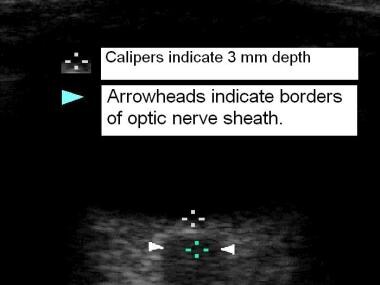
| Media file 3: Ultrasonography - Optic nerve sheath diameter measurement. Top of field is cornea, bottom of field reveals retina, then optic nerve in lowest field. Images courtesy of Dr Peter Fagenholz et al. | |
![]() | View Full Size Image | Media type: Ultrasound |
| Media file 4: Horse evacuation of nonambulatory altitude illness. Patient in the Khumbu, Nepal. Image courtesy of Dr Peter Fagenholz. | |
![]() | View Full Size Image | Media type: Image |
Altitude Illness - Cerebral Syndromes excerpt
Article Last Updated: Apr 16, 2008