Continually Updated Clinical Reference
 
 
  All Sources     eMedicine     Medscape     Drug Reference     MEDLINE
 
eMedicine - Echinoderm Envenomation : Article by

Quick Find
Authors & Editors
Introduction
Clinical
Differentials
Workup
Treatment
Medication
Follow-up
Miscellaneous
Multimedia
References

Related Articles
Anaphylaxis

Coelenterate and Jellyfish Envenomations

Corneal Abrasion

Decompression Sickness

Dysbarism

Lionfish and Stonefish

Snake Envenomations, Sea

Stingray Envenomations


Patient Education
Infections Center

Skin, Hair, and Nails Center

Bites and Stings Center

Tetanus Overview

Tetanus Causes

Tetanus Symptoms

Tetanus Treatment

Bruises Overview

Stingray Injury Overview


Author: Scott A Gallagher, MD, FACEP, Chairman, Department of Emergency Medicine, Aspen Valley Hospital; Senior Clinical Instructor, Department of Surgery, School of Medicine, University of Colorado Health Sciences Center

Scott A Gallagher is a member of the following medical societies: American College of Emergency Physicians and Wilderness Medical Society

Editors: Robert Norris, MD, Chief, Associate Professor, Department of Surgery, Division of Emergency Medicine, Stanford University Medical Center; John T VanDeVoort, PharmD, ABAT, Director of Pharmacy, Sacred Heart Hospital; James S Walker, DO, Program Coordinator, Associate Professor, Department of Emergency Medicine, University of Oklahoma Health Sciences Center; John D Halamka, MD, MS, Associate Professor of Medicine, Harvard Medical School, Beth Israel Deaconess Medical Center; Chief Information Officer, CareGroup Healthcare System and Harvard Medical School; Attending Physician, Division of Emergency Medicine, Beth Israel Deaconess Medical Center; Jonathan Adler, MD, Attending Physician, Department of Emergency Medicine, Massachusetts General Hospital; Division of Emergency Medicine, Harvard Medical School

Author and Editor Disclosure

Synonyms and related keywords: Echinodermata, brittle stars, Ophiuroidea, starfish, starfish envenomation, sea cucumber envenomation, brittle star envenomation, Asteroidea, sea urchins, long-spined sea urchins, short-spined sea urchins, Echinoidea, sea cucumbers, Holothuroidea, echinoderm envenomation, echinoderm sting, crown-of-thorns starfish, Acanthaster planci, Echinaster, Plectaster, Solaster, Diadema, Echinothrix, Phormosoma, Asthenosoma, Araeosoma, Toxopneustes pileolus, Tripneustes, Bohadschia argus, marine envenomations 

Background

The phylum Echinodermata includes a diverse group of marine animals that are slow moving and nonaggressive, including brittle stars (class Ophiuroidea), starfish (class Asteroidea), sea urchins (class Echinoidea), and sea cucumbers (class Holothuroidea). These animals have pentamerous (5-part) radial symmetry and calcareous skeletons that form thick outer plates and protective spines in some; hence, they are named Echinodermata, which means spiny skin. Injury and envenomation occur almost exclusively from accidental contact or careless handling; bathers, divers, and fishermen are at greatest risk. Poisonous echinoderm ingestions or intoxications are not covered in this article.

Pathophysiology

While most echinoderms are poisonous, and many have sharp spines or spicules capable of causing injury, only a few members of the Asteroidea, Echinoidea, and Holothuroidea classes are capable of causing venomous injuries in humans. In this article, envenomation refers to the parenteral or topical application of toxins produced in specialized glands and tissues with modified application structures (spines, pedicellaria, tentacles). This definition is in contrast to poisoning or intoxication, which refers to the oral ingestion of toxins produced or accumulated in nonspecialized glands or tissues.
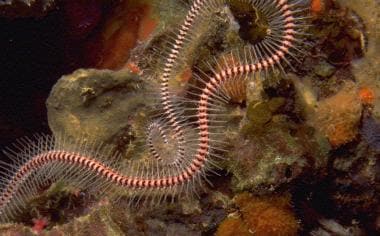
Brittle stars (class Ophiuroidea; see Media file 6) are not generally considered capable of causing venomous injuries in humans. However, some brittle stars (Ophiomastix annulosa) do possess toxins and are capable of causing paralysis and death in small animals. These animals should be handled with care.

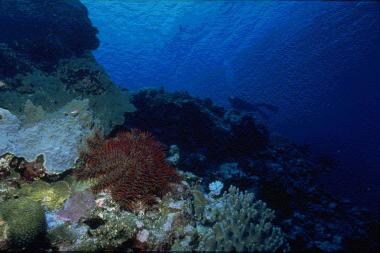
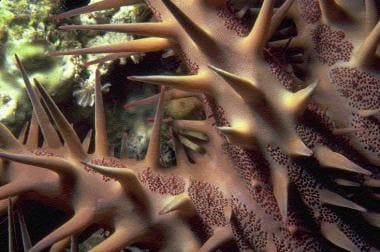
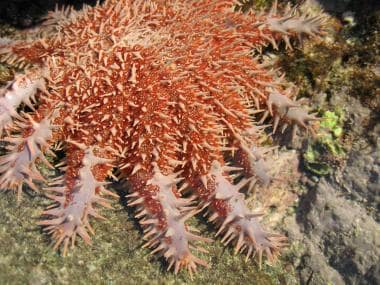
Starfish (Asteroidea) envenomation in humans is well described, with the crown-of-thorns starfish (Acanthaster planci) as the main culprit (see Media files 1-2). Acanthaster species possess long (5-6 cm), extremely sharp spines projecting from the dorsal surfaces of their bodies and numerous arms (7-23, a notable exception to the usual 5 arms). These spines are covered with a 3-layered integument that, in turn, is associated with glandular cells that produce a variety of toxins. Rupture of the overlying integument during spine penetration results in release of a range of bioactive substances capable of causing local and generalized toxicity in humans. Other starfish potentially capable of envenomation include members of the genus Echinaster, which possess thorny spines and small pits from which toxins are secreted, and Plectaster and Solaster species, which are reported to cause contact dermatitis.

Sea urchins (Echinoidea) capable of causing venomous injuries in humans use specialized spines (long or short) and pedicellaria (delicate seizing organs equipped with pincerlike jaws) to deliver their venom. Although both structures are present, generally only one is venomous in a given species. Thus, grouping the venomous urchins into 1 of the following 3 categories is convenient:

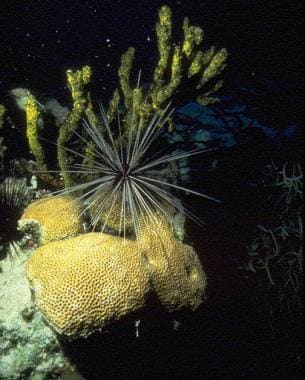
  • Long-spined species may inject venom during a puncture with rupture of the overlying integument (Diadema species; see Media file 5) or with fracture and release of venom from hollow-lumen spines (Echinothrix species).
  • Short-spined species similarly may envenom during puncture when downward pressure ruptures the surrounding integument (Phormosoma species), or they may deliver a severe sting without puncture via venom glands located at the spine tips (Asthenosoma species, Araeosoma species).
  • Species with pedicellaria include those reputed to be the most venomous of all sea urchins, the flower urchin (Toxopneustes pileolus), and others that are less venomous (Tripneustes species). Pedicellaria are small, delicate, tripled-jawed seizing organs that are supported by a long stalk and interspersed among numerous nonvenomous spines. Fanglike appendages are associated with venom glands at the tips of each jaw. The fangs are capable of penetrating skin and may be difficult to dislodge because the valve muscles tightly close each jaw. Pedicellaria continue envenoming even when detached from the urchin body and, thus, should be removed promptly.

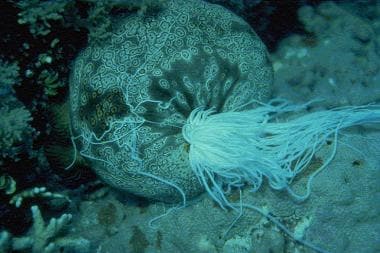
Sea cucumbers (Holothuroidea) are generally regarded as nonvenomous, although many are poisonous to eat without proper preparation. The Cuvierian tubules of some sea cucumbers are toxic and may be extruded from the anus as a defensive mechanism when the animal is disturbed or irritated (Bohadschia argus; see Media file 4). According to some sources, skin contact may trigger a vigorous inflammatory reaction.1, 2 However, other experts attest to island customs in which Cuvierian tubules are applied for the relief of coral cuts (A. M. Kerr, Yale University, written communication, March 1999; G. Paulay, Guam University, written communication, March 1999). Accounts of blindness following eye contact are poorly substantiated,3 although intense conjunctivitis or keratitis may occur.

Frequency

United States

Echinoderm envenomations do not represent a significant public health problem, although little epidemiologic data are available. Venomous echinoderms are encountered principally in tropical seas. Nonvenomous traumatic injuries from echinoderms are not uncommon in the United States, especially in coastal communities where sea urchins live.

International

Echinoderm envenomations are quite common, although little epidemiologic data are available.

The most common starfish envenomization results from contact with the crown-of-thorns starfish (Acanthaster planci), which populates reefs of the Indo-Pacific from east Africa to Central America. Similarly, sea urchins capable of envenomation tend to be concentrated in tropical and subtropical marine regions. The Indo-Pacific is the home of all categories of venomous urchins, including Diadema, Echinothrix, and Toxopneustes species and the venomous genera of sea cucumbers (Holothuria). For some Chinese, Malay, and Pacific Island gourmets, properly prepared sea cucumbers are prized as a delicacy (eg, beche-de-mer, trepang).

Mortality/Morbidity

Significant local and systemic effects are possible following echinoderm envenomation from any of the 3 venomous classes, starfish (Asteroidea), sea urchins (Echinoidea), and sea cucumbers (Holothuroidea). However, a clear link between echinoderm envenomation and death (other than subsequent drowning) cannot be found in the literature, despite several anecdotal reports of fatalities.4, 2, 5, 6 Detailed documentation is sparse, and death must be very rare. This is in contrast to poisoning or intoxication following ingestion of certain echinoderms, which has been well documented to result in severe illness and fatality.


History

Immediate and often incapacitating pain is described following puncture wounds from the crown-of-thorns starfish (Acanthaster planci), long-spined urchins (Diadema species, Echinothrix species), and some short-spined urchins (Phormosoma species). Similarly, pedicellaria-containing urchins (Toxopneustes species, Tripneustes species) and other short-spined urchins (Asthenosoma species, Araeosoma species) may deliver a severe sting at the slightest touch without inflicting any puncture at all. Significant ocular inflammation, dermatitis, and pain may follow topical exposure to the holothurin toxins of venomous sea cucumbers.

  • Crown-of-thorns starfish (Acanthaster planci)
    • Envenomation begins with penetration of the skin with the long remarkably sharp dorsal spines. Usually, but not invariably, immediate excruciating burning pain is experienced at the puncture site. Divers are reportedly at risk of unsafe ascent, disorientation, and loss of control because of the intense pain. A single puncture may result in several hours of pain, while multiple or intraarticular punctures may lead to pain, discomfort, and limitation of joint movement for several weeks.
    • Bleeding at the puncture site may be prolonged in some patients and is followed by surrounding ecchymosis and soft tissue swelling. Systemic symptoms of protracted nausea and vomiting, headache, arthralgias, paresthesias, and muscular paralysis are less substantiated than the other symptoms described but, nevertheless, are reported in several texts. Case reports of edema and pruritus suggest the possibility of allergic reaction, although no reports of anaphylaxis or fatality are mentioned.
    • Common complications result from retained foreign material and include secondary infection and granuloma formation.
  • Sea urchins: The mechanism of envenomation varies among the 3 groups.
    • Long-spined urchins (Diadema species, Echinothrix species) are capable of causing deeply penetrating injuries. Envenomation initially results in severe burning pain, which is localized to the puncture site and may last several hours, reappearing with any pressure on the wound site. Localized edema, erythema, warmth, and bleeding may follow. The systemic symptoms of nausea, vomiting, paresthesias, muscular paralysis, and respiratory distress occur in the most severe cases. Delayed sequelae include wound tattooing as pigment is leeched from dark-colored spines into the surrounding tissue, synovitis if a joint space is violated, and secondary wound infection or granuloma formation if foreign material is retained.
    • Some short-spined urchins have spines tipped with balloonlike venom sacs that are capable of delivering a severe sting without inflicting a penetrating wound (Asthenosoma species, Araeosoma species), while others envenom in a fashion similar to long-spined urchins, releasing venom into the wound when the spine penetrates the skin (Phormosoma species).
    • Urchins with pedicellaria may envenom following simple handling if sufficient contact occurs. The flower sea urchin (Toxopneustes pileolus) is reputedly the most venomous of urchins. Intense radiating pain, paresthesias, hypotension, respiratory distress, and muscular paralysis are potential sequelae of contact with this species and may last up to 6 hours. Reportedly, a female pearl diver became unconscious after accidental contact with the flower sea urchin and subsequently drowned.
  • Sea cucumbers
    • Envenomation follows contact with the toxin-containing body wall or the organs of Cuvier, a mass of white, pink, or red tubules just inside the anus. In some species, long sticky threadlike organs may be extruded from the anus when the animal is disturbed. Direct contact with these organs, or even fragments released in close proximity to a diver, may induce a papular contact dermatitis, severe ocular inflammation, and, purportedly, blindness.
    • Similarly, toxic mucous secretions on sea cucumber skin can be a skin and eye irritant. These toxins, known as holothurins, also are elaborated in the body wall and, thus, are capable of causing severe illness or death upon ingestion.

Physical

The severity of envenomation depends on multiple factors, including the offending species; site and number of stings; the size, maturity, and age of the animal; and the underlying health and individual sensitivity of the individual exposed.

  • Puncture wound
    • In addition to immediate pain, deep puncture wounds that accompany envenomation by crown-of-thorns starfish (Acanthaster species), long-spined urchins (Diadema species, Echinothrix species), and some short-spined urchins (Phormosoma species) often are associated with retained spine fragments and persistent discomfort. Violet or black discoloration of the wound may occur as pigment from dark-spined species (Diadema, Strongylocentrotus) leeches into the wound; this discoloration usually is not permanent. Bleeding, ecchymosis, surrounding erythema, edema, and even pruritus may follow spine puncture by Acanthaster species.
    • Complications arise when punctures occur in proximity to a joint space (eg, synovitis), nerves (eg, neuropathy), vessels (eg, hemorrhage), or when wounds become indolent, often because of retained spine fragments (eg, chronic pain, granuloma, secondary infection).
    • Nonpenetrating wounds result from envenomation by some short-spined urchins (Asthenosoma species, Araeosoma species) and pedicellaria-containing urchins (Toxopneustes species, Tripneustes species). Although the local complications that follow puncture wounds do not occur, significant pain and systemic effects result.
    • Sea cucumber envenomations similarly are not associated with puncture wounds. Contact with the venomous tentacular organs of Cuvier or dispersed fragments may result in severe dermatitis, conjunctivitis, keratitis, and, possibly, blindness.
  • Systemic effects
    • A panoply of systemic effects has been described following echinoderm envenomations; they commonly include nausea, vomiting, paresthesias, generalized weakness, respiratory distress, and delirium. Claims of cardiac dysrhythmias, paralysis, and fatality are difficult to substantiate. The most severe echinoderm envenomations result from stings by the flower sea urchin (Toxopneustes pileolus) and have caused at least 1 death following loss of consciousness and subsequent drowning in a Japanese pearl diver.
    • No deaths are known to have resulted from the crown-of-thorns starfish (Acanthaster planci), although injury eventually resulting in leg amputation has been reported. Long-spined black sea urchins (thought to be Diadema species) have been implicated twice in severe neurologic sequelae, one case of meningoencephalitis and another of Guillain-Barré syndrome. The theoretic possibility of anaphylactic reaction to echinoderm venoms is entertained by some, although no cases have been documented to date.
  • Delayed sequelae
    • Delayed sequelae include chronic pain, granuloma formation, wound tattooing, and secondary infection.
    • Tetanus may result following echinoderm envenomations accompanied by puncture wounds.

Causes

Echinoderms are slow moving and nonaggressive; injury and envenomation occur as the result of accidental exposure or careless handling.

  • Bathers, waders, and divers are at risk of stepping on or being forced against the sharp spines of venomous sea urchins and starfish, especially in waters with strong surges, currents, or poor visibility.
  • Fishermen and overly curious individuals often become envenomed through careless handling.
  • The sharp spines of venomous long-spined urchins, certain short-spined urchins, and starfish can easily penetrate wet suits and gloves. The stinging tips of other short-spined urchins and those with pedicellaria easily envenomate through exposed skin.
  • Sea cucumbers may induce severe contact dermatitis or ocular injury in divers following unprotected handling or mask clearing in close proximity to the animal.


Anaphylaxis
Coelenterate and Jellyfish Envenomations
Corneal Abrasion
Decompression Sickness
Dysbarism
Lionfish and Stonefish
Snake Envenomations, Sea
Stingray Envenomations

Other Problems to be Considered

Marine wound infections
Retained foreign body


Lab Studies

  • No specific laboratory tests are indicated in the management of echinoderm envenomations; however, in cases of severe systemic symptoms (eg, hypotension, paralysis, respiratory failure), a complete workup to exclude other etiologies may be warranted.

Imaging Studies

  • Soft tissue radiographs are indicated as the initial study modality when attempting to exclude retained foreign bodies.
    • Most calcareous spines are visualized either directly or indirectly with the use of radiographs.
    • Nonradiodense objects can be revealed as filling defects or outlined by air drawn into the wound during the injury.
  • If an object cannot be visualized by plain radiography or retrieved easily through direct visualization, ultrasound may be used.
    • Ultrasound can detect nonradiodense foreign bodies as small as 1 X 2 mm and can be used to accurately localize foreign material and provide guidance during removal.
    • Tendons, deep scar tissue, fresh hematoma, and tissue calcifications can produce false-positive ultrasound readings.
    • Ultrasonography requires experience and skill to maximize its usefulness.
  • Computed tomography (CT) scans and magnetic resonance imaging (MRI) are expensive alternatives to ultrasound that can identify and precisely localize retained foreign material. Both require a high degree of patient cooperation and may be difficult to perform on pediatric patients.

Procedures

  • Ocular exposure to holothurin toxins and tentacular fragments following exposure to the organs of Cuvier of sea cucumbers requires a thorough slit lamp examination for retained foreign bodies and evidence of corneal abrasion or keratitis.


Prehospital Care

  • Prehospital care entails recognition of the injury as a potential envenomation, gentle removal of superficial spines and pedicellaria, direct pressure to control bleeding, administration of analgesia, and transport for medical evaluation.
  • Recognition of serious systemic symptoms and prompt institution of appropriate life-saving procedures, such as cardiopulmonary resuscitation (CPR) and treatment for anaphylaxis, should be paramount in the prehospital care setting. CPR and advanced cardiac life support (ACLS) are rarely indicated but always take absolute precedence.
  • While not universally endorsed, several sources recommend pressure immobilization as an early first aid measure for rare cases with suspected anaphylactic reaction. Apply a compression bandage to the affected limb to impede lymphatic flow at a pressure range of 40-70 mm Hg for upper extremities and 55-70 mm Hg for lower extremities (clinically equivalent to comfortable pressure that is neither too tight nor too loose). Immobilization via splinting should follow to limit muscular contraction and the resultant muscle pump effect. In the absence of serious generalized allergic reaction, pressure immobilization bandaging is strongly contraindicated and may be harmful.

Emergency Department Care

Emergency department (ED) management of echinoderm envenomation involves addressing the venom exposure and the accompanying trauma inflicted by the specific application structures used to deliver the venom (spines, pedicellaria, tentacles). General rules of therapy include prompt analgesia, wound management, and observation for and supportive treatment of significant systemic symptoms.

  • Methods of recommended analgesia are variable but generally include initial treatment with hot water immersion followed by adjunctive local or regional anesthesia and parenteral analgesics, as needed.
    • Nearly all references recommend initial immersion in nonscalding hot water following the removal of visible spines and sheaths. Hot water immersion to inactivate heat-labile toxins is widely recommended as effective treatment for envenomations by echinoderms as well as stingrays, stonefish, and other venomous marine spine injuries.
      • Immerse the affected limb in water not warmer than 114°F or 45°C.
      • Exercise caution not to inflict thermal burns by placing an insensate limb (as the result of local anesthesia or decreased sensitivity from pain) in scalding water.
    • Others have noted that immersion in ice water also may provide relief.
    • Local or regional anesthesia is a suggested means of adjunctive analgesia when immersion therapy does not provide sufficient pain relief. Local or regional adjunctive anesthesia offers several benefits, including no risk of inflicting thermal injury; reliable, prompt, and prolonged duration of analgesia; and simultaneous debridement of the wound while providing analgesia.
    • Parenteral analgesics and/or sedatives may be needed for wounds that are difficult to anesthetize or persons who exhibit anxiety reaction to envenomation.
  • Wound management principles include identification of foreign material, adequate debridement, prophylactic antibiotics when indicated, tetanus prophylaxis, and appropriate referral for retained fragments that are not easily accessible in the ED.
    • Promptly undertake debridement of loose spines, spicules, and pedicellaria, taking care not to break brittle structures and create retained fragments.
      • Immediate gentle removal of obviously protruding spines prevents further envenomation, penetration, or breakage.
      • Similarly, to prevent ongoing envenomation, remove all visible pedicellaria as soon as possible by applying shaving foam and gently scraping with a razor. Pull embedded debris straight out with forceps, taking care to avoid bending or jiggling spines that may break off at the tips.
      • Ultrasound or radiography can help identify retained fragments that may require referral for consideration of operative removal. Surgical removal with proper anesthesia of embedded spines is indicated when in proximity to joints, nerves, or vessels. Spines in weight-bearing surfaces may also require removal to prevent chronic pain.
      • Retained spine fragments may cause inflammation, become encapsulated, and develop granulomata during the healing process, leading to infection or chronic pain.
      • Most thin embedded spines are absorbed or extruded through the skin in days to weeks. Not all spines need be surgically removed. Copious irrigation to remove introduced foreign material always should be performed after adequate anesthesia.
    • Tetanus prophylaxis is indicated in all patients with traumatic marine injuries who have insufficient or uncertain immunization histories.
  • Ocular exposure to the holothurin toxins of sea cucumbers mandates a careful ophthalmologic examination. Following topical anesthesia, copiously irrigate and perform slit lamp examination to identify and address any retained tentacular fragments, corneal abrasions, or evidence of keratitis. Prompt ophthalmologic referral is indicated.
  • Systemic symptoms of envenomation are not uncommon and reportedly encompass a wide range of nonspecific symptoms, including nausea, vomiting, abdominal pain, malaise, arthralgias, paresthesias, muscular paralysis, respiratory distress, hypotension, syncope, and, rarely, death.
  • No antivenom for any of the venomous echinoderms exists. Treatment is supportive.
  • Although rare, some severe reactions may represent anaphylaxis and should be treated accordingly.

Consultations

  • Consultation with an appropriate surgical specialist is advised for all complicated puncture wounds in proximity to articular and neurovascular structures. Spine extraction is best performed acutely and with an operating microscope in the surgical suite.
  • Plantar puncture wounds are potentially complicated injuries and may require consultation or referral for foreign material not easily extracted in the ED.
  • Consultation and admission to the general internist for supportive care may be warranted when symptoms of serious systemic envenomation are present. Protracted pain, nausea, muscular weakness, respiratory distress, and hypotension are a few systemic symptoms that may warrant care beyond the scope of the emergency department. Additionally, in the rare case of sepsis caused by Vibrio or Aeromonas species, a coordinated multispecialty effort is needed to address wound debridement, antibiosis, and critical care support.
  • Urgent ophthalmologic referral is appropriate in cases of ocular exposure to holothurin toxins.


Medical therapy is directed primarily at local and systemic analgesia, with nonspecific supportive therapy required only in the most severe cases. Prophylactic antibiotics are generally not indicated, except in persons with deep puncture wounds or who are immunocompromised. However, once infection is established, prompt therapy must be instituted with emphasis on coverage for potential marine pathogens. No antivenoms are available. Tetanus prophylaxis is indicated in all marine animal injuries.

Drug Category: Local anesthetics

Used to provide local or regional anesthesia as adjunctive or alternative pain control.

Drug NameBupivacaine (Marcaine, Sensorcaine)
DescriptionAny of the commonly used local anesthetics suffice; however, bupivacaine provides superior duration of anesthesia and pain relief for irrigation, wound exploration, and debridement.
Adult Dose10-20 mL of 0.25-0.5% intralesionally; not to exceed 3-4 mg/kg
Pediatric Dose<12 years: Not established
>12 years: 1.25 mg/kg/dose intralesionally
ContraindicationsDocumented hypersensitivity; septicemia; spinal deformities; severe hypertension; existing neurologic disease
InteractionsMay enhance effects of CNS depressants; coadministration may increase toxicity of MAOIs, TCAs, beta-blockers, vasopressors, and phenothiazines
PregnancyC - Fetal risk revealed in studies in animals but not established or not studied in humans; may use if benefits outweigh risk to fetus
PrecautionsTest a dose and monitor for CNS toxicity, cardiovascular toxicity, and signs of unintended intrathecal administration; caution with inflammation or sepsis in region of proposed injection; monitor patient's state of consciousness after each injection; caution in hypertension, cerebral vascular insufficiency, peripheral vascular disease or heart block, and arteriosclerotic heart disease

Drug Category: Analgesics

For adjunctive pain control when immersion therapy and local and/or regional anesthesia are not sufficient. Analgesic route (oral or parenteral) is a matter of choice and may not be needed with appropriate local or regional anesthetic.

Drug NameMorphine sulfate (Duramorph, Astramorph, MS Contin)
DescriptionDOC for narcotic analgesia because of its reliable and predictable effects, safety profile, and ease of reversibility with naloxone.
Morphine sulfate administered IV may be dosed in a number of ways and is commonly titrated until desired effect obtained.
Adult Dose0.1 mg/kg IV/IM/SC; may repeat q1-3h prn pain control
Pediatric DoseAdminister as in adults
ContraindicationsDocumented hypersensitivity; hypotension; potentially compromised airway where establishing rapid airway control would be difficult
InteractionsPhenothiazines may antagonize analgesic effects of opiate agonists; TCAs, MAOIs, and other CNS depressants may potentiate adverse effects of morphine
PregnancyC - Fetal risk revealed in studies in animals but not established or not studied in humans; may use if benefits outweigh risk to fetus
PrecautionsAvoid in hypotension, respiratory depression, nausea, emesis, constipation, and urinary retention; caution in atrial flutter and other supraventricular tachycardias; has vagolytic action and may increase ventricular response rate

Drug Category: Antibiotics

Indicated for outpatient treatment of early or minor wound infections and prophylaxis for high-risk wounds (deep puncture wounds, grossly contaminated wounds, persons who are chronically ill or immunocompromised).

Trimethoprim/sulfamethoxazole, ciprofloxacin, tetracycline, and doxycycline are referenced as the initial oral antibiotics of choice in different sources for uncomplicated wound infection or prophylaxis following marine-acquired injuries. Other antibiotics mentioned include cephalexin, amoxicillin, and amoxicillin clavulanate.

Broad-spectrum parenteral antibiotics are indicated for serious wound infections (eg, cellulitis, myositis, gas gangrene) or sepsis following injuries sustained in the marine environment. The mortality rate for a Vibrio species wound infection approaches 50% (usually patients with chronic liver disease), and serious Aeromonas species infection may mimic clostridial gas gangrene.

No controlled studies exist regarding efficacy of therapy. Several references suggest both a tetracycline and either an extended-spectrum cephalosporin or aminoglycoside.

Drug NameTrimethoprim-sulfamethoxazole (Bactrim, Septra)
DescriptionInhibits bacterial synthesis of dihydrofolic acid by competing with PABA. This results in inhibition of bacterial growth.
Adult Dose160 mg TMP/800 mg SMZ PO bid
Pediatric Dose15-20 mg/kg/d PO, based on TMP, tid/qid for 14 d
ContraindicationsDocumented hypersensitivity; megaloblastic anemia caused by folate deficiency
InteractionsMay increase PT when used with warfarin (perform coagulation tests and adjust dose accordingly); coadministration with dapsone may increase blood levels of both drugs; coadministration of diuretics increases prevalence of thrombocytopenia purpura in elderly patients; phenytoin levels may increase with coadministration; may potentiate effects of methotrexate in bone marrow depression; hypoglycemic response to sulfonylureas may increase with coadministration; may increase levels of zidovudine
PregnancyC - Fetal risk revealed in studies in animals but not established or not studied in humans; may use if benefits outweigh risk to fetus
PrecautionsDiscontinue at first appearance of rash or sign of adverse reaction; obtain CBCs frequently; discontinue therapy if significant hematologic changes occur; goiter, diuresis, and hypoglycemia may occur with sulfonamides; prolonged IV infusions or high doses may cause bone marrow depression (if signs occur, give 5-15 mg/d leucovorin); caution in folate deficiency (eg, individuals with chronic alcoholism, elderly patients, those receiving anticonvulsant therapy, persons with malabsorption syndrome); hemolysis may occur in individuals with G-6-PD deficiency; patients with AIDS may not tolerate or respond to TMP-SMZ; caution in renal or hepatic impairment (perform urinalyses and renal function tests during therapy); give fluids to prevent crystalluria and stone formation

Drug NameCiprofloxacin (Cipro)
DescriptionBactericidal antibiotic that inhibits bacterial DNA synthesis and, consequently, growth by inhibiting DNA-gyrase in susceptible organisms.
Adult Dose500 mg PO bid
Pediatric Dose<18 years: Not recommended
>18 years: Administer as in adults
ContraindicationsDocumented hypersensitivity
InteractionsAntacids, iron salts, and zinc salts may reduce serum levels; administer antacids 2-4 h before or after taking fluoroquinolones; cimetidine may interfere with metabolism of fluoroquinolones; reduces therapeutic effects of phenytoin; probenecid may increase serum concentrations; may increase toxicity of theophylline, caffeine, cyclosporine, and digoxin (monitor digoxin levels); may increase effects of anticoagulants (monitor PT)
PregnancyC - Fetal risk revealed in studies in animals but not established or not studied in humans; may use if benefits outweigh risk to fetus
PrecautionsIn prolonged therapy, perform periodic evaluations of organ system functions (eg, renal, hepatic, hematopoietic); adjust dose in renal function impairment; superinfections may occur with prolonged or repeated antibiotic therapy

Drug NameTetracycline (Sumycin)
DescriptionTreats susceptible bacterial infections of gram-positive and gram-negative organisms as well as infections caused by Mycoplasma, Chlamydia, and Rickettsia species. Inhibits bacterial protein synthesis by binding with 30S and possibly 50S ribosomal subunit(s) of susceptible bacteria.
Adult Dose500 mg PO qid
Pediatric Dose<8 years: Not recommended
>8 years: 10-20 mg/lb (25-50 mg/kg) PO qid
ContraindicationsDocumented hypersensitivity; severe hepatic dysfunction
InteractionsBioavailability decreases with antacids containing aluminum, calcium, magnesium, iron, or bismuth subsalicylate; can decrease effects of oral contraceptives, causing breakthrough bleeding and increased risk of pregnancy; tetracyclines can increase hypoprothrombinemic effects of anticoagulants
PregnancyD - Fetal risk shown in humans; use only if benefits outweigh risk to fetus
PrecautionsPhotosensitivity may occur with prolonged exposure to sunlight or tanning equipment; reduce dose in renal impairment; consider drug serum level determinations in prolonged therapy; tetracycline use during tooth development (last one half of pregnancy through age 8 y) can cause permanent discoloration of teeth; Fanconilike syndrome may occur with outdated tetracyclines

Drug NameDoxycycline (Bio-Tab, Doryx, Vibramycin)
DescriptionInhibits protein synthesis and, thus, bacterial growth by binding with 30S and, possibly, 50S ribosomal subunits of susceptible bacteria.
Adult Dose100 mg PO/IV bid
Pediatric Dose<8 years: Not recommended
>8 years: 2-5 mg/kg/d PO in 1-2 divided doses; not to exceed 200 mg/d
ContraindicationsDocumented hypersensitivity; severe hepatic dysfunction
InteractionsBioavailability decreases with antacids containing aluminum, calcium, magnesium, iron, or bismuth subsalicylate; tetracyclines can increase hypoprothrombinemic effects of anticoagulants; tetracyclines can decrease effects of oral contraceptives, causing breakthrough bleeding and increased risk of pregnancy
PregnancyD - Fetal risk shown in humans; use only if benefits outweigh risk to fetus
PrecautionsPhotosensitivity may occur with prolonged exposure to sunlight or tanning equipment; reduce dose in renal impairment; consider drug serum level determinations in prolonged therapy; tetracycline use during tooth development (last one half of pregnancy through age 8 y) can cause permanent discoloration of teeth; Fanconilike syndrome may occur with outdated tetracyclines

Drug NameCeftazidime (Fortaz, Ceptaz)
DescriptionThird-generation cephalosporin that has broad gram-negative spectrum, lower efficacy against gram-positive organisms, and higher efficacy against resistant organisms.
Arrests bacterial cell wall synthesis and inhibits bacterial growth by binding to one or more of the penicillin-binding proteins.
Adult Dose2 g IV q8h
Pediatric Dose50 mg/kg IV q8h; not to exceed 6 g/d
ContraindicationsDocumented hypersensitivity
InteractionsNephrotoxicity may increase with aminoglycosides, furosemide, and ethacrynic acid; probenecid may increase ceftazidime levels
PregnancyB - Fetal risk not confirmed in studies in humans but has been shown in some studies in animals
PrecautionsAdjust dose in renal impairment

Drug Category: Corticosteroids

May be indicated for treatment of delayed tissue reactions. These occur in the form of either nodular or diffuse granulomatous lesions, occurring up to 3 months after penetrating echinoderm injuries, particularly those from sea urchins. Generally, though not exclusively, these result from unrecognized retained spine fragments. Intralesional and/or systemic corticosteroid therapy may be beneficial, although clearly less efficacious than surgical removal of spine fragments. Topical corticosteroids may be useful for treatment of dermatitis.

Drug NamePrednisone (Deltasone, Meticorten, Sterapred)
DescriptionUseful in treatment of inflammatory and allergic reactions. By reversing increased capillary permeability and suppressing PMN activity, may decrease inflammation.
Adult Dose5-60 mg/d PO qd or divided bid/qid; taper over 2 wk as symptoms resolve
Pediatric Dose4-5 mg/m2/d
Alternatively, administer 1-2 mg/kg PO qd; taper over 2 wk as symptoms resolve
ContraindicationsDocumented hypersensitivity; viral infection; peptic ulcer disease; hepatic dysfunction; connective tissue infections; fungal or tubercular skin infections; GI disease
InteractionsCoadministration with estrogens may decrease prednisone clearance; concurrent use with digoxin may cause digitalis toxicity secondary to hypokalemia; phenobarbital, phenytoin, and rifampin may increase metabolism of glucocorticoids (consider increasing maintenance dose); monitor for hypokalemia with coadministration of diuretics
PregnancyC - Fetal risk revealed in studies in animals but not established or not studied in humans; may use if benefits outweigh risk to fetus
PrecautionsAbrupt discontinuation of glucocorticoids may cause adrenal crisis; hyperglycemia, edema, osteonecrosis, myopathy, peptic ulcer disease, hypokalemia, osteoporosis, euphoria, psychosis, myasthenia gravis, growth suppression, and infections may occur with glucocorticoid use

Drug NameTriamcinolone (Aristocort)
DescriptionTreats inflammatory dermatosis that is responsive to steroids. Decreases inflammation by suppressing migration of PMNs and reversing capillary permeability.
Adult DoseAdminister 60 mg IM followed by additional doses of 20-100 mg given when signs and symptoms recur; taper over 2 wk as symptoms resolve
Pediatric Dose<6 years: Not established
6-12 years: 0.03-0.2 mg/kg IM at 1- to 7-d intervals
>12 years: Administer as in adults; taper over 2 wk as symptoms resolve
ContraindicationsDocumented hypersensitivity; fungal, viral, and bacterial skin infections
InteractionsCoadministration with barbiturates, phenytoin, and rifampin decreases effects of triamcinolone
PregnancyC - Fetal risk revealed in studies in animals but not established or not studied in humans; may use if benefits outweigh risk to fetus
PrecautionsMultiple complications (eg, severe infections, hyperglycemia, edema, osteonecrosis, myopathy, peptic ulcer disease, hypokalemia, osteoporosis, euphoria, psychosis, myasthenia gravis, growth suppression) may occur; abrupt discontinuation of glucocorticoids may cause adrenal crisis

Drug NameHydrocortisone (Solu-Cortef)
DescriptionHas mineralocorticoid activity and glucocorticoid effects. Decreases inflammation by suppression of migration of PMNs and reversal of increased capillary permeability. Useful in management of inflammation caused by immune response.
Adult Dose100 mg IV bolus initially; followed by continuous infusion of 100 mg q8h for 24-48 h
Once patient is stable, oral hydrocortisone may be started at dose of 50 mg PO q8h for another 48 h; taper over 2 wk as symptoms resolve
Pediatric Dose<12 years: 1-2 mg/kg IV bolus; followed by 25-150 mg/d divided q6-8h
>12 years: 1-2 mg/kg IV bolus; followed by 150-250 mg/d divided q6-8h; taper over 2 wk as symptoms resolve
ContraindicationsDocumented hypersensitivity; viral, fungal, or tubercular skin infections
InteractionsCorticosteroid clearance may decrease with estrogens; may increase digitalis toxicity secondary to hypokalemia
PregnancyC - Fetal risk revealed in studies in animals but not established or not studied in humans; may use if benefits outweigh risk to fetus
PrecautionsCaution in hyperthyroidism, osteoporosis, peptic ulcer, cirrhosis, nonspecific ulcerative colitis, diabetes, and myasthenia gravis

Drug Category: Immune globulins

These agents are used to generate passive immunity.

Drug NameTetanus immune globulins (Hyper-Tet)
DescriptionUsed for passive immunization of any person with a wound that may be contaminated with tetanus spores.
Adult DoseFor prophylaxis: 250-500 U IM in opposite extremity to tetanus toxoid lesion
Clinical tetanus: 3000-10,000 U IM for clinical tetanus
Pediatric DoseFor prophylaxis: 250 U IM in opposite extremity as tetanus toxoid
Clinical tetanus: 3000-10,000 U IM
ContraindicationsSince antibodies in globulin preparation may interfere with immune response to vaccination, do not administer within 3 mo of live virus immune globulin administration; may be necessary to revaccinate persons who received immune globulin shortly after live virus vaccination
InteractionsNone reported
PregnancyC - Fetal risk revealed in studies in animals but not established or not studied in humans; may use if benefits outweigh risk to fetus
PrecautionsPersons with isolated IgA deficiency have potential for developing antibodies to IgA and can have anaphylactic reactions to subsequent administration of blood products that contain IgA; do not perform skin testing because intradermal injection of concentrated gamma globulin may cause localized area of inflammation and can be misinterpreted, causing medication to be withheld from a patient not allergic to this material; true allergic responses to human gamma globulin given in prescribed IM manner are extremely rare; do not admix with other medications because usually incompatible

Drug Category: Toxoids

Generally, immunization against tetanus is considered for this type of envenomation. A booster injection in previously immunized individuals is recommended to prevent this potentially lethal syndrome. Patients who may not have been immunized against Clostridium tetani products should receive tetanus immune globulin (Hyper-Tet).

Drug NameDiphtheria-tetanus toxoid (Decavac)
DescriptionUsed to induce active immunity against tetanus in selected patients. Immunizing agents of choice for most adults and children >7 y. Necessary to administer booster doses to maintain tetanus immunity throughout life.
Pregnant patients should receive only tetanus toxoid, not a diphtheria antigen-containing product.
In children and adults, may administer into deltoid or midlateral thigh muscles. In infants, preferred site of administration is midlateral thigh.
Adult DosePrimary immunization: 0.5 mL IM; give 2 injections 4-8 wk apart and a third dose 6-12 mo after second injection
Give 0.5 mL booster dose q10y
Pediatric DoseAdminister as in adults
ContraindicationsDocumented hypersensitivity; history of any type of neurologic symptoms or signs following administration of this product; FDA recommends that elective tetanus immunization be deferred during any outbreak of poliomyelitis because tetanus toxoid injections are an important cause of provocative poliomyelitis
InteractionsPatients receiving immunosuppressants, including corticosteroids or radiation therapy, may remain susceptible despite immunization because of poor immune response; cimetidine may enhance or augment delayed-hypersensitivity responses to skin-test antigens; avoid concurrent use of medication with systemic chloramphenicol because it may impair amnestic response to tetanus toxoid; concurrent use of tetanus immune globulin may delay development of active immunity by several days (interaction is nevertheless clinically insignificant and does not preclude concurrent use)
PregnancyC - Fetal risk revealed in studies in animals but not established or not studied in humans; may use if benefits outweigh risk to fetus
PrecautionsDo not use to treat actual tetanus infections or for immediate prophylaxis of unimmunized individuals (use tetanus antitoxin instead, preferably human tetanus immune globulin); diminished antibody response to active immunization may be observed in patients receiving immunosuppressive therapy; better to defer primary diphtheria immunization until immunosuppressive therapy discontinued; routine immunization of symptomatic and asymptomatic HIV-infected persons is recommended


Deterrence/Prevention

  • Starfish (Asteroidea) and sea urchins (Echinoidea)
    • Most injuries and envenomations caused by starfish and sea urchins result from inadvertently stepping upon or carelessly handling them. Wading in bare feet in turbid waters, especially at night, should be avoided. While shoes, diving booties, and wet suits may provide some protection, each is easily penetrated by the sharp long spines of the crown-of-thorns starfish and many species of urchin.
    • The use of thick gloves is recommended if one must handle the crown-of-thorns starfish or any of the sharp-spined sea urchins. This also applies to many sea cucumber species and short-spined sea urchins, particularly the flower urchin (Toxopneustes pileolus), that do not need to produce a puncture wound to envenomate.
  • Sea cucumbers (Holothuroidea)
    • The toxins contained in the body wall and white Cuvierian tubules extruded from the anus of some species of sea cucumber may cause significant ocular irritation. Therefore, divers should not clear their masks in close vicinity to a disturbed sea cucumber or touch their eyes after handling sea cucumbers.
    • Whether significant dermal irritation occurs after contact is debatable (conflicting data are available). Several sources report vigorous inflammatory reactions following direct skin contact with Cuvierian tubules and recommend against touching the white tubules extruded from the anus of some sea cucumbers. Other experts report extensive personal experience and island customs involving direct contact with no adverse effects.

Patient Education


Medical/Legal Pitfalls

  • Failure to recognize need for tetanus prophylaxis with marine-acquired injuries (Tetanus has caused death following penetrating marine wounds.)
  • Failure to recognize potential for wound contamination and subsequent secondary infection with marine-acquired injuries (do not close puncture wounds and deep lacerations to prevent infection following primary closure.)
  • Failure to identify and address retained foreign bodies with the use of alternative imaging techniques and subsequent referral. In one series of marine animal injuries, nearly 20% were associated with a retained foreign body.
  • Failure to prevent thermal injury when using hot water immersion technique, particularly if local anesthesia is used as an adjunct
  • Failure to recognize symptoms of diving-related disorders in the event of an uncontrolled ascent precipitated by painful envenomations at depth

Special Concerns

  • Erysipelothrix rhusiopathiae
    • Secondary skin infection with Erysipelothrix rhusiopathiae as a result of small abrasions and lacerations acquired while handling marine animals, particularly fish and shellfish, is known as fish handler's disease.
    • Fish handler's disease appears as a well-demarcated cellulitis that is characterized by erythema, edema, and warmth. Erythromycin, cephalexin, and penicillin VK are referenced as appropriate first-line treatment.
  • Mycoplasma marinum
    • Chronic suppurative and granulomatous lesions may result from wound contamination with seawater containing M marinum.
    • While dissemination is rare, local debridement, adequate drainage, and prolonged antibiotic therapy (eg, doxycycline, co-trimoxazole) are essential to proper wound therapy.
  • Vibrio (V vulnificus, V parahaemolyticus) and Aeromonas (A parahaemolyticus, A damsela, A alginolyticus)
    • The most serious marine infections, while rare, result from infection with Vibrio and Aeromonas species. Necrotizing fasciitis, cellulitis, myositis, gas gangrene, and sepsis may result in loss of limb and life.
    • Vibrio vulnificus sepsis has a 20-50% mortality rate, depending on the source referenced. Aeromonas species infection may be equally severe, clinically resembling clostridial gas gangrene.
    • Sepsis from these organisms typically requires intensive care support and antimicrobial therapy based on sensitivity results. Initial antibiotic therapy should consist of parenteral broad-spectrum antibiotics, such as an aminoglycoside and third-generation cephalosporin.


Media file 1:  Echinoderm envenomations. Unlike most starfish that are typically pentamerous, the crown-of-thorns starfish (Acanthaster planci) may have as many as 23 arms and a body disc up to 60 cm in diameter. Photo courtesy of Dee Scarr.
Click to see larger pictureClick to see detailView Full Size Image
Media type:  Photo

Media file 2:  Echinoderm envenomations. Detail of the crown-of-thorns starfish (Acanthaster planci) spines, which may grow to 6 cm in length. Photo courtesy of Dee Scarr.
Click to see larger pictureClick to see detailView Full Size Image
Media type:  Photo

Media file 3:  Echinoderm envenomations. Detail of the crown-of-thorns starfish (Acanthaster planci). Photo courtesy of Scott A. Gallagher, MD.
Click to see larger pictureClick to see detailView Full Size Image
Media type:  Photo

Media file 4:  Echinoderm envenomations. The common and toxic sea cucumber, Bohadschia argus, with extruded Cuvierian tubules. Contact with these sticky white tentaclelike organs or their free-floating fragments may result in intense skin or ocular irritation. Photo courtesy of Paul S. Auerbach, MD.
Click to see larger pictureClick to see detailView Full Size Image
Media type:  Photo

Media file 5:  Echinoderm envenomations. Long-spined sea urchins, such as this Diadema species, inflict an acutely painful penetrating injury that may be accompanied by systemic symptoms and chronic wound sequelae. Photo courtesy of Dee Scarr.

Click to see larger pictureClick to see detailView Full Size Image
Media type:  Photo

Media file 6:  Echinoderm envenomations. Close-up of brittle star arm. Although spiny, members belonging to this class (Ophiuroidea) generally are considered harmless. Of the phylum Echinodermata, only starfish (class Asteroidea), sea urchins (class Echinoidea), and sea cucumbers (class Holothuroidea) are capable of envenomation. Photo courtesy of Scott A. Gallagher, MD.
Click to see larger pictureClick to see detailView Full Size Image
Media type:  Photo


  1. Williamson JA, Fenner PJ, Burnett JW. Venomous and Poisonous Marine Animals: Medical and Biological Handbook. 1996:88-97, 106-117, 312-325.
  2. Marsh L, Slack-Smith S, Gurry D. Sea Stingers. Perth: Western Australian Museum; 1986:133.
  3. Underhill D. Australia's Dangerous Creatures. Sydney: Reader's Digest; 1987:368.
  4. Freyvogel TA. Poisonous and venomous animals in East Africa. Acta Trop. 1972;29(4):401-51. [Medline].
  5. Edmonds C. Dangerous Marine Creatures. Frenchs Forest, NSW: Reed Books; 1989:192.
  6. Smith MM. Sea and Shore Dangers: Their Recognition, Avoidance, and Treatment. 1977. Grahamstown, South Africa: JLB Smith Institute of Ichthyology, Rhodes University; 21-31.
  7. Auerbach PS. Marine envenomations. N Engl J Med. Aug 15 1991;325(7):486-93. [Medline].
  8. Auerbach PS. Medical Guide to Hazardous Life. 2nd ed. Best Pub Co; 1991:21-23, 33-34.
  9. Auerbach PS. Wilderness Medicine: Management of Wilderness and Environmental Emergencies. 4th ed. Mosby-Year Book; 2001:1473-1479.
  10. Bove AA, Davis J. Bove and Davis' Diving Medicine. 3rd ed. WB Saunders Co; 1997:310-311.
  11. Cracchiolo A, Goldberg L. Local and systemic reactions to puncture injuries by the sea urchin spine and the date palm thorn. Arthritis Rheum. Jul-Aug 1977;20(6):1206-12. [Medline].
  12. Cunningham P, Goetz P. Venomous and Toxic Marine Life of the World. 2nd ed. Lonely Planet Publications; 1996:77-91.
  13. Edmonds C. Dangerous Marine Creatures: Field Guide for Medical Treatment. 2nd ed. Best Pub Co; 1995:136-140, 149-153.
  14. Habif TP. Clinical Dermatology: A Color Guide to Diagnosis and Therapy. 3rd ed. Mosby-Year Book; 1996:488-489, 493.
  15. Halstead BW, Auerbach PS. With prevention, first aid and treatment. In: Dangerous Aquatic Animals of the World: A Color Atlas. Darwin Press Inc; 1992:45-49.
  16. Kizer KW. Marine envenomations. J Toxicol Clin Toxicol. 1983-84;21(4-5):527-55. [Medline].
  17. Liram N. Sea urchin puncture resulting in PIP joint synovial arthritis: case report and MRI study. J Travel Med. 2000;7 (1):43-5. [Medline].
  18. McGoldrick J, Marx JA. Marine envenomations. Part 2: Invertebrates. J Emerg Med. Jan-Feb 1992;10(1):71-7. [Medline].
  19. Meier J, White J. Clinical Toxicology of Animal Venoms and Poisons. C R C Press LLC; 1995:2-5, 129-133.
  20. Perkins RA. Poisoning, envenomation, and trauma from marine creatures. Am Fam Physician. 2004;69 (4):885-90. [Medline].
  21. Perkins RA, Morgan SS. Poisoning, envenomation, and trauma from marine creatures. Am Fam Physician. Feb 15 2004;69(4):885-90. [Medline].
  22. Schwartz S, Meinking T. Venomous marine animals of Florida: morphology, behavior, health hazards. J Fla Med Assoc. Oct 1997;84(7):433-40. [Medline].
  23. Singletary EM, Rochman AS, Bodmer JC. Envenomations. Med Clin North Am. Nov 2005;89(6):1195-224. [Medline].
  24. Soppe GG. Marine envenomations and aquatic dermatology. Am Fam Physician. Aug 1989;40(2):97-106. [Medline].
  25. Strauss MB, MacDonald RI. Hand injuries from sea urchin spines. Clin Orthop Relat Res. Jan-Feb 1976;(114):216-8. [Medline].
  26. Trott AT. Wounds and Lacerations: Emergency Care and Closure. 2nd ed. Mosby-Year Book; 1997:285-295.

Echinoderm Envenomation excerpt

Article Last Updated: Mar 10, 2008