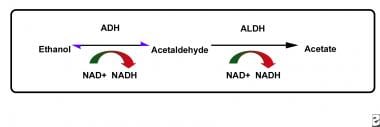
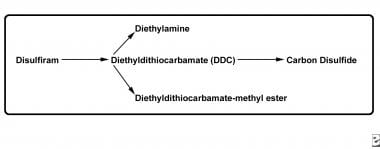
You are in: eMedicine Specialties > Emergency Medicine > TOXICOLOGY Toxicity, DisulfiramArticle Last Updated: Jan 8, 2007AUTHOR AND EDITOR INFORMATIONAuthor: Samara Soghoian, MD, Staff Physician, Department of Emergency Medicine, State University of New York Downstate Medical Center Samara Soghoian is a member of the following medical societies: American College of Emergency Physicians and Society for Academic Emergency Medicine Coauthor(s): Sage W Wiener, MD, Assistant Professor, Department of Emergency Medicine, State University of New York Downstate, Director of Medical Toxicology, Department of Emergency Medicine, Kings County Hospital Center; José Eric Díaz-Alcalá, MD, DABMT, Consulting Staff, Department of Ambulatory Care, Division of Emergency Medicine-Medical Toxicology, Veterans Affairs Medical Center of San Juan, Puerto Rico Editors: David C Lee, MD, Research Director, Department of Emergency Medicine, Assistant Professor, North Shore University Hospital and New York University Medical School; John T VanDeVoort, PharmD, ABAT, Director of Pharmacy, Sacred Heart Hospital; John G Benitez, MD, MPH, FACMT, FACPM, FAAEM, Associate Professor, Departments of Emergency Medicine (Toxicology), Environmental Medicine, Community & Preventive Medicine and Pediatrics, University of Rochester School of Medicine; Director, Finger Lakes Regional Resource Center; Managing and Associate Medical Director, Ruth A Lawrence Poison and Drug Information Center, University of Rochester Medical Center; John D Halamka, MD, MS, Associate Professor of Medicine, Harvard Medical School, Beth Israel Deaconess Medical Center; Chief Information Officer, CareGroup Healthcare System and Harvard Medical School; Attending Physician, Division of Emergency Medicine, Beth Israel Deaconess Medical Center; Asim Tarabar, MD, Assistant Professor, Department of Surgery, Section of Emergency Medicine, Yale University School of Medicine; Consulting Staff, Department of Emergency Medicine, Yale-New Haven Hospital Author and Editor Disclosure Synonyms and related keywords: disulfiram toxicity, Antabuse, acetaldehyde syndrome, disulfiram-ethanol reaction, DER, tetraethylthiuram disulfide, TETD, management of alcoholism, deterrent to ethanol abuse INTRODUCTIONBackgroundDisulfiram (tetraethylthiuram disulfide [TETD]) has been used for more than 50 years as a deterrent to ethanol abuse in the management of alcoholism. Approximately 200,000 alcoholics take disulfiram, or Antabuse, regularly in the United States. The first suggestion that disulfiram might be used in the treatment of alcoholism came in 1937 when an American physician noted that workers in the rubber industry who were exposed to TETD developed a reaction after drinking ethanol. A decade later, two Danish researchers at the Royal Danish School of Pharmacy in Copenhagen made the same discovery. Jens Hald and Eric Jacobsen were experimenting with disulfiram as a potential antihelminthic, and each took small doses to determine potential side effects in humans. Several days later, they attended a cocktail party and both became ill. They concluded that the facial flushing and tachycardia they experienced must be due to the disulfiram. Soon thereafter, physicians began prescribing disulfiram as a deterrent to ethanol abuse. The disulfiram-ethanol reaction (DER) is due to increased acetaldehyde levels generated by metabolism of ethanol by alcohol dehydrogenase in the liver. This acetaldehyde normally does not accumulate because it is cleared rapidly by metabolism via aldehyde dehydrogenase. Disulfiram blocks this enzyme, irreversibly inhibiting the oxidation of acetaldehyde and causing a manifold increase in acetaldehyde levels after ethanol consumption. The discomfort associated with this acetaldehyde syndrome is intended to serve as a negative stimulus, but the reaction may be severe enough to cause hypotension and death. In considering disulfiram toxicity, a distinction must be made between the clinical manifestations of the disulfiram-ethanol reaction and the toxic effects of disulfiram itself. Direct disulfiram toxicity may be further divided into acute poisoning versus chronic poisoning. The directly toxic effects of disulfiram include neurologic, cutaneous, and hepatotoxic sequelae in addition to the disulfiram-ethanol reaction. Disulfiram received US Food and Drug Administration (FDA) approval for use in the treatment of alcoholism in 1951. At that time, it was commonly prescribed in very high doses, up to 3,000 mg a day in some cases. This resulted in a relatively high rate of extremely severe or fatal reactions. Today much lower doses are used, and the incidence of both adverse reactions and frank toxicity has waned. PathophysiologyEthanol is mainly metabolized in the liver to acetaldehyde by alcohol dehydrogenase (ADH). Acetaldehyde is then oxidized to acetate by aldehyde dehydrogenase (ALDH). Disulfiram irreversibly inhibits the oxidation of acetaldehyde by competing with the cofactor nicotinamide adenine dinucleotide (NAD) for binding sites on ALDH (see Image 1). Ultimately, disulfiram reduces the rate of oxidation of acetaldehyde, causing a 5- to 10-fold increase in the concentration of acetaldehyde. The increased acetaldehyde levels are thought to produce the unpleasant side effects associated with acetaldehyde syndrome. Alone, disulfiram is relatively nontoxic; however, it inhibits most of the hepatic microsomal enzymes (cytochrome P450), which leads to an interference with the metabolism of certain drugs (eg, Coumadin, some benzodiazepines, theophylline, phenytoin, caffeine, tricyclic antidepressants [TCAs]). Consequently, elevated serum levels ensue and corresponding toxicity may occur. Disulfiram is highly lipid soluble (accumulates in adipose tissue) and has 80% bioavailability after an oral dose. Approximately 5-20% is not metabolized and is excreted unchanged in the feces; the remainder is metabolized to toxic and nontoxic metabolites. The elimination of disulfiram and its metabolites is a very slow process. Approximately 20% of the drug remains in the body for 1-2 weeks postingestion. Most of these metabolites are then eliminated through the gastrointestinal (GI), genitourinary (GU), and respiratory tracts. Disulfiram metabolites cause clinically important effects in the body (see Image 2). Diethyldithiocarbamate (DDC), an active metabolite of disulfiram, chelates copper, thus impairing the activity of dopamine beta-hydroxylase, an enzyme that catalyzes the metabolism of dopamine to norepinephrine. DDC thus causes depletion of presynaptic norepinephrine and accumulation of dopamine. This dopamine agonism is thought to be the mechanism underlying both the hypotension and altered behavior associated with disulfiram toxicity. Although no studies have examined the effects of low doses of disulfiram on psychotic symptoms, there have been many reports of hypomania and psychosis among alcoholics taking high-dose disulfiram (up to 2,000 mg a day). It may be the case that disulfiram, like L-dopa and amphetamine, unmasks or exacerbates preexisting psychotic symptoms in susceptible individuals by increasing central dopamine levels in this manner. The ability of DDC to chelate copper may provide another mechanism for the neurotoxicity seen with both acute intoxication and chronic use of disulfiram. Lesions of the basal ganglia have been described in patients with extrapyramidal symptoms after therapy with disulfiram. It has been hypothesized that abnormal accumulation of metal in the CNS, leading to oxidative stress and neuronal cell death, is responsible for this. In addition, a recent study found that disulfiram and DDC increase the release of glutamate from striato-cortical synaptic vesicles, both in vitro and in rats. This may provide yet another mechanism for DDC-mediated neuronal damage. DDC also chelates nickel, interferes with the sulfhydryl groups in cytochrome P-450 enzymes, and inhibits ADH and ALDH enzymes. Furthermore, DDC affects glutathione reductase in erythrocytes and inhibits superoxide dismutase, thereby impairing the ability to eliminate free radicals. DDC-induced methemoglobinemia also can occur secondary to impairment (consumption) of glutathione-dependent methemoglobin reduction. Carbon disulfide (CS2), another disulfiram metabolite from DDC metabolism, interacts with pyridoxal 5-phosphate to inhibit the monoamine oxidase (MAO) enzyme. This may cause seizures because it leads to a decrease in active pyridoxine (ie, vitamin B-6). CS2 may deplete GABA levels in the brain because of an accumulation of amines caused by impaired metabolism. CS2 inhibits dopamine beta hydroxylase. In addition to its neurotoxic effects (neurobehavioral toxin), CS2 is hepatotoxic, inhibits cytochrome P-450, and is cardiotoxic. Mortality/MorbidityDisulfiram toxicity has a particular classification with significant overlap. The first classification is the classic disulfiram-ethanol reaction (DER), known as the acetaldehyde syndrome. Secondly, disulfiram has its own associated acute and chronic adverse drug reactions. Finally, disulfiramlike reactions are associated with many other substances that have an ethanol-like mechanism of toxicity with disulfiram.
CLINICALHistoryThe disulfiram-ethanol reaction (DER) is the classic manifestation of patients with disulfiram toxicity. This reaction occurs after the ingestion of even small amounts of ethanol with the concomitant use of disulfiram or disulfiramlike agents. Disulfiram toxicity may also occur in the absence of ethanol exposure. Directly toxic effects are seen with both chronic use and acute massive ingestion.
Physical
Causes
DIFFERENTIALSUrinary Obstruction
| ||||||||||||||||||||||||||||||||||||||||||||||||||||||||||||||||||||||||||||||||||||||||||||||||||||||||||||||||||||||||||||||||||||||||||||||||||||||||||||||||||||||||||||||
| Drug Name | Activated charcoal (Liqui-Char) |
|---|---|
| Description | Most useful if administered within 4 h of ingestion. Repeat doses may be used, especially with ingestion of sustained release agents. Limited outcome studies exist, especially when administration is more than 1 h postingestion. Administration of charcoal by itself (in aqueous solution), as opposed to coadministration with a cathartic, is becoming the current practice standard. This is because studies have not shown benefit from cathartics, and, while most drugs and toxins are absorbed within 30-90 min, laxatives take hours to work. Dangerous fluid and electrolyte shifts have occurred when cathartics are used in small children. When ingested dose is known, charcoal may be administered at 10 times ingested dose of agent, over 1 or 2 doses. |
| Adult Dose | 1 g/kg PO/NG (50-75 g usual dose); may administer 0.5 g/kg PO/NG as repeat dose if desired Cathartic not recommended |
| Pediatric Dose | Administer as in adults (12.5-25 g usual dose) Cathartic not recommended |
| Contraindications | Documented hypersensitivity; poisoning or overdose of mineral acids and alkalies; unprotected airway with absent gag reflex |
| Interactions | May inactivate ipecac syrup if used concomitantly; effectiveness of other medications decreases with coadministration; decreased levels occur with sherbet, milk, or ice cream |
| Pregnancy | C - Safety for use during pregnancy has not been established. |
| Precautions | Protect airway before administration in patients with absent gag reflex or a depressed level of consciousness; when considering repeat dosing, monitor for active bowel sounds to minimize risk of charcoal ileus |
Treat hypotensive patients with IV crystalloid (eg, 0.9 NS or LR). If pressors are indicated, norepinephrine (Levophed) is DOC (over dopamine) because of catecholamine depletion.
| Drug Name | Norepinephrine (Levophed) |
|---|---|
| Description | Used in protracted hypotension following adequate fluid-volume replacement. Stimulates beta1- and alpha-adrenergic receptors, which, in turn, increases cardiac muscle contractility, heart rate, and vasoconstriction. As a result, systemic blood pressure and coronary blood flow increases. After obtaining a response, adjust rate of flow to and maintain at a low normal blood pressure (eg, 80-100 mm Hg systolic), sufficient to perfuse vital organs. |
| Adult Dose | 4-8 mcg/min IV initial; titrate prn q5-10min |
| Pediatric Dose | 1-2 mcg/min IV or 0.1 mcg/kg/min IV initial; titrate prn |
| Contraindications | Documented hypersensitivity; peripheral or mesenteric vascular thrombosis because ischemia may be increased and area of the infarct extended |
| Interactions | Arrhythmogenic in aromatic and halogenated hydrocarbon exposures; atropine may enhance the pressor response by blocking reflex bradycardia caused by norepinephrine |
| Pregnancy | D - Unsafe in pregnancy |
| Precautions | Correct blood-volume depletion, if possible, before therapy; extravasation may cause severe tissue necrosis and, thus, should be administered into a large vein; caution in occlusive vascular disease |
Improves the flushing response in DER. Diphenhydramine (H1 blocker) and cimetidine or ranitidine (H2 blockers) may be beneficial. NSAIDs (eg, Toradol) may ameliorate flushing response by blocking the synthesis of prostaglandins.
| Drug Name | Diphenhydramine (Benadryl) |
|---|---|
| Description | H1-receptor blocker with antiparkisonism, antiemetic, and anticholinergic response. Used for symptomatic relief of symptoms caused by histamine released in response to allergens. |
| Adult Dose | 25-50 mg PO/IV/IM q6-8h |
| Pediatric Dose | 5 mg/kg/d PO/IV/IM in divided qid (0.5-1 mg/kg/dose) |
| Contraindications | Documented hypersensitivity; MAOIs |
| Interactions | Potentiates effect of CNS depressants; because of alcohol content, do not administer syrup dosage form to patient taking medications that can cause disulfiramlike reactions |
| Pregnancy | C - Safety for use during pregnancy has not been established. |
| Precautions | May exacerbate angle-closure glaucoma, hyperthyroidism, peptic ulcer, and urinary tract obstruction; adverse effects include sedation and paradoxical excitation (PED) |
| Drug Name | Cimetidine (Tagamet) |
|---|---|
| Description | H2 antagonist that, when combined with an H1 type, may be useful for treating itching and flushing in anaphylaxis, pruritus, urticaria, and contact dermatitis that do not respond to H1 antagonists alone. Use in addition to H1 antihistamines. |
| Adult Dose | 300 mg IV/IM q6h, continuous infusion 37.5 mg/h (900 mg/d), 400 mg PO bid, or 400-800 mg qhs |
| Pediatric Dose | 40-60 mg/kg/d IV/IM |
| Contraindications | Documented hypersensitivity |
| Interactions | Can increase blood levels of theophylline, warfarin, tricyclic antidepressants, triamterene, phenytoin, quinidine, propranolol, metronidazole, procainamide, and lidocaine |
| Pregnancy | B - Usually safe but benefits must outweigh the risks. |
| Precautions | Elderly persons may experience confusion; may cause impotence and gynecomastia in young males; may increase levels of many drugs; adjust dose or discontinue treatment if changes in renal function occur |
| Drug Name | Ranitidine (Zantac) |
|---|---|
| Description | H2 antagonist that, when combined with an H1 type, may be useful in treating allergic reactions that do not respond to H1 antagonists alone. |
| Adult Dose | 50 mg IV q6-8h, continuous infusion at 6.25 mg/h, 150 mg PO bid, or 300 mg qhs |
| Pediatric Dose | 5-10 mg/kg/d |
| Contraindications | Documented hypersensitivity |
| Interactions | May decrease effects of ketoconazole and itraconazole; may alter serum levels of ferrous sulfate, diazepam, nondepolarizing muscle relaxants, and oxaprozin |
| Pregnancy | B - Usually safe but benefits must outweigh the risks. |
| Precautions | Caution in renal or liver impairment; if changes in renal function occur during therapy, consider adjusting dose or discontinuing treatment |
NSAIDs may benefit by reducing the severity of the flushing response. Pyridoxine (vitamin B-6) may be useful in patients who demonstrate evidence of neurological toxicity or intractable seizures.
| Drug Name | Ketorolac (Toradol) |
|---|---|
| Description | Inhibits prostaglandin synthesis by decreasing the activity of cyclo-oxygenase, which results in decreased formation of prostaglandin precursors. |
| Adult Dose | Load 30-60 mg IV/IM, then 15-30 mg IV/IM q6-8h (60-120 mg/d) or 10-20 mg PO first dose, then 10 mg PO q4-6h, not to exceed 40 mg/d >65 y: Use lower doses within dosing range; do not exceed 2 wk duration of therapy |
| Pediatric Dose | Not established |
| Contraindications | Documented hypersensitivity; peptic ulcer disease; recent GI bleeding or perforation; renal insufficiency; high risk of bleeding; do not administer into CNS |
| Interactions | Coadministration with aspirin increases risk of inducing serious NSAID-related adverse effects; probenecid may increase concentrations and, possibly, toxicity of NSAIDs; may decrease effect of hydralazine, captopril, and beta-blockers; may decrease diuretic effects of furosemide and thiazides; monitor PT closely (instruct patients to watch for signs of bleeding); may increase risk of methotrexate toxicity; phenytoin levels may be increased when administered concurrently |
| Pregnancy | D - Unsafe in pregnancy |
| Precautions | Category D in third trimester of pregnancy; acute renal insufficiency, hyperkalemia, hyponatremia, interstitial nephritis, and renal papillary necrosis may occur; increases risk of acute renal failure in patients with preexisting renal disease or compromised renal perfusion; low WBC counts (rare), usually return to normal during ongoing therapy; discontinue therapy if persistent leukopenia, granulocytopenia, or thrombocytopenia occur |
| Drug Name | Pyridoxine (Nestrex) |
|---|---|
| Description | Used in the treatment of pyridoxine-dependent seizures. Involved in synthesis of GABA within CNS. |
| Adult Dose | 1 g IV initial; repeat prn |
| Pediatric Dose | 500 mg IV initial; repeat prn |
| Contraindications | Documented hypersensitivity |
| Interactions | May decrease levodopa, phenytoin, and phenobarbital serum levels; may act synergistically with benzodiazepines |
| Pregnancy | C - Safety for use during pregnancy has not been established. |
| Precautions | >200 mg/d may precipitate withdrawal effects when medication discontinued |
These agents are useful in cases of vomiting to mitigate symptoms and to avoid volume depletion.
| Drug Name | Metoclopramide (Reglan) |
|---|---|
| Description | A promotility agent that increases gastric contractions, relaxes the pyloric sphincter and duodenal bulb, and increases peristalsis in the duodenum and jejunum. Exact mechanism is unknown, but metoclopramide may increase gastric emptying and decrease intestinal transit time by sensitizing tissues to the effects of acetylcholine. Has little or no effect on gastric, biliary, or pancreatic secretions, or on colon or gallbladder motility. |
| Adult Dose | 10 mg IV/IM q2-3h prn |
| Pediatric Dose | 0.4-0.8 mg/kg/d PO/IV/IM divided qid; not to exceed to 5 mg/dose |
| Contraindications | Documented hypersensitivity; GI hemorrhage, perforation, or obstruction; pheochromocytoma Relative contraindications include seizure disorder or presence of other drugs likely to cause extrapyramidal symptoms or NMS |
| Interactions | Sedative effects may be potentiated by CNS depressants such as ethanol and benzodiazepines; promotility effects of metoclopramide are antagonized by anticholinergic and opioid drugs; decreased gastric transit time may decrease absorption of drugs (eg, digoxin) or increase absorption of drugs from small intestine (eg, acetaminophen, tetracycline, ethanol, levodopa); caution in patients taking MAOIs because of increased catecholamine release caused by metoclopramide |
| Pregnancy | B - Usually safe but benefits must outweigh the risks. |
| Precautions | Associated with suicidal ideation in patients with history of depression; dystonic reactions may be observed; neuroleptic malignant syndrome reported; long-term use, particularly in elderly persons, may be associated with tardive dyskinesia; since metoclopramide may induce release of catecholamines and is associated with transient rise in plasma aldosterone may cause hypertension or volume overload in patients with history of hypertension, cirrhosis, or CHF; metoclopramide is largely excreted renally, and dose should be lowered in patients with renal impairment |
| Drug Name | Ondansetron (Zofran) |
|---|---|
| Description | Selective antagonist of serotonin 5HT3 receptors generally used to control chemotherapy-associated and postoperative nausea and vomiting. Precise mechanism of action is not known; however, ondansetron is thought to block either vagal stimulation of serotonin release in the central chemoreceptor trigger zone of the area postrema, or a vagally mediated vomiting reflex caused by release of serotonin from enterochromaffin cells of small intestine and stimulation of peripheral 5HT3 receptors, or both. |
| Adult Dose | 4 mg IV over 30 sec to 5 min |
| Pediatric Dose | 4-12 years: 100 mcg/kg IV over 30 sec to 5 min >40 kg: 4 mg IV |
| Contraindications | Patients with previous hypersensitivity reactions to ondansetron or other 5HT3 antagonists |
| Interactions | Ondansetron is metabolized by hepatic cytochrome P-450 enzymes (CYP3A4, CYP2D6, CYP1A2); clearance is significantly increased by potent inducers of CYP3A4 (carbamazepine, phenytoin, rifampicin), but no dosage adjustments have been recommended for patients on these medications |
| Pregnancy | B - Usually safe but benefits must outweigh the risks. |
| Precautions | Safety and clearance of ondansetron in patients with hepatic failure not studied, and its safety has not been studied n pregnancy or in children <3 y; increases large bowel transit time and should be used with caution in patients with possible subacute small bowel obstruction; most frequently reported adverse effects are headache, constipation, and flushing; rare cases of tachycardia, bradycardia, hypotension, syncope, seizure, angina, and ECG abnormalities reported |
| Drug Name | Granisetron (Kytril) |
|---|---|
| Description | An antinauseant and antiemetic available in PO and IV forms for use in severe postoperative and chemotherapy/radiation therapy-induced nausea. Granisetron is a selective antagonist of serotonin 5HT3 receptors. Precise mechanism of action not known; however, thought to block either vagal stimulation of serotonin release in central chemoreceptor trigger zone of area postrema, or a vagally mediated vomiting reflex caused by release of serotonin from enterochromaffin cells of small intestine and stimulation of peripheral 5HT3 receptors. |
| Adult Dose | 10 mcg/kg IV over 5 min |
| Pediatric Dose | Not established |
| Contraindications | Documented hypersensitivity |
| Interactions | CYP-450 3A substrate, inducers (eg, phenobarbital) may decrease effect, while inhibitors (eg, erythromycin, clarithromycin) may increase toxicity |
| Pregnancy | C - Safety for use during pregnancy has not been established. |
| Precautions | Caution in liver disease |
| Media file 1: The pathway of ethanol metabolism. Disulfiram reduces the rate of oxidation of acetaldehyde by competing with the cofactor nicotinamide adenine dinucleotide (NAD) for binding sites on aldehyde dehydrogenase (ALDH). | |
![]() | View Full Size Image | Media type: Graph |
| Media file 2: Disulfiram, prodrug for active metabolites. | |

![]() | View Full Size Image | Media type: Graph |
Article Last Updated: Jan 8, 2007