| Patient Education |
|
Click here for patient education.
|
|
You are in: eMedicine Specialties >
Dermatology > BACTERIAL INFECTIONS
Bacillary Angiomatosis
Article Last Updated: Mar 17, 2008
AUTHOR AND EDITOR INFORMATION
Section 1 of 11
Author: Robert A Schwartz, MD, MPH, Professor and Head of Dermatology, Professor of Medicine, Professor of Pediatrics, Professor of Pathology, Professor of Preventive Medicine and Community Health, UMDNJ-New Jersey Medical School
Robert A Schwartz is a member of the following medical societies: Alpha Omega Alpha, American Academy of Dermatology, American College of Physicians, and Sigma Xi
Coauthor(s):
W Clark Lambert, MD, PhD, Professor and Head, Dermatopathology, Departments of Pathology and Dermatology, UMDNJ-New Jersey Medical School
Editors: Ponciano D Cruz Jr, MD, Vice-Chair, JB Shelmire Professor, Department of Dermatology, University of Texas Southwestern Medical Center; Richard P Vinson, MD, Assistant Clinical Professor, Department of Dermatology, Texas Tech University School of Medicine; Consulting Staff, Mountain View Dermatology, PA; Jeffrey Meffert, MD, Assistant Clinical Professor of Dermatology, University of Texas Health Science Center-San Antonio; Catherine Quirk, MD, Clinical Assistant Professor, Department of Dermatology, Brown University; William D James, MD, Paul R Gross Professor of Dermatology, University of Pennsylvania School of Medicine; Vice-Chair, Program Director, Department of Dermatology, University of Pennsylvania Health System
Author and Editor Disclosure
Synonyms and related keywords:
BA, epithelioid angiomatosis, bartonellosis, Bartonella henselae, B henselae, bartonellosis, Bartonella quintana, B quintana, catscratch disease, cat scratch disease, cat scratch fever, catscratch fever, trench fever
Background
Bacillary angiomatosis (BA) is a systemic disease first described by Stoler and associates in 1983.1 They reported a 32-year-old patient with presumed acquired immunodeficiency syndrome (AIDS) who developed multiple subcutaneous nodules characterized histologically by a vascular proliferation. Bacillary forms were demonstrated, and the patient responded to erythromycin with an apparent cure. In 1987, Cockerell and associates2 called widespread attention to BA, describing 6 patients with AIDS and unusual cutaneous papules and nodules distinct from Kaposi sarcoma. Being unaware of its infectious origin, they called it epithelioid angiomatosis. This name was selected because the deeper dermis has alterations similar to those of epithelioid hemangiomas, with endothelial cells adherent to one another in an epithelioid pattern. Its bacterial origin was later confirmed, and the name bacillary angiomatosis was proposed by LeBoit et al3, 4, originally as a transitional term pending proper identification of the causative agent(s). Its systemic nature became evident when postmortem examinations showed nodules in the larynx, gastrointestinal tract, peritoneum, and diaphragm. Others observed additional patients with BA and postulated a likely bacterial origin. The organism was found to have some features in common with the etiologic agent of cat scratch disease and some in common with that of bartonellosis. Originally proposed as a new species, Rochalimaea henselae and Rochalimaea quintana, the 2 agents of BA have been reclassified as Bartonella species rather than Rochalimaea species. BA often responds to therapy with oral erythromycin, although other oral antibiotics and antituberculosis medications, including tetracycline, trimethoprim-sulfamethoxazole, and rifampin, may also be effective. While BA is treatable and curable, it may be life threatening if untreated.
The eMedicine article Bacillary Angiomatosis (infectious diseases focus) may be helpful. Additionally, visit the Medscape HIV Pathogenesis Resource Center and the HIV Transmission and Prevention Resource Center.
Pathophysiology
The etiologic agents of BA are 2 Bartonella species, Bartonella henselae and Bartonella quintana. BA can occur in immunocompetent persons, although it has been linked most commonly with AIDS. DNA hybridization, 16S rRNA sequence homology, cellular fatty acid profiles, and cytosine and guanine content studies have shown these Bartonella species are closely related to Bartonella bacilliformis. Epidemiologic evidence has suggested that B henselae–induced BA is also associated with exposure to cats. Speculation about nonhuman reservoirs and vectors of transmission is reasonable because both trench fever and bartonellosis are arthropod borne.
BA has been suggested to be caused with equal frequency by B henselae and B quintana. Infection with these tiny gram-negative bacilli that are difficult to culture results from exposure to flea-infested cats in B henselae infection and the human body louse in B quintana infection. B quintana can also cause bacteremia, urban trench fever, and endocarditis in immunocompetent persons. It is associated with lytic bone lesions. Peliosis hepatis and lymph node involvement are linked with B henselae.
Age
A wide age range exists, with infants to elderly people affected. The age range was 26-52 years in one early series of patients with AIDS.
History
- These patients usually report scattered cutaneous papules and nodules, some rather large in size, or a subcutaneous nodule resembling a common bacterial abscess.
- Although BA is not limited to patients with immunodeficiency or AIDS, consider the immune status of patients with BA.
- Patients with HIV disease are at increased risk of developing BA when their CD4 T-cell count is below 200/µL.
Physical
- BA has 4 cutaneous patterns, as follows:
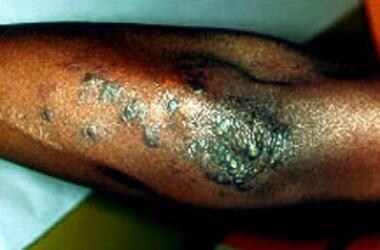
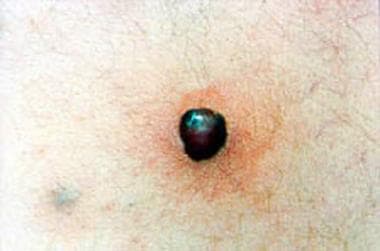
- Globular angiomatous papules or nodules resembling pyogenic granuloma
- Violaceous nodules resembling Kaposi sarcoma
- A somewhat lichenoid violaceous plaque
- A subcutaneous nodule with or without ulceration
- Nodules may be up to 10 cm in diameter, varying in number from one to hundreds. Hundreds of pinhead-sized cutaneous papules may be present.
- Because extensive visceral BA may occur with only cutaneous BA evident, regard skin BA as a marker of possible internal involvement.
- Physical findings relating to systemic involvement by BA may also be evident. Peliosis hepatis is a disease caused by Bartonella infection, which can manifest as nausea, vomiting, diarrhea, and fever with hepatosplenomegaly. Also, bone pain from a destructive bone mass may occur.
- Weight loss and lymphadenopathy may be present.
- BA may be evident as neurologic dysfunction in patients with AIDS or as a persistent bacteremia, peliosis hepatis, or massive visceral lymphadenopathy.
- Chronic recurrent ulcerations of the toes and polyneuropathy have also been described.5
Causes
Epidemiologic evidence has suggested that BA is associated with exposure to cats. Speculation about nonhuman reservoirs and vectors of transmission for B henselae is reasonable because both trench fever and bartonellosis are arthropod borne. BA has been suggested to be caused with equal frequency by B henselae and B quintana. Infection with these tiny gram-negative bacilli that are difficult to culture results from exposure to flea-infested cats in B henselae infection and the human body louse in B quintana infection. B henselae is a small, curved, gram-negative rod grown best in 5% carbon dioxide with high humidity on freshly poured agar containing 5% defibrinated rabbit blood. DNA sequencing shows it to be a rickettsialike organism closely related to B quintana. A specific antibody response to B henselae represents an alternative to diagnosis by culture. However, both the sensitivity and specificity of the B quintana assay have been questioned. Culture is the most convincing means of diagnosing BA, but it takes 20-40 days. Other identification options are also available. A rapid, sensitive, and simple method for diagnosis of these 2 Bartonella species is by the use of a polymerase chain reaction (PCR)–enzyme immunoassay. These 2 species may also be identified directly in clinical specimens by PCR-restriction fragment length polymorphism analysis of a 16S rRNA gene fragment.
Acneiform Eruptions
Glomus Tumor
Kaposi Sarcoma
Other Problems to be Considered
Angiokeratoma
Bacterial abscess
Cavernous hemangioma
Nodal myofibromatosis
Pyogenic granuloma
Verruga peruana
Imaging Studies
- Chest radiography may reveal pulmonary parenchymal nodules, which may have either well-defined or poorly defined borders, with no region of the lung consistently favored.
- Striking contrast enhancement of pulmonary nodules with computed tomography scanning or angiography is often evident.
- Radiography is recommended for detecting the typical lytic bone lesions, which usually manifest as focal bone pain. These lesions are sometimes only localized to the area where a subcutaneous lesion is present and can be asymptomatic.
Histologic Findings
The overlying epidermis may demonstrate atrophy, ulceration, or, at times, pseudoepitheliomatous hyperplasia.6 An epithelial collarette may be observed, particularly in those BA nodules that clinically resemble pyogenic granuloma. The dermis shows a vascular proliferation with small vessels arranged in clusters around ectatic vessels that may be markedly dilated. A lobular pattern may be observed, with varying amounts of edema and mucinous or fibrotic change between the lobules. Protuberant cuboidal endothelial cells line the blood vessel lobules. This lobulation is accentuated with a reticulum stain. Little or no atypia is usually observed, although marked atypia of endothelial nuclei has been described with solid-appearing areas of endothelial cells having many mitotic figures and necrosis. Some BA lesions have 2 distinct regions of vascular proliferation, a superficial one resembling a pyogenic granuloma or a papular angiokeratoma and a deeper one similar to a histiocytoid hemangioma with a proliferation of small blood vessels lined by protuberant endothelial cells closely adherent to one another in an epithelioid pattern. The presence of neutrophils adjacent to the blood vessels is noteworthy and may be an important clue to this diagnosis. Granular material resembling fibrin may be beside the neutrophils. This is the bacterium, observed best with either Warthin-Starry silver or Grocott-silver methenamine stain. A similar histologic pattern may be evident in affected oral mucosa, lymph nodes, liver, spleen, bone marrow, larynx, gastrointestinal tract, peritoneum, diaphragm, and bronchial mucosa. Some lesions have only a few solitary neutrophils and moderate numbers of bacteria, whereas others have clusters of neutrophils and numerous nearby bacteria, in some cases to the extent of mimicking a frank abscess. Some BA nodules may histologically resemble those of histiocytoid (epithelioid) hemangioma, Kaposi sarcoma, and verruga peruana (bartonellosis). A proliferation of both endothelial cells and factor XIIIa–positive dermal dendrocytes is observed in BA, verruga peruana, granuloma pyogenicum, and Kaposi sarcoma. B henselae and B quintana, the etiologic agents of BA, may stain positively with a specific antiserum against the cat scratch bacillus; however, BA is a vascular proliferation, not a formation of stellate abscesses without granuloma formation as is cat scratch disease. In addition, patients with cat scratch disease do not respond to antibiotics, as do patients with BA. The organisms causing BA resemble the agent of verruga peruana and Oroya fever (bartonellosis), Bartonella bacilliformis, in producing a histologically similar vascular proliferation, in having a gram-negative wall structure observed by electron microscopy, and in tending to grow in clumps visible by light microscopy. Bartonellosis is transmitted by an insect vector (a Peruvian sandfly) present only in a mountainous region of Peru near the city of Oroya and is first evident within erythrocytes, producing its febrile manifestation (Oroya fever). Cervical lymph node tissue also can reveal organisms identified as Bartonella with PCR techniques.6
Medical Care
- BA often responds dramatically to oral erythromycin, an effect largely unexplained by this compound's bacteriostatic properties. An antiangiogenic effect of erythromycin has been postulated and tested with in vitro models of B quintana infection.7 Erythromycin seems to profoundly down-modulate endothelial cell proliferation, irrespective of its bacteriostatic effects, which may be a key component of its efficacy in the treatment of patients with BA.
- Other oral antibiotics and antituberculosis drugs, including tetracycline, trimethoprim-sulfamethoxazole, and rifampin, may also be effective.
- BA may be life threatening without therapy.
Oral erythromycin, 2 g qd, in divided doses, is the authors' first choice, with administration often resulting in the skin lesions gradually fading in the next 4 wk; however, if they persist, even in diminished form, medication is changed to tetracycline, 2 g qd, or then to trimethoprim and sulfamethoxazole. If the infection appears serious, adding a bactericidal medication, such as a third-generation cephalosporin or an aminoglycoside, may be prudent during initial 3 wk of therapy. One patient responded favorably to azithromycin plus ciprofloxacin started together with antiretroviral therapy.8
Drug Category: Antibiotics
Empiric antimicrobial therapy must be comprehensive and should cover all likely pathogens in the context of the clinical setting.
| Drug Name | Erythromycin (E.E.S., Eryc, Ery-Tab, Erythrocin) |
| Description | Macrolide antibiotic isolated from a Streptomyces strain. Spectrum is between penicillin and tetracyclines. Highly bacteriostatic. The mechanism of action involves binding to the 50S ribosomal subunit and inhibiting microbial protein synthesis. |
| Adult Dose | 500 mg PO q6h |
| Pediatric Dose | Not established |
| Contraindications | Documented hypersensitivity; hepatic impairment |
| Interactions | Coadministration may increase toxicity of theophylline, digoxin, carbamazepine, and cyclosporine; may potentiate anticoagulant effects of warfarin; coadministration with lovastatin and simvastatin increases risk of rhabdomyolysis |
| Pregnancy | B - Fetal risk not confirmed in studies in humans but has been shown in some studies in animals
|
| Precautions | Caution in liver disease; estolate formulation may cause cholestatic jaundice; GI adverse effects are common (administer doses pc); discontinue use if nausea, vomiting, malaise, abdominal colic, or fever occur; use enteric-coated preparations or erythromycin stearate to avoid gastric juice destruction |
| Drug Name | Azithromycin (Zithromax) |
| Description | Spectrum is between penicillin and tetracyclines. Highly bacteriostatic. Mechanism of action involves binding to the 50S ribosomal subunit and inhibiting microbial protein synthesis. |
| Adult Dose | 500 mg PO on day 1 and 250 mg PO qd for 4 d |
| Pediatric Dose | Not established |
| Contraindications | Documented hypersensitivity; hepatic impairment; coadministration with pimozide |
| Interactions | May increase toxicity of theophylline, warfarin, and digoxin; effects are reduced with coadministration of aluminum and/or magnesium antacids; nephrotoxicity and neurotoxicity may occur when coadministered with cyclosporine |
| Pregnancy | B - Fetal risk not confirmed in studies in humans but has been shown in some studies in animals
|
| Precautions | Site reactions can occur with IV route; bacterial or fungal overgrowth may result with prolonged antibiotic use; may increase hepatic enzymes and cholestatic jaundice; caution in patients with impaired hepatic function, prolonged QT intervals, or pneumonia; caution in hospitalized, geriatric, or debilitated patients; fewer gastrointestinal side effects than erythromycin; more expensive |
| Drug Name | Clarithromycin (Biaxin) |
| Description | A 6-methoxy erythromycin. Inhibits bacterial growth, possibly by blocking dissociation of peptidyl tRNA from ribosomes causing RNA-dependent protein synthesis to arrest. Highly bacteriostatic. Spectrum is between penicillin and tetracyclines. |
| Adult Dose | 250-500 mg PO bid |
| Pediatric Dose | Not established |
| Contraindications | Documented hypersensitivity; coadministration with pimozide |
| Interactions | Toxicity increases with coadministration of fluconazole and pimozide; clarithromycin effects decrease and GI adverse effects may increase with coadministration of rifabutin or rifampin; may increase toxicity of anticoagulants, cyclosporine, tacrolimus, digoxin, omeprazole, carbamazepine, ergot alkaloids, triazolam, and HMG CoA-reductase inhibitors; plasma levels of certain benzodiazepines may increase, prolonging CNS depression; arrhythmias and increase in QTc intervals occur with disopyramide; coadministration with omeprazole may increase plasma levels of both agents |
| Pregnancy | C - Fetal risk revealed in studies in animals but not established or not studied in humans; may use if benefits outweigh risk to fetus
|
| Precautions | Coadministration with ranitidine or bismuth citrate is not recommended with CrCl <25 mL/min; administer half dose or increase dosing interval if CrCl <30 mL/min; diarrhea may be sign of pseudomembranous colitis; superinfections may occur with prolonged or repeated antibiotic therapies; fewer GI adverse effects than erythromycin; more expensive |
| Drug Name | Doxycycline (Bio-Tab, Doryx, Vibramycin) |
| Description | Inhibits protein synthesis and thus bacterial growth by binding to 30S and possibly 50S ribosomal subunits of susceptible bacteria. Important form of tetracycline effective in bid dosing. |
| Adult Dose | 100 mg PO bid |
| Pediatric Dose | <8 years: Not recommended >8 years: Not established |
| Contraindications | Documented hypersensitivity; severe hepatic dysfunction |
| Interactions | Bioavailability decreases with antacids containing aluminum, calcium, magnesium, iron, or bismuth subsalicylate; tetracyclines can increase hypoprothrombinemic effects of anticoagulants |
| Pregnancy | D - Fetal risk shown in humans; use only if benefits outweigh risk to fetus
|
| Precautions | Photosensitivity may occur with prolonged exposure to sunlight or tanning equipment; reduce dose in renal impairment; consider drug serum level determinations in prolonged therapy; tetracycline use during tooth development (last one half of pregnancy through age 8 y) can cause permanent discoloration of teeth; Fanconilike syndrome may occur with outdated tetracyclines |
| Drug Name | Trimethoprim and sulfamethoxazole (Bactrim, Bactrim DS, Septra) |
| Description | Synthetic antibacterial combination product. Inhibits bacterial growth by inhibiting synthesis of dihydrofolic acid. Sterile solution for IV infusion only in BA. |
| Adult Dose | 160 mg TMP/800 mg SMZ IV over 1 h once |
| Pediatric Dose | Not established |
| Contraindications | Documented hypersensitivity; megaloblastic anemia due to folate deficiency |
| Interactions | May increase PT when used with warfarin (perform coagulation tests and adjust dose accordingly); coadministration with dapsone may increase blood levels of both drugs; coadministration of diuretics increases incidence of thrombocytopenia purpura in elderly patients; phenytoin levels may increase with coadministration; may potentiate effects of methotrexate in bone marrow depression; hypoglycemic response to sulfonylureas may increase with coadministration; may increase levels of zidovudine |
| Pregnancy | C - Fetal risk revealed in studies in animals but not established or not studied in humans; may use if benefits outweigh risk to fetus
|
| Precautions | Caution in pregnancy and breastfeeding women; discontinue at first appearance of skin rash or sign of adverse reaction; obtain CBC counts frequently; discontinue therapy if significant hematologic changes occur; goiter, diuresis, and hypoglycemia may occur with sulfonamides; prolonged IV infusions or high doses may cause bone marrow depression (if signs occur, administer 5-15 mg/d leucovorin); caution in folate deficiency (eg, people with long-term alcoholism, elderly people, those receiving anticonvulsant therapy, those with malabsorption syndrome); hemolysis may occur in G-6-PD deficient individuals; patients with AIDS may not tolerate or respond to TMP-SMZ; caution in renal or hepatic impairment (perform urinalyses and renal function tests during therapy); administer fluids to prevent crystalluria and stone formation |
| Drug Name | Rifampin (Rifadin, Rimactane) |
| Description | Effective in treatment against tuberculosis organisms and meningococcal organisms. |
| Adult Dose | 300-600 mg IV over 30 min; not to exceed 600 mg/d 10 mg/kg PO; not to exceed 600 mg/d |
| Pediatric Dose | 10-20 mg/kg PO/IV; not to exceed 60 mg/d |
| Contraindications | Documented hypersensitivity; severe adverse reactions to isoniazid (eg, drug fever, chills, arthritis, acute liver disease of any etiology) |
| Interactions | Induces microsomal enzymes, which may decrease effects of acetaminophen, PO anticoagulants, barbiturates, benzodiazepines, beta-blockers, chloramphenicol, PO contraceptives, corticosteroids, mexiletine, cyclosporine, digitoxin, disopyramide, estrogens, hydantoins, methadone, clofibrate, quinidine, dapsone, tazobactam, sulfonylureas, theophyllines, tocainide, and digoxin; blood pressure may increase with coadministration of enalapril; coadministration with isoniazid may result in higher rate of hepatotoxicity than with either agent alone (discontinue one or both agents if alterations in LFTs occur) |
| Pregnancy | C - Fetal risk revealed in studies in animals but not established or not studied in humans; may use if benefits outweigh risk to fetus
|
| Precautions | Obtain CBC counts and baseline clinical chemistries prior to and throughout therapy; in liver disease, weigh benefits against risk of further liver damage; interruption of therapy and high-dose intermittent therapy are associated with thrombocytopenia that is reversible if therapy is discontinued as soon as purpura occurs; if treatment is continued or resumed after appearance of purpura, cerebral hemorrhage or death may occur; urine, feces, saliva, sputum, sweat, and tears may be colored red-orange by rifampin; PO contraceptives may be affected; soft contact lens may be permanently stained |
| Drug Name | Tetracycline (Sumycin) |
| Description | Inhibits bacterial protein synthesis by binding with 30S and possibly 50S ribosomal subunit(s). Has anti-inflammatory activity. Primarily bacteriostatic. Active against a wide range of gram-positive and gram-negative organisms. |
| Adult Dose | 1-2 g/d PO divided bid/qid |
| Pediatric Dose | <8 years: Not recommended >8 years: 10-20 mg/lb (25-50 mg/kg) PO divided bid/qid |
| Contraindications | Documented hypersensitivity; severe hepatic dysfunction |
| Interactions | Bioavailability decreases with antacids containing aluminum, calcium, magnesium, iron, or bismuth subsalicylate; tetracyclines can increase hypoprothrombinemic effects of anticoagulants |
| Pregnancy | D - Fetal risk shown in humans; use only if benefits outweigh risk to fetus
|
| Precautions | Photosensitivity may occur with prolonged exposure to sunlight or tanning equipment; reduce dose in renal impairment; consider drug serum level determinations in prolonged therapy; tetracycline use during tooth development (last one-half of pregnancy through age 8 y) can cause permanent discoloration of teeth; Fanconilike syndrome may occur with outdated tetracyclines |
Further Inpatient Care
Because BA is a potentially fatal systemic disease, patients must be carefully monitored to be sure that the cutaneous and visceral lesions have resolved after appropriate antibiotic therapy.
Deterrence/Prevention
B henselae has been shown to adhere to and invade mature human erythrocytes.9 Thus, erythrocytes may serve as the primary target in Bartonella infections. Studies are warranted to prevent possible Bartonella transfusional transmission.
Complications
BA may cause disease of many different organs, including the heart, brain, liver, and spleen, if not treated promptly.
Prognosis
With proper treatment, the prognosis is excellent. However, a delay can result in spread of disease. Deaths have been reported.
Medical/Legal Pitfalls
Because BA is usually a curable systemic disorder that can be fatal untreated, care must be taken to facilitate the diagnosis and management. Be particularly cautious in patients with Kaposi sarcoma and AIDS because they are at increased risk for the development of BA.
| Media file 1:
Many blood vessels of varying dimensions lined by swollen endothelial cells that contain bacilli. An infiltrate of acute and chronic inflammatory cells as well as fibrin deposition is noted in places (hematoxylin and eosin, X80). |
 | View Full Size Image | |
Media type: Photo
|
| Media file 2:
A 40-year-old HIV-positive homosexual man with lichenoid cutaneous plaques on his upper extremities. |
 | View Full Size Image | |
Media type: Photo
|
| Media file 3:
A 35-year-old Mexican retrovirus-negative immigrant with recent splenectomy for idiopathic thrombocytopenic purpura and multiple violaceous nodules on his trunk. |
 | View Full Size Image | |
Media type: Photo
|
| Media file 4:
Lesion showing large masses of blood vessels of markedly varying dimensions lined by swollen endothelial cells. The tissue is friable with evident fragmentation during processing (hematoxylin and eosin, X23). |

 | View Full Size Image | |
Media type: Photo
|
- Stoler MH, Bonfiglio TA, Steigbigel RT, Pereira M. An atypical subcutaneous infection associated with acquired immune deficiency syndrome. Am J Clin Pathol. Nov 1983;80(5):714-8. [Medline].
- Cockerell CJ, Whitlow MA, Webster GF, Friedman-Kien AE. Epithelioid angiomatosis: a distinct vascular disorder in patients with the acquired immunodeficiency syndrome or AIDS-related complex. Lancet. Sep 19 1987;2(8560):654-6. [Medline].
- LeBoit PE, Berger TG, Egbert BM, Beckstead JH, Yen TS, Stoler MH. Bacillary angiomatosis. The histopathology and differential diagnosis of a pseudoneoplastic infection in patients with human immunodeficiency virus disease. Am J Surg Pathol. Nov 1989;13(11):909-20. [Medline].
- LeBoit PE. The expanding spectrum of a new disease, bacillary angiomatosis. Arch Dermatol. Jun 1990;126(6):808-11. [Medline].
- Stockmeyer B, Schoerner C, Frangou P, Moriabadi T, Heuss D, Harrer T. Chronic vasculitis and polyneuropathy due to infection with Bartonella henselae. Infection. Apr 2007;35(2):107-9. [Medline].
- Amsbaugh S, Huiras E, Wang NS, Wever A, Warren S. Bacillary angiomatosis associated with pseudoepitheliomatous hyperplasia. Am J Dermatopathol. Feb 2006;28(1):32-5. [Medline].
- Meghari S, Rolain JM, Grau GE, Platt E, Barrassi L, Mege JL, et al. Antiangiogenic effect of erythromycin: an in vitro model of Bartonella quintana infection. J Infect Dis. Feb 1 2006;193(3):380-6. [Medline].
- Vasquez T P, Chanqueo C L, Garcia C P, Poggi M H, Ferres G M, Bustos M M, et al. [Bacillary angiomatosis caused by Bartonella quintana in an human immunodeficiency virus positive patient.]. Rev Chilena Infectol. Apr 2007;24(2):155-9. [Medline].
- Pitassi LH, Magalhães RF, Barjas-Castro ML, de Paula EV, Ferreira MR, Velho PE. Bartonella henselae infects human erythrocytes. Ultrastruct Pathol. Nov-Dec 2007;31(6):369-72. [Medline].
- Adal KA, Cockerell CJ, Petri WA Jr. Cat scratch disease, bacillary angiomatosis, and other infections due to Rochalimaea. N Engl J Med. May 26 1994;330(21):1509-15. [Medline].
- Ahsan N, Holman MJ, Riley TR, Abendroth CS, Langhoff EG, Yang HC. Peloisis hepatis due to Bartonella henselae in transplantation: a hemato-hepato-renal syndrome. Transplantation. Apr 15 1998;65(7):1000-3. [Medline].
- Angritt P, Tuur SM, Macher AM, Smith KJ, Park CS, Hobin FP, et al. Case for diagnosis. Cat-scratch disease. Mil Med. May 1988;153(5):M25-32. [Medline].
- Angritt P, Tuur SM, Macher AM, Smith KJ, Park CS, Hobin FP, et al. Epithelioid angiomatosis in HIV infection: neoplasm or cat-scratch disease?. Lancet. Apr 30 1988;1(8592):996. [Medline].
- Anonymous. Epithelioid angiomatosis: a variant of Kaposi's sarcoma. Lancet. Nov 21 1987;2(8569):1214-5. [Medline].
- Arias-Stella J, Lieberman PH, Erlandson RA, Arias-Stella J Jr. Histology, immunohistochemistry, and ultrastructure of the verruga in Carrion's disease. Am J Surg Pathol. Sep 1986;10(9):595-610. [Medline].
- Arrese Estrada J, Pierard GE. Dendrocytes in verruga peruana and bacillary angiomatosis. Dermatology. 1992;184(1):22-5. [Medline].
- Baron AL, Steinbach LS, LeBoit PE, Mills CM, Gee JH, Berger TG. Osteolytic lesions and bacillary angiomatosis in HIV infection: radiologic differentiation from AIDS-related Kaposi sarcoma. Radiology. Oct 1990;177(1):77-81. [Medline].
- Berger TG, Tappero JW, Kaymen A, LeBoit PE. Bacillary (epithelioid) angiomatosis and concurrent Kaposi's sarcoma in acquired immunodeficiency syndrome. Arch Dermatol. Nov 1989;125(11):1543-7. [Medline].
- Birtles RJ, Harrison TG, Taylor AG. The causative agent of bacillary angiomatosis. N Engl J Med. Nov 14 1991;325(20):1447-8. [Medline].
- Brenner DJ, O'Connor SP, Winkler HH, Steigerwalt AG. Proposals to unify the genera Bartonella and Rochalimaea, with descriptions of Bartonella quintana comb. nov., Bartonella vinsonii comb. nov., Bartonella henselae comb. nov., and Bartonella elizabethae comb. nov., and to remove the family Bartonellaceae from the order Rickettsiales. Int J Syst Bacteriol. Oct 1993;43(4):777-86. [Medline].
- Cockerell CJ, Bergstresser PR, Myrie-Williams C, Tierno PM. Bacillary epithelioid angiomatosis occurring in an immunocompetent individual. Arch Dermatol. Jun 1990;126(6):787-90. [Medline].
- Cockerell CJ, LeBoit PE. Bacillary angiomatosis: a newly characterized, pseudoneoplastic, infectious, cutaneous vascular disorder. J Am Acad Dermatol. Mar 1990;22(3):501-12. [Medline].
- Cockerell CJ, Tierno PM, Friedman-Kien AE, Kim KS. Clinical, histologic, microbiologic, and biochemical characterization of the causative agent of bacillary (epithelioid) angiomatosis: a rickettsial illness with features of bartonellosis. J Invest Dermatol. Nov 1991;97(5):812-7. [Medline].
- Drancourt M, Mainardi JL, Brouqui P, Vandenesch F, Carta A, Lehnert F, et al. Bartonella (Rochalimaea) quintana endocarditis in three homeless men. N Engl J Med. Feb 16 1995;332(7):419-23. [Medline].
- Fernandez-Bussy RA, Alonso AB, Carlson D. Bacillary angiomatosis in an HIV-positive patient. Good response to Dapsone. J Eur Acad Dermatol Venereol. 1995;4:289-93.
- Guerra LG, Neira CJ, Boman D, Ho H, Casner PR, Zuckerman M, et al. Rapid response of AIDS-related bacillary angiomatosis to azithromycin. Clin Infect Dis. Aug 1993;17(2):264-6. [Medline].
- Hall AV, Roberts CM, Maurice PD, McLean KA, Shousha S. Cat-scratch disease in patient with AIDS: atypical skin manifestation. Lancet. Aug 20 1988;2(8608):453-4. [Medline].
- Harris PJ. Intracerebral bacillary angiomatosis in HIV. Ann Intern Med. Nov 1 1992;117(9):795. [Medline].
- Haught WH, Steinbach J, Zander DS, Wingo CS. Case report: bacillary angiomatosis with massive visceral lymphadenopathy. Am J Med Sci. Oct 1993;306(4):236-40. [Medline].
- Jimenez-Acosta F, Pardo RJ, Cohen RJ, Gould EW, Penneys NS. Bacillary angiomatosis of acquired immunodeficiency syndrome: case report and literature review. J Am Acad Dermatol. Mar 1990;22(3):525-9. [Medline].
- Jung AC, Paauw DS. Diagnosing HIV-related disease: using the CD4 count as a guide. J Gen Intern Med. Feb 1998;13(2):131-6. [Medline].
- Karakas M, Baba M, Aksungur VL, Homan S, Memisoglu HR, Uguz A. Bacillary angiomatosis on a region of burned skin in a immunocompetent patient. Br J Dermatol. Sep 2000;143(3):609-11. [Medline].
- Karem KL. Immune aspects of Bartonella. Crit Rev Microbiol. 2000;26(3):133-45. [Medline].
- Karem KL, Paddock CD, Regnery RL. Bartonella henselae, B. quintana, and B. bacilliformis: historical pathogens of emerging significance. Microbes Infect. Aug 2000;2(10):1193-205. [Medline].
- Kemper CA, Lombard CM, Deresinski SC, Tompkins LS. Visceral bacillary epithelioid angiomatosis: possible manifestations of disseminated cat scratch disease in the immunocompromised host: a report of two cases. Am J Med. Aug 1990;89(2):216-22. [Medline].
- Keynan Y, Yakirevitch E, Shusterman T, Alter-Migdal E, Avidor B, Weber G, et al. Bone marrow and skin granulomatosis in a patient with Bartonella infection. J Med Microbiol. Jan 2007;56(Pt 1):133-5. [Medline].
- Knobler EH, Silvers DN, Fine KC, Lefkowitch JH, Grossman ME. Unique vascular skin lesions associated with human immunodeficiency virus. JAMA. Jul 22-29 1988;260(4):524-7. [Medline].
- Koehler JE, Glaser CA, Tappero JW. Rochalimaea henselae infection. A new zoonosis with the domestic cat as reservoir. JAMA. Feb 16 1994;271(7):531-5. [Medline].
- Koehler JE, LeBoit PE, Egbert BM, Berger TG. Cutaneous vascular lesions and disseminated cat-scratch disease in patients with the acquired immunodeficiency syndrome (AIDS) and AIDS-related complex. Ann Intern Med. Sep 15 1988;109(6):449-55. [Medline].
- Koehler JE, Quinn FD, Berger TG, LeBoit PE, Tappero JW. Isolation of Rochalimaea species from cutaneous and osseous lesions of bacillary angiomatosis. N Engl J Med. Dec 3 1992;327(23):1625-31. [Medline].
- Koehler JE, Tappero JW. Bacillary angiomatosis and bacillary peliosis in patients infected with human immunodeficiency virus. Clin Infect Dis. Oct 1993;17(4):612-24. [Medline].
- Levell NJ, Bewley AP, Chopra S, Churchill D, French P, Miller R, et al. Bacillary angiomatosis with cutaneous and oral lesions in an HIV-infected patient from the U.K. Br J Dermatol. Jan 1995;132(1):113-5. [Medline].
- Lopez-Elzaurdia C, Fraga J, Sols M, Burgos E, Sanchez Garcia M, Garcia-Diez A. Bacillary angiomatosis associated with cytomegalovirus infection in a patient with AIDS. Br J Dermatol. Aug 1991;125(2):175-7. [Medline].
- Lucey D, Dolan MJ, Moss CW, Garcia M, Hollis DG, Wegner S, et al. Relapsing illness due to Rochalimaea henselae in immunocompetent hosts: implication for therapy and new epidemiological associations. Clin Infect Dis. Mar 1992;14(3):683-8. [Medline].
- Malane MS, Laude TA, Chen CK, Fikrig S. An HIV-1-positive child with fever and a scalp nodule. Lancet. Dec 2 1995;346(8988):1466. [Medline].
- Matar GM, Koehler JE, Malcolm G, Lambert-Fair MA, Tappero J, Hunter SB, et al. Identification of Bartonella species directly in clinical specimens by PCR-restriction fragment length polymorphism analysis of a 16S rRNA gene fragment. J Clin Microbiol. Dec 1999;37(12):4045-7. [Medline].
- Milam MW, Balerdi MJ, Toney JF, Foulis PR, Milam CP, Behnke RH. Epithelioid angiomatosis secondary to disseminated cat scratch disease involving the bone marrow and skin in a patient with acquired immune deficiency syndrome: a case report. Am J Med. Feb 1990;88(2):180-3. [Medline].
- Moore EH, Russell LA, Klein JS, White CS, McGuinness G, Davis LG, et al. Bacillary angiomatosis in patients with AIDS: multiorgan imaging findings. Radiology. Oct 1995;197(1):67-72. [Medline].
- Morgan J, Robinson MJ, Rosen LB, Unger H, Niven J. Malignant endovascular papillary angioendothelioma (Dabska tumor). A case report and review of the literature. Am J Dermatopathol. Feb 1989;11(1):64-8. [Medline].
- Ohl ME, Spach DH. Bartonella quintana and urban trench fever. Clin Infect Dis. Jul 2000;31(1):131-5. [Medline].
- Omulecki A. Bacillary (epithelioid) angiomatosis-nowa zakazna choroba zwiazana z AIDS. Przegl Dermatol. 1992;74:172-6.
- Perkocha LA, Geaghan SM, Yen TS, Nishimura SL, Chan SP, Garcia-Kennedy R, et al. Clinical and pathological features of bacillary peliosis hepatis in association with human immunodeficiency virus infection. N Engl J Med. Dec 6 1990;323(23):1581-6. [Medline].
- Petersen K, Earhart KC, Wallace MR. Bacillary Angiomatosis in a Patient with Chronic Lymphocytic Leukemia. Infection. Dec 28 2007;[Medline].
- Plettenberg A, Lorenzen T, Burtsche BT, Rasokat H, Kaliebe T, Albrecht H, et al. Bacillary angiomatosis in HIV-infected patients--an epidemiological and clinical study. Dermatology. 2000;201(4):326-31. [Medline].
- Raoult D, Drancourt M, Carta A, Gastaut JA. Bartonella (Rochalimaea) quintana isolation in patient with chronic adenopathy, lymphopenia, and a cat. Lancet. Apr 16 1994;343(8903):977. [Medline].
- Relman DA. Isolation of Rochalimaea species. N Engl J Med. May 13 1993;328(19):1422-3. [Medline].
- Relman DA, Loutit JS, Schmidt TM, Falkow S, Tompkins LS. The agent of bacillary angiomatosis. An approach to the identification of uncultured pathogens. N Engl J Med. Dec 6 1990;323(23):1573-80. [Medline].
- Rudikoff D, Phelps RG, Gordon RE, Battone EJ. Acquired immunodeficiency syndrome-related bacillary vascular proliferation (epithelioid angiomatosis): rapid response to erythromycin therapy. Arch Dermatol. May 1989;125(5):706-7. [Medline].
- Sanchez MR, del Rocio Flashner Z. Angiomatosis bacilar una nueva enfermedad infecciosa. Medico Interamericano. 1995;12:517-9.
- Sander A, Penno S. Semiquantitative species-specific detection of Bartonella henselae and Bartonella quintana by PCR-enzyme immunoassay. J Clin Microbiol. Oct 1999;37(10):3097-101. [Medline].
- Santos R, Cardoso O, Rodrigues P, Cardoso J, Machado J, Afonso A, et al. Bacillary angiomatosis by Bartonella quintana in an HIV-infected patient. J Am Acad Dermatol. Feb 2000;42(2 Pt 1):299-301. [Medline].
- Schwartz RA, Gallardo MA, Kapila R, Gascón P, Herscu J, Siegel I, et al. Bacillary angiomatosis in an HIV seronegative patient on systemic steroid therapy. Br J Dermatol. Dec 1996;135(6):982-7. [Medline].
- Schwartz RA, Janniger CK. Bacillary angiomatosis. J Am Acad Dermatol. 1991;24:802-3, 807-8.
- Schwartz RA, Nychay SG, Janniger CK, Lambert WC. Bacillary angiomatosis: presentation of six patients, some with unusual features. Br J Dermatol. Jan 1997;136(1):60-5. [Medline].
- Schwartzman WA. Infections due to Rochalimaea: the expanding clinical spectrum. Clin Infect Dis. Dec 1992;15(6):893-900. [Medline].
- Schwartzman WA, Marchevsky A, Meyer RD. Epithelioid angiomatosis or cat scratch disease with splenic and hepatic abnormalities in AIDS: case report and review of the literature. Scand J Infect Dis. 1990;22(2):121-33. [Medline].
- Slater LN, Coody DW, Woolridge LK, Welch DF. Murine antibody responses distinguish Rochalimaea henselae from Rochalimaea quintana. J Clin Microbiol. Jul 1992;30(7):1722-7. [Medline].
- Slater LN, Welch DF, Min KW. Rochalimaea henselae causes bacillary angiomatosis and peliosis hepatis. Arch Intern Med. Mar 1992;152(3):602-6. [Medline].
- Spach DH. Bacillary angiomatosis. Int J Dermatol. Jan 1992;31(1):19-24. [Medline].
- Spach DH, Kanter AS, Dougherty MJ, Larson AM, Coyle MB, Brenner DJ, et al. Bartonella (Rochalimaea) quintana bacteremia in inner-city patients with chronic alcoholism. N Engl J Med. Feb 16 1995;332(7):424-8. [Medline].
- Szaniawski WK, Don PC, Bitterman SR, Schachner JR. Epithelioid angiomatosis in patients with AIDS. Report of seven cases and review of the literature. J Am Acad Dermatol. Jul 1990;23(1):41-8. [Medline].
- Tappero JW, Mohle-Boetani J, Koehler JE, Swaminathan B, Berger TG, LeBoit PE, et al. The epidemiology of bacillary angiomatosis and bacillary peliosis. JAMA. Feb 10 1993;269(6):770-5. [Medline].
- Tompkins DC, Steigbigel RT. Rochalimaea's role in cat scratch disease and bacillary angiomatosis. Ann Intern Med. Mar 1 1993;118(5):388-90. [Medline].
- Torok L, Viragh SZ, Borka I, Tapai M. Bacillary angiomatosis in a patient with lymphocytic leukaemia. Br J Dermatol. May 1994;130(5):665-8. [Medline].
- Ueno H, Muramatsu Y, Chomel BB, Hohdatsu T, Koyama H, Morita C. Seroepidemiological survey of Bartonella (Rochalimaea) henselae in domestic cats in Japan. Microbiol Immunol. 1995;39(5):339-41. [Medline].
- Webster GF, Cockerell CJ, Friedman-Kien AE. The clinical spectrum of bacillary angiomatosis. Br J Dermatol. Jun 1992;126(6):535-41. [Medline].
- Welch DF, Pickett DA, Slater LN, Steigerwalt AG, Brenner DJ. Rochalimaea henselae sp. nov., a cause of septicemia, bacillary angiomatosis, and parenchymal bacillary peliosis. J Clin Microbiol. Feb 1992;30(2):275-80. [Medline].
- Woo SB, Treister N. Ciclosporin-induced fibrovascular polyps vs. bacillary angiomatosis. Br J Dermatol. Jan 17 2008;[Medline].
Bacillary Angiomatosis excerpt Article Last Updated: Mar 17, 2008
|