You are in: eMedicine Specialties > Dermatology > REACTIVE AND INFLAMMATORY DERMATOSES Pyoderma GangrenosumArticle Last Updated: Sep 12, 2006AUTHOR AND EDITOR INFORMATIONAuthor: J Mark Jackson, MD, Assistant Clinical Professor, Department of Internal Medicine, Division of Dermatology, University of Louisville J Mark Jackson is a member of the following medical societies: American Academy of Dermatology, American Medical Association, Kentucky Medical Association, and Texas Medical Association Coauthor(s): Jeffrey P Callen, MD, Professor of Medicine, Chief, Division of Dermatology, University of Louisville School of Medicine Editors: David P Fivenson, MD, Director, Wound Care Service, Department of Dermatology, Henry Ford Health System; Michael J Wells, MD, Associate Professor, Department of Dermatology, Texas Tech University Health Sciences Center; Warren R Heymann, MD, Head, Division of Dermatology, Professor, Department of Internal Medicine, University of Medicine and Dentistry of New Jersey; Joel M Gelfand, MD, MSCE, Medical Director, Clinical Studies Unit, Assistant Professor, Department of Dermatology, Associate Scholar, Center for Clinical Epidemiology and Biostatistics, University of Pennsylvania; Dirk M Elston, MD, Director, Department of Dermatology, Geisinger Medical Center Author and Editor Disclosure Synonyms and related keywords: PG, classic PG, classic pyoderma gangrenosum, atypical PG, atypical pyoderma gangrenosum, pyostomatitis vegetans, vulvar pyoderma gangrenosum, penile pyoderma gangrenosum, peristomal pyoderma gangrenosum INTRODUCTIONBackgroundPyoderma gangrenosum (PG) is an uncommon ulcerative cutaneous condition of uncertain etiology. PG was first described in 1930. It is associated with systemic diseases in at least 50% of patients who are affected. The diagnosis is made by excluding other causes of similar appearing cutaneous ulcerations, including infection, malignancy, vasculitis, collagen vascular diseases, diabetes, and trauma. Ulcerations of PG may occur after trauma or injury to the skin in 30% of patients; this process is termed pathergy. The 2 primary variants of PG are the classic ulcerative form, usually observed on the legs, and a more superficial variant known as atypical PG that tends to occur on the hands. Patients with PG may have involvement of other organ systems that manifests as sterile neutrophilic abscesses. Culture-negative pulmonary infiltrates are the most common extracutaneous manifestation. Other organs systems that may be involved include the heart, the central nervous system, the GI tract, the eyes, the liver, the spleen, bones, and lymph nodes. The prognosis of PG is generally good; however, recurrences may occur and residual scarring is common. Therapy of PG involves the use of anti-inflammatory agents, such as corticosteroids, and immunosuppressive agents. PathophysiologyThe pathophysiology of PG is poorly understood, but dysregulation of the immune system, specifically altered neutrophil chemotaxis, is believed to be involved. FrequencyUnited StatesPG occurs in about 1 person per 100,000 people each year. Mortality/MorbidityDeath from PG is rare, but it may occur due to an associated disease or as the result of therapy. Pain is a usual complaint of patients and may require narcotics. Pathergy, or the development of PG-like lesions at the site of skin trauma, may create problems with wound healing, especially after surgical procedures. RaceNo racial predilection is apparent. SexPG affects both sexes. A slight female predominance may exist. AgeAll ages may be affected, but PG predominantly occurs in the fourth and fifth decades of life. Children may be affected, but they account for only 3-4% of the total number of cases. PG may affect children and adolescents. Nothing is clinically distinctive about these patients other than their age. CLINICALHistory
Physical
CausesNo specific causes of PG have been identified, but trauma to the skin in patients with PG may induce new lesions. This is called pathergy. DIFFERENTIALSAcute Febrile Neutrophilic Dermatosis Aphthous Stomatitis Behcet Disease Chancroid Churg-Strauss Syndrome (Allergic Granulomatosis) Ecthyma Ecthyma Gangrenosum Herpes Simplex Hypersensitivity Vasculitis (Leukocytoclastic Vasculitis) Impetigo Insect Bites Sporotrichosis Squamous Cell Carcinoma Venous Insufficiency Verrucous Carcinoma Wegener Granulomatosis
| |||||||||||||||||||||||||||||||||||||||||||||||||||||||||||||||||||||||||||||||||||||||||||||||||||||||||||||||||||||||||||||||||||||||||||||||||||||||||||||||||||||||||||||||||||||||||||||||||||||||||||||||||||||||||||||||||||||
| Drug Name | Prednisone (Deltasone, Sterapred, Orasone) |
|---|---|
| Description | DOC; may decrease inflammation by reversing increased capillary permeability and suppressing PMN activity. Methylprednisolone IV may be used in some patients. |
| Adult Dose | 0.5-2 mg/kg/d PO; taper as condition improves; single morning dose is safer for long-term use, but divided doses have more anti-inflammatory effect |
| Pediatric Dose | 4-5 mg/m2/d PO; alternatively, 0.05-2 mg/kg PO divided bid/qid; taper over 2 wk as symptoms resolve |
| Contraindications | Documented hypersensitivity; viral, fungal, connective tissue, or tubercular skin infections; peptic ulcer disease; hepatic dysfunction; GI disease |
| Interactions | Coadministration with estrogens may decrease clearance; when used with digoxin, digitalis toxicity secondary to hypokalemia may increase; phenobarbital, phenytoin, and rifampin may increase metabolism of glucocorticoids (consider increasing maintenance dose); monitor for hypokalemia with coadministration of diuretics |
| Pregnancy | B - Usually safe but benefits must outweigh the risks. |
| Precautions | Closely monitor blood sugar levels in patients with diabetes; patients with potentially long course of therapy should have a PPD placed and read prior to therapy or within first 2 wk of therapy; routinely check blood pressure in patients with high blood pressure; caution in history of tuberculosis, osteoporosis, peptic ulcer disease, and psychological problems; aseptic necrosis may occur |
These agents have immunomodulatory effects.
| Drug Name | Cyclosporine (Sandimmune, Neoral) |
|---|---|
| Description | Demonstrated to be helpful in a variety of skin disorders. Most effective steroid-sparing agent. Also used as primary therapy in some patients. |
| Adult Dose | 3-5 mg/kg/d PO/IV, sometimes initial loading therapy at 10-12 mg/kg/d is useful for first 3-5 d |
| Pediatric Dose | Administer as in adults |
| Contraindications | Documented hypersensitivity; uncontrolled hypertension or malignancies; do not administer concomitantly with PUVA or UV-B radiation in psoriasis because it may increase risk of cancer |
| Interactions | Carbamazepine, phenytoin, isoniazid, rifampin, and phenobarbital may decrease concentrations; azithromycin, itraconazole, nicardipine, ketoconazole, fluconazole, erythromycin, verapamil, grapefruit juice, diltiazem, aminoglycosides, acyclovir, amphotericin B, and clarithromycin may increase toxicity; acute renal failure, rhabdomyolysis, myositis, and myalgias increase when taken concurrently with lovastatin; high-dose methylprednisolone may increase risk of seizures when used concomitantly; concomitant use of ACE inhibitors and cyclosporine may decrease renal function |
| Pregnancy | C - Safety for use during pregnancy has not been established. |
| Precautions | Main adverse effects include, anaphylaxis (with IV use), hypertension, hepatotoxicity, nephrotoxicity, malignancy (lymphoproliferative type), gingival hyperplasia, hypomagnesemia, hyperkalemia, and hypertrichosis; check blood pressure at least monthly; monitor renal function by measuring serum creatinine levels at least monthly; reserve IV use only for patients who cannot take PO; infectious disease, pancreatitis, and paresthesia may occur; associated with arteriopathy and Raynaud phenomenon; vasoconstriction leading to mesenteric ischemia may occur Optic disc edema, including papilledema, with possible visual impairment secondary to intracranial hypertension, has been reported in transplant patients (product information for Sandimmune oral soft gelatin cap, oral solution, injection for infusion, 2005) |
| Drug Name | Azathioprine (Imuran) |
|---|---|
| Description | Another drug that may be effective as a steroid-sparing agent. Antagonizes purine metabolism and inhibits synthesis of DNA, RNA, and proteins. May decrease proliferation of immune cells, which results in lower autoimmune activity. |
| Adult Dose | 1-2 mg/kg/d (50-200 mg) PO |
| Pediatric Dose | Administer as in adults |
| Contraindications | Documented hypersensitivity; low levels of serum TPMT; history of treatment with alkylating agents |
| Interactions | Toxicity increases with allopurinol; concurrent use with ACE inhibitors may induce severe leukopenia; may increase levels of methotrexate metabolites and decrease effects of anticoagulants, neuromuscular blockers, and cyclosporine; live virus vaccines may have a greater systemic effect; coadministration with other immunosuppressive agents may increase bone marrow suppression; increases in uric acid levels reported when administered concomitantly with tacrolimus |
| Pregnancy | D - Unsafe in pregnancy |
| Precautions | Reduce dose in patients with low TMPT levels; bone marrow suppression may occur; nausea and vomiting are commonly noted; may increase risk of lymphoproliferative disorders in patients treated with long-term therapy; cancer, hepatotoxicity, infectious disease, leukopenia, megaloblastic anemia, pancreatitis, and thrombocytopenia may occur |
| Drug Name | Mycophenolate (CellCept) |
|---|---|
| Description | Inhibits purine synthesis and proliferation of human lymphocytes. May be used as steroid-sparing agent or as primary agent in patients that do not respond to first-line agents. |
| Adult Dose | 1-2 g/d PO |
| Pediatric Dose | Not established |
| Contraindications | Documented hypersensitivity |
| Interactions | May elevate acyclovir and ganciclovir levels; antacids and cholestyramine decreases absorption, reducing levels (do not administer together); probenecid may increase levels; salicylates may increase toxicity |
| Pregnancy | C - Safety for use during pregnancy has not been established. |
| Precautions | Risk of lymphoma may increase in patients on long-term therapy; slightly higher rate of viral and bacterial infections is present while on therapy; GI disturbance and dose-related hematologic effects, including leukopenia, may occur; CellCept brand of oral susp contains aspartame, which is metabolized to phenylalanine (care should be taken if administered to patients with phenylketonuria) |
| Drug Name | Cyclophosphamide (Cytoxan) |
|---|---|
| Description | Alkylating agent that depresses B-cell and T-cell function. Chemically related to nitrogen mustards. As an alkylating agent, the mechanism of action of the active metabolites may involve cross-linking of DNA, which may interfere with growth of normal and neoplastic cells. |
| Adult Dose | 1-2 mg/kg/d PO |
| Pediatric Dose | Administer as in adults |
| Contraindications | Documented hypersensitivity; severely depressed bone marrow function; pregnancy |
| Interactions | Allopurinol may increase risk of bleeding or infection and enhance myelosuppressive effects; may potentiate doxorubicin-induced cardiotoxicity; may reduce digoxin serum levels and antimicrobial effects of quinolones; chloramphenicol may increase half-life of cyclophosphamide while decreasing metabolite concentrations; may increase effect of anticoagulants; coadministration with high doses of phenobarbital may increase rate of metabolism and leukopenic activity; thiazide diuretics may prolong cyclophosphamide-induced leukopenia and neuromuscular blockade by inhibiting cholinesterase activity |
| Pregnancy | D - Unsafe in pregnancy |
| Precautions | GI upset and oral stomatitis may occur in up to 70% of patients; hemorrhagic cystitis possible, particularly if drug is given without hydration; azoospermia or anovulation may occur after prolonged therapy; alopecia and hyperpigmentation of nails and skin may occur; perform routine CBC counts and urinalysis; cardiomyopathy, infectious disease, interstitial pneumonia, Stevens-Johnson syndrome, and toxic epidermal necrolysis may occur; possibility of increased toxicity in adrenalectomized patients; be aware of possibility of cross-sensitivity with other alkylating agents Patients with moderate renal failure (glomerular filtration rate [GFR] 10-50 mL/min) should receive 75% of normal dose given at usual dosage interval and patients with severe renal failure (GFR <10 mL/min) receive 50% of normal dose given at usual dosage interval (no dosage reduction required for mild renal failure (GFR >50 mL/min), although dosing interval should be increased to q12h; dosage may also be adjusted by increasing dosing interval as follows: GFR >10 mL/min, increase interval to >12 h; GFR <10 mL/min, increase interval to q18-24h; data show that patients with hepatic failure develop more toxicity with cyclophosphamide as opposed to patients with normal hepatic function |
| Drug Name | Chlorambucil (Leukeran) |
|---|---|
| Description | Alkylates and cross-links strands of DNA, inhibiting DNA replication and RNA transcription. Used as primary or steroid-sparing agent. |
| Adult Dose | 4-6 mg/d PO |
| Pediatric Dose | Not established |
| Contraindications | Documented hypersensitivity; previous resistance to this medication; pregnancy |
| Interactions | Additive effect with other immunosuppressive agents |
| Pregnancy | D - Unsafe in pregnancy |
| Precautions | Decreases immune response to live viral vaccines; lymphopenia and neutropenia may occur (monitor CBC counts regularly); metabolism is decreased in patients with impaired hepatic function; hepatotoxicity; infertility, leukemia, myelosuppression, pancytopenia, peripheral neuropathy, pneumonitis, and secondary malignant neoplastic disease may occur; avoid administration of live vaccines to immunocompromised persons; do not administer full dosage within 4 wk of completion of full course of radiation therapy or chemotherapy (risk of bone marrow damage) |
| Drug Name | Tacrolimus (Prograf) |
|---|---|
| Description | Suppresses humoral immunity (T-lymphocyte) activity. |
| Adult Dose | 0.05 mg/kg/d IV or 0.15-0.30 mg/kg/d PO divided bid |
| Pediatric Dose | 0.1 mg/kg/d IV or 0.3 mg/kg/d PO |
| Contraindications | Documented hypersensitivity; hypersensitivity to tacrolimus products or hydrogenated castor oil (if IV formulation used) |
| Interactions | Diltiazem, nicardipine, clotrimazole, verapamil, erythromycin, ketoconazole, itraconazole, fluconazole, bromocriptine, grapefruit juice, metoclopramide, methylprednisolone, danazol, cyclosporine, cimetidine, and clarithromycin may increase levels; coadministration of rifabutin, rifampin, phenobarbital, phenytoin, and carbamazepine may reduce levels |
| Pregnancy | C - Safety for use during pregnancy has not been established. |
| Precautions | Do not administer simultaneously with cyclosporine (tonic clonic seizures may occur); cardiomegaly, diabetes mellitus, hyperglycemia, hyperkalemia, hypertension, hypomagnesemia, prolonged QT interval, and malignant lymphoma may occur |
These agents are used to improve the clinical and immunologic aspects of the disease. They may decrease autoantibody production and increase solubilization and removal of immune complexes.
| Drug Name | Immune globulins intravenous (Sandoglobulin, Gammagard, Gamimune) |
|---|---|
| Description | Neutralize circulating myelin antibodies through anti-idiotypic antibodies; down-regulates proinflammatory cytokines, including INF-gamma; blocks Fc receptors on macrophages; suppresses inducer T and B cells and augments suppressor T cells; blocks complement cascade; and promotes remyelination. May increase CSF IgG (10%). |
| Adult Dose | 2 g/kg IV over 2-5 d |
| Pediatric Dose | Administer as in adults |
| Contraindications | Documented hypersensitivity; IgA deficiency; anti-IgE/IgG antibodies |
| Interactions | Increases toxicity of live virus vaccine (MMR) (do not administer within 3 mo of vaccine) |
| Pregnancy | C - Safety for use during pregnancy has not been established. |
| Precautions | Check serum IgA before IVIG (use an IgA-depleted product, eg, Gammagard S/D); infusions may increase serum viscosity and thromboembolic events; infusions may increase risk of migraine attacks, aseptic meningitis (10%), urticaria, pruritus, or petechiae (2-30 d postinfusion); increases risk of renal tubular necrosis in elderly patients and in patients with diabetes, volume depletion, and preexisting kidney disease; laboratory result changes associated with infusions include elevated antiviral or antibacterial antibody titers for 1 mo, 6-fold increase in ESR for 2-3 wk, and apparent hyponatremia |
These agents have effects on the activity of the immune system.
| Drug Name | Thalidomide (Thalomid) |
|---|---|
| Description | Immunomodulatory agent that may suppress excessive production of TNF-alpha and may down-regulate selected cell-surface adhesion molecules involved in leukocyte migration. In patients <50 kg (110 lb), start at low end of dose regimen. |
| Adult Dose | 50-300 mg/d PO qd with water, preferably hs and at least 1 h pc; 50-200 mg usually yields results |
| Pediatric Dose | Not established |
| Contraindications | Documented hypersensitivity; sexually active males not using latex condom (risk to fetus from semen of patients taking thalidomide unknown), women of childbearing potential not using 2 forms of contraception |
| Interactions | May increase sedation of alcohol, barbiturates, chlorpromazine, and reserpine; because of teratogenic effects, women must use 2 additional methods of contraception or abstain from intercourse |
| Pregnancy | X - Contraindicated in pregnancy |
| Precautions | May cause sedation and an increase in vasoocclusive events; perform pregnancy test within 24-h period prior to initiating therapy (qwk during first month, followed by qmo tests in women with regular menstrual cycles or q2wk with irregular menstrual cycles); bradycardia may occur; use protective measures (eg, sunscreens, protective clothing) against exposure to sunlight or UV light (eg, tanning beds); prescribing physician must register with the "System for Thalomid Education and Prescribing Safety " (STEPS) program established by manufacturer; aplastic anemia, pancytopenia, anemia, leukopenia, neutropenia, thrombocytopenia, cancer, tuberculosis recurrence, and optic neuritis may occur |
| Drug Name | Etanercept (Enbrel) |
|---|---|
| Description | Soluble p75 TNF receptor fusion protein (sTNFR-Ig). Inhibits TNF binding to cell surface receptors, thereby, decreasing inflammatory and immune responses. |
| Adult Dose | 50-100 mg SC qwk |
| Pediatric Dose | 0.4 mg/kg SC qwk |
| Contraindications | Documented hypersensitivity, sepsis, concurrent live vaccination, active granulomatous infection, heart failure, patients with demyelinating diseases |
| Interactions | None reported |
| Pregnancy | B - Usually safe but benefits must outweigh the risks. |
| Precautions | Serious infections may develop and therapy should be discontinued if they occur; possible adverse effects include injection site pain, redness and swelling at injection site, and headaches; rare cases of lupuslike symptoms and heart failure reported (discontinue treatment if symptoms develop) |
| Drug Name | Infliximab (Remicade) |
|---|---|
| Description | Chimeric IgG1k monoclonal antibody that neutralizes cytokine TNF-alpha and inhibits its binding to TNF-alpha receptor. Reduces infiltration of inflammatory cells and TNF-alpha production in inflamed areas |
| Adult Dose | 3-5 mg/kg IV infusion over 2-4 h Initial induction dose then repeat at week 2, then week 6, then q6-8wk May increase to 10 mg/kg IV q8wk for patients who respond, then lose their response; discontinue treatment in those who do not response by week 14 |
| Pediatric Dose | Administer as in adults |
| Contraindications | Documented hypersensitivity, congestive heart failure, active granulomatous disease, patients with history of tuberculosis or positive PPD test and are untreated, sepsis |
| Interactions | Crohn disease patients (adolescent and young adult) on concomitant treatment with azathioprine or 6-mercaptopurine have developed fatal hepatosplenic T-cell lymphomas; concomitant immunosuppressive therapy (risk of serious infection, including sepsis and pneumonia [some fatal cases]); concomitant use of infliximab and anakinra not recommended (increased risk for serious infection) |
| Pregnancy | C - Safety for use during pregnancy has not been established. |
| Precautions | TNF-alpha modulates cellular immune responses; anti-TNF therapies (eg, infliximab) may adversely affect normal immune responses and allow development of superinfections; more cases of lymphoma were observed in TNF-alpha blockers compared with control groups; may increase risk of reactivation of tuberculosis in patients with particular granulomatous infections; has been associated with lupus erythematosus; acute coronary syndrome, congestive heart failure, demyelinating disease of CNS or seizure disorder, hepatotoxicity, leukopenia, neutropenia, thrombocytopenia, and pancytopenia may occur; serum sickness?like reactions may occur upon reinstitution of infliximab therapy after extended period without therapy |
| Drug Name | Adalimumab (Humira) |
|---|---|
| Description | TNF-alpha inhibitor. Fully human inhibitor of TNF-alpha administered by SC injection. |
| Adult Dose | 40 mg SC qwk or every other wk |
| Pediatric Dose | Not established |
| Contraindications | Documented hypersensitivity; rheumatoid arthritis, ulcerative colitis, psoriatic arthritis |
| Interactions | Concomitant use of adalimumab and anakinra not recommended (serious infections have occurred with concomitant use); risk for severe infection with concurrent immunosuppressive therapy (live vaccines should not be given concurrently) |
| Pregnancy | B - Usually safe but benefits must outweigh the risks. |
| Precautions | Aplastic anemia, cancer, demyelinating disease of CNS, erythrocytosis, formation of autoantibodies; systemic lupus?like syndrome, infectious disease, leukopenia, malignant lymphoma, pancytopenia, tuberculosis recurrence, paresthesia, and subdural hematoma may occur |
| Drug Name | Clofazimine (Lamprene) |
|---|---|
| Description | Inhibits mycobacterial growth, binds preferentially to mycobacterial DNA. Has antimicrobial properties, but mechanism of action is unknown. |
| Adult Dose | 200-400 mg/d PO qd |
| Pediatric Dose | 1 mg/kg/d PO qd |
| Contraindications | Documented hypersensitivity |
| Interactions | Dapsone may inhibit anti-inflammatory activity; coadministration with antacids can result in reduced clofazimine bioavailability; may increase phenytoin clearance |
| Pregnancy | C - Safety for use during pregnancy has not been established. |
| Precautions | Severe abdominal symptoms may require exploratory laparotomies; caution in patients with GI problems (eg, abdominal pain, diarrhea); skin discoloration due to drug may result in depression or suicide; apply oil to skin for dryness and ichthyosis |
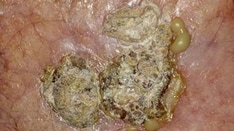
| Media file 1: Classic or typical pyoderma gangrenosum. This patient did not have an associated disease, and the condition responded well to cyclosporine. | |
![]() | View Full Size Image | Media type: Photo |
| Media file 2: Atypical pyoderma gangrenosum. | |
![]() | View Full Size Image | Media type: Photo |
| Media file 3: Peristomal pyoderma gangrenosum. | |
![]() | View Full Size Image | Media type: Photo |
Article Last Updated: Sep 12, 2006