| Patient Education |
|
Click here for patient education.
|
|
You are in: eMedicine Specialties >
Dermatology > LYMPHOMA AND RELATED PROCESSES
Pityriasis Lichenoides
Article Last Updated: Jan 16, 2007
AUTHOR AND EDITOR INFORMATION
Section 1 of 11
Author: Peter A Klein, MD, Staff Physician, Department of Dermatology, University Hospital, State University of New York at Stony Brook
Coauthor(s):
Jeffrey P Callen, MD, Professor of Medicine, Chief, Division of Dermatology, University of Louisville School of Medicine
Editors: Gregory J Raugi, MD, PhD, Professor, Department of Internal Medicine, Division of Dermatology, University of Washington at Seattle; Chief, Dermatology Section, Primary and Specialty Care Service, Veterans Administration Medical Center of Seattle; Michael J Wells, MD, Associate Professor, Department of Dermatology, Texas Tech University Health Sciences Center; Daniel S Loo, MD, Associate Professor, Residency Program Director, Department of Dermatology, Boston University School of Medicine; Catherine Quirk, MD, Clinical Assistant Professor, Department of Dermatology, Brown University; William D James, MD, Paul R Gross Professor of Dermatology, University of Pennsylvania School of Medicine; Vice-Chair, Program Director, Department of Dermatology, University of Pennsylvania Health System
Author and Editor Disclosure
Synonyms and related keywords:
Mucha-Habermann disease, guttate parapsoriasis, pityriasis lichenoides chronica, PLC, pityriasis lichenoides et varioliformis acuta, PLEVA
Background
Pityriasis lichenoides is a rare cutaneous disorder of unknown etiology. Pityriasis lichenoides encompasses a spectrum of clinical presentations ranging from acute papular lesions that rapidly evolve into pseudovesicles and central necrosis (pityriasis lichenoides et varioliformis acuta or PLEVA) to small, scaling, benign-appearing papules (pityriasis lichenoides chronica or PLC). Although historically, the term Mucha-Habermann disease has referred only to PLEVA, the term applies broadly to the entire spectrum of disease including PLC. A rare febrile ulceronecrotic variant has been reported, which is a severe form of PLEVA with high fever and marked constitutional symptoms. Lesions may self-involute and resolve completely over weeks, or new lesions occasionally may appear in crops, waxing and waning spontaneously for months to years thereafter.
Pathophysiology
Mucha-Habermann disease is not a vasculitic process despite reports of immunoglobulin and complement deposition in vessels. Fibrin is not present in the walls of vessels, and thrombi are not found in the lumen. A cell-mediated mechanism has been proposed based on a T-lymphocytic infiltrate with a cytotoxic/suppressor phenotype, diminished epidermal Langerhans cells, and a reduction of the CD4/CD8 ratio. Mucha-Habermann disease is not a lymphoproliferative disorder. CD30 (Ki-1) cells, which are associated with large cell lymphoma, have been identified in the infiltrate of both lymphomatoid papulosis and Mucha-Habermann disease, leading some authors to view this as a self-limited self-healing lymphoproliferative disease.
Frequency
United States
The incidence of Mucha-Habermann disease in the United States has not been reported.
International
In approximately 44,000 patients seen over 10 years in 3 catchment areas in Great Britain, 17 cases of PLEVA were diagnosed.
Mortality/Morbidity
A case series of 22 children revealed a mean duration in PLEVA of 1.6 months to complete resolution and a mean duration in PLC of 7.5 months. The natural tendency of the disease is to remit spontaneously, but some cases may wax and wane over years. Disease duration may be longer in adults. A rare severe variant of PLEVA presents with a sudden eruption of diffuse coalescent necrotic ulcerations associated with high fever. Patients may develop complications such as interstitial pneumonitis, abdominal pain, malabsorption, central nervous system involvement, bacteremia, sepsis, and rheumatic manifestations. T-cell receptor clonal rearrangements of lymphocytic infiltrates have been detected in patients with PLEVA. Occasional cases (<2%) have been reported to evolve into cutaneous lymphoma, although some reports may have represented misdiagnosis of lymphomatoid papulosis.
Race
All races are affected. A racial predisposition has not been reported.
Sex
A male predominance has been reported in the pediatric population and in patients presenting with febrile ulceronecrotic Mucha-Habermann disease.
Age
Most patients present during the first 3 decades of life. Studies of children have shown a variable age of onset from 3-15 years, with a mean age of 9.3 years.
History
The history is dependent on where an individual patient's manifestations fall on the spectrum of Mucha-Habermann disease.
- Pityriasis lichenoides et varioliformis acuta
- The common variant of PLEVA presents with the abrupt appearance of multiple papules on the trunk, buttocks, and proximal extremities. Papules rapidly progress to vesicles and hemorrhagic crusts.
- Minor constitutional symptoms may be present.
- A patient with febrile ulceronecrotic PLEVA presents with acute constitutional symptoms such as high fever, malaise, and myalgias.
- Lesions of PLEVA may be associated with burning and pruritus.
- Pityriasis lichenoides chronica
- At the subacute end of the spectrum, PLC may develop over days.
- PLC also is distributed over the trunk, buttocks, and proximal extremities.
Physical
The clinical presentation of Mucha-Habermann disease spans a continuum that is a function of the acuity of onset. PLEVA and PLC are not distinct diseases, but rather, they are different manifestations of the same process, although the process is accelerated in PLEVA.
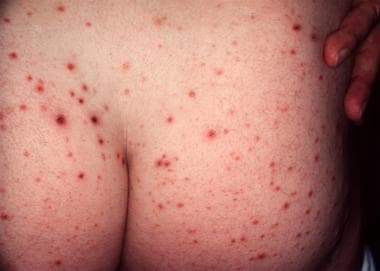
- PLEVA presents acutely with 10-50 erythematous–to–reddish brown or purpuric round or ovoid lichenoid papules that are 5-15 mm in diameter. Many papules demonstrate a pseudovesicular summit evolving to a central necrosis and a hemorrhagic crust.
- PLC presents as small erythematous–to–reddish brown papules, although with increased numbers compared to PLEVA. A fine scale usually is found, although not initially, which has been likened to frosted glass. The eruption often is polymorphic, with lesions at different stages of evolution.
- Lesions that are clinically consistent with both PLEVA and PLC often are found on physical examination, and the polymorphic appearance helps distinguish Mucha-Habermann from guttate psoriasis and lichen planus.
- PLEVA lesions may evolve into lesions of PLC.
- Most lesions heal with postinflammatory changes, such as a transient or persistent leukoderma or hyperpigmentation.
- Ulceronecrotic PLEVA presents with a sudden eruption of diffuse coalescent necrotic ulcerations associated with high fever. Some lesions may resemble those of PLC, but many are large, ulceronecrotic, and covered by a black oyster shell-like crust. Necrotic ulcerating lesions may eventuate into varioliform scars.
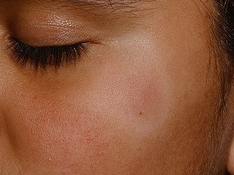
- Dark-skinned people rarely may present with widespread macular hypopigmentation rather than the typical papular morphology. This variant is most common in children. The diagnosis depends on careful inspection, which reveals subtle PLC lesions that are compatible histologically with this diagnosis.
- In both PLEVA and PLC, lesions are scattered but discrete.
- Lesions may be distributed symmetrically or asymmetrically on the trunk, buttocks, and proximal extremities, with occasional acral involvement. Lesions may appear on the palms, soles, face, and scalp. Asymmetric or segmental nondermatomal presentations have been reported.
- Erosions and hemorrhagic crusts may be found.
- Mucosal lesions consisting of irregular erythema and superficial ulcerations on the buccal mucosa and palate have been reported.
Causes
- A number of acute exanthems (eg, Mucha-Habermann disease, pityriasis rosea, acute lichen planus, guttate psoriasis, erythema multiforme) are believed to be caused by a hypersensitivity reaction to infectious agents. Familial outbreaks, clustering of cases, and comorbid symptoms have been used to support these relationships in Mucha-Habermann disease, although clear causality is lacking. Elevations of pathogen-specific antibody titers also have been offered as proof of causality, but such immunologic responses may represent epiphenomena caused by nonspecific immune responses to unknown pathogens. The most commonly reported associated pathogens are Epstein-Barr virus (EBV), Toxoplasma gondii, and human immunodeficiency virus (HIV).
- Two studies implicate EBV as an etiologic factor in Mucha-Habermann disease. The cases indicate that EBV may be a trigger in PLEVA, but neither study necessarily illustrates well-characterized comorbid EBV-mediated disease.
- In 1977, Boss et al reported a cluster of 10 cases seen over 1 year, in which eruptions were clinically consistent with PLEVA. Of these, 4 demonstrated elevated immunoglobulin G (IgG) complement-fixing antibodies to EBV. During resolution of the eruption, 3 of 4 patients demonstrated 4-fold or greater decrements in antibody titers.
- In 1989, Edwards et al described a child with a 3-week history of migratory arthralgias, monoarticular arthritis, acute pharyngitis, otitis media, and fevers to 104ºF. The girl developed a vesicular eruption localized primarily to the extremities, which clinically and histopathologically was consistent with Mucha-Habermann disease, with the exception of necrotic fibrin thrombi in the superficial and mid dermis. A Monospot test result was positive, and acute and convalescent serologies were consistent with a reactivation of EBV. Liver function tests were within normal limits. The patient's condition improved with treatment using oral tetracycline.
- Elevated Toxoplasma gondii titers have been demonstrated in some patients with Mucha-Habermann disease. Despite an absence of clinical infection in case reports and series, more than 80% of primary Toxoplasma infections are asymptomatic, and toxoplasmosis cannot necessarily be dismissed as a causative agent.
- In 1969, Andreev et al were the first to suggest a link between toxoplasmosis and a recurrent PLEVA-like skin eruption in a patient with positive Toxoplasma serologies. Cutaneous lesions reportedly responded favorably to pyrimethamine.
- In 1972, Zlatkov and Andreev reported 11 patients with PLC and found that test results were positive for toxoplasmosis in 6 patients (55%) using complement-fixations test, intradermal test with toxoplasmin, and Sabin-Feldman dye test. Patients in whom test results were seropositive responded favorably to pyrimethamine, while no improvement was noted in the cutaneous lesions of 3 patients in whom results were seronegative.
- In 1987, Rongioletti et al described a patient who presented with acute onset of cutaneous lesions and histopathologic findings consistent with PLEVA. Serologic examination demonstrated enzyme-linked immunosorbent assay positivity for IgG and immunoglobulin M (IgM) and weak positive indirect fluorescence test results for IgM (1:16). Giemsa stain on the biopsy specimen failed to demonstrate Toxoplasma cysts. Spiramycin treatment was initiated, and lesions subsided over a few weeks. Convalescent serologies failed to demonstrate IgM 2 months later, although the authors still concluded that Toxoplasma species may have caused the cutaneous eruption.
- In 1997, Nassef and Hammam reported 22 patients diagnosed clinically and histopathologically with PLC and 20 healthy control subjects. Clinical examination for signs of toxoplasmosis only revealed axillary lymphadenopathy in 2 patients. Eight patients with PLC (36%) had a positive serodiagnosis by indirect hemagglutination versus 10% in the control group, and this difference was statistically significant. Using indirect immunofluorescence antibody tests, the difference was 36% versus 15%, respectively, but the difference was not statistically significant. All 22 patients with PLC were treated with pyrimethamine and trisulfapyrimidine, and lesions in 5 of 8 patients with seropositive results cleared completely within 2 months. None of the patients with seronegative results responded to treatment.
- The first association between Mucha-Habermann disease and HIV infection was reported in 1991 by Ostlere et al. A patient with asymptomatic disease and a CD4+ T-cell count of 208 cells per microliter, diagnosed 6 months previously, presented with lesions consistent clinically and histopathologically with PLEVA.
- In 1997, Smith et al reported a series of 5 patients with HIV infection in the early stage of disease, with CD4+ T-cell counts exceeding 200 cells per microliter and/or absolute lymphocyte counts within normal limits. The authors suggested that PLEVA serves as a marker of early–to–mid stage HIV disease.
- In 1998, Griffiths reported a patient who presented with a severely pruritic, erythematous, papular eruption that worsened as the CD4+ T-cell count fell from 200 to 20 cells per microliter. Biopsy confirmed PLC, and the disease progressed to febrile ulceronecrotic PLEVA. Dramatic improvement was attained using cyclosporine, and mild PLC-like lesions remained on maintenance doses. On saquinavir and lamivudine, the viral load became undetectable with a concomitant rise in the CD4+ count and a complete resolution of skin lesions. That the inherent immunologic dysregulation of HIV may play a role in Mucha-Habermann disease has been suggested.
- In addition to EBV, Toxoplasma gondii, and HIV, a number of other infectious agents have been implicated. The following observations are provocative but may be chance associations.
- Single case reports have suggested that parvovirus B19 and adenovirus can trigger Mucha-Habermann disease.
- One case report also describes resolution of PLC after tonsillectomy, with throat cultures yielding Staphylococcus aureus and group A beta hemolytic streptococci.
- Piamphongsant similarly found coagulase-positive staphylococci on throat cultures in 4 of 10 patients, with some improvement of cutaneous lesions using oral tetracycline.
- Freeze-dried live attenuated measles vaccine administered by injection has been associated with Mucha-Habermann disease.
- Most cases of PLEVA cannot be attributed to any one cause and are idiopathic.
Chickenpox
Gianotti-Crosti Syndrome (Papular Acrodermatitis of Childhood)
Lichen Planus
Pityriasis Rosea
Psoriasis, Guttate
Other Problems to be Considered
Arthropod bite
Disseminated herpes zoster
Drug eruption
Primary HIV infection
Secondary syphilis
Vasculitis
Viral exanthem
Lab Studies
- Laboratory workup largely is a function of the acuity of the disease. A patient presenting with febrile ulceronecrotic PLEVA requires an entirely different approach than a patient presenting with PLC.
- The following laboratory tests address both implicated causes of Mucha-Habermann disease and other disorders in the differential diagnosis; tailor the workup to each patient's presentation.
- Antistreptolysin O titers
- EBV IgM/IgG viral capsid antigen and nuclear antigen antibody
- Erythrocyte sedimentation rate
- Hepatitis B surface antigen, antisurface antibody, and anticore IgM
- Hepatitis C virus antibody
- HIV screening
- Monospot or heterophil antibody test
- Rapid plasma reagin
- Throat cultures
- Toxoplasma Sabin-Feldman dye test, enzyme-linked immunoassay, and indirect immunofluorescence/hemagglutination
Other Tests
- A punch or shave biopsy may be performed to confirm the diagnosis.
Histologic Findings
Ackerman has established histopathologic criteria for fully developed lesions of PLEVA and PLC. Early lesions in both variants are smooth, since areas of parakeratosis initially are overlain by a normal cornified layer with a basket-woven appearance.
PLEVA lesions are characterized by a wedge-shaped superficial and deep dermal lymphohistiocytic infiltrate, confluent parakeratosis, thinning of the granular layer, ballooning of keratinocytes, intraepidermal vesiculation, necrosis of keratinocytes, diffuse disappearance of the dermal-epidermal junction, and dermal edema.
PLC lesions are characterized by a superficial dermal infiltrate, focal parakeratosis, preservation of the granular layer, and focal disappearance of the dermal-epidermal interface. Necrosis and ballooning of keratinocytes typically are not present.
Medical Care
Large ulcerations found in the febrile ulceronecrotic variant of PLEVA require local wound care. Infected lesions may be treated with topical mupirocin and sterile dressing changes twice daily.
No randomized controlled trials of the use of medications have been performed in Mucha-Habermann disease. Since the disease tends towards self-resolution, evaluation of treatments without adequate controls cannot result in useful recommendations. A number of open trials have reported success with light therapy and oral medications.
No randomized controlled trials have been performed in Mucha-Habermann disease. Since the disease course tends towards self-resolution, evaluation of treatments without adequate controls cannot result in rational recommendations. Nevertheless, a number of open trials have reported success with light therapy and oral medications.
Phototherapy has been reported useful in the treatment of subacute or chronic disease. Sun exposure may result in the amelioration of lesions. Psoralen plus UV-A (PUVA) therapy (150-200 J/cm2) has been reported, with as many as 4 treatments per week to a total of 30-35 treatments, depending on the patient's skin type. UV-A without psoralens and UV-B may result in clearing. Relapses are not uncommon.
Case reports suggest the use of multiple oral medications including tetracycline, erythromycin, sulfonamides, dapsone, chloroquine, streptomycin, isoniazid, penicillin, methotrexate (MTX), etretinate, and pentoxifylline. Potent topical corticosteroids may be useful if few lesions are present. Systemic corticosteroids may have a role in severe cases of PLEVA. Despite a lack of randomized controlled trials, oral tetracycline and erythromycin have been prescribed most often in case series.
Drug Category: Antibiotics
May have immunomodulatory activity. Empiric antimicrobial therapy must be comprehensive and should cover all likely pathogens in the context of the clinical setting.
| Drug Name | Tetracycline (Sumycin) |
| Description | Treats gram-positive and gram-negative organisms, as well as mycoplasmal, chlamydial, and rickettsial infections. Inhibits bacterial protein synthesis by binding with 30S and possibly 50S ribosomal subunit(s). |
| Adult Dose | 1-2 g PO divided bid/qid |
| Pediatric Dose | <8 years: Not recommended >8 years: 25-50 mg/kg PO divided bid/qid |
| Contraindications | Documented hypersensitivity; severe hepatic dysfunction |
| Interactions | Bioavailability decreases with antacids containing aluminum, calcium, magnesium, iron, or bismuth subsalicylate; may enhance agents with neuromuscular blocking effect; can decrease effects of oral contraceptives, causing breakthrough bleeding and increased risk of pregnancy; tetracyclines can increase hypoprothrombinemic effects of anticoagulants Coadministration with retinoids can cause increased intracranial pressure (coadministration contraindicated); administer tetracycline at least 1 h before or 4-6 h after colestipol or cholestyramine; if tetracycline administered concurrently with digoxin, monitor digoxin levels (dosage adjustment for digoxin may be required; risk of interaction may be reduced if given with Lanoxicaps) |
| Pregnancy | D - Unsafe in pregnancy
|
| Precautions | Pseudotumor cerebri has been associated with tetracyclines, therefore, possibility for permanent sequelae exists; photosensitivity may occur with prolonged exposure to sunlight or tanning equipment; reduce dose in renal impairment; consider drug serum level determinations in prolonged therapy; tetracycline use during tooth development (last one half of pregnancy through age 8 y) can cause permanent discoloration of teeth; may cause falsely positive urine glucose measurements |
| Drug Name | Erythromycin (E.E.S., E-Mycin, Ery-Tab) |
| Description | Inhibits bacterial growth, possibly by blocking dissociation of peptidyl tRNA from ribosomes causing RNA-dependent protein synthesis to arrest. For treatment of staphylococcal and streptococcal infections. In children, age, weight, and severity of infection determine proper dosage. When bid dosing is desired, half-total daily dose may be administered q12h. For more severe infections, dose is doubled. |
| Adult Dose | 250 mg PO qid or 333 mg PO q8h |
| Pediatric Dose | 30-50 mg/kg/d PO in divided doses |
| Contraindications | Documented hypersensitivity; hepatic impairment; concomitant administration with cisapride |
| Interactions | May significantly alter metabolism of nonsedating antihistamines and cause serious adverse cardiovascular events; concurrent use of lovastatin and erythromycin may cause rhabdomyolysis in patients who are seriously ill; may increase serum theophylline levels and toxicity; concomitant administration of digoxin may result in elevated serum digoxin levels; coadministration can increase effects of anticoagulants; concurrent use with ergotamine or dihydroergotamine has been associated with acute ergot toxicity; erythromycin may decrease clearance of triazolam and midazolam; erythromycin in patients taking other drugs metabolized by cytochrome P-450 system may be associated with elevations in serum concentrations of those drugs; has demonstrated QTc prolongation in combination with other drugs that prolong the QT interval |
| Pregnancy | B - Usually safe but benefits must outweigh the risks.
|
| Precautions | Caution in liver disease; estolate formulation may cause cholestatic jaundice; adverse GI tract effects are common (administer doses pc); discontinue if nausea, vomiting, malaise, abdominal colic, or fever occur; elderly patients may experience increased susceptibility to torsades de pointes arrhythmias |
Drug Category: Psoralens
Tricyclic furocoumarins, when combined with UV radiation, produce DNA photoproducts resulting in suppression of both DNA synthesis and cell division.
| Drug Name | Methoxsalen (Oxsoralen-Ultra, 8-MOP) |
| Description | Inhibits mitosis by binding covalently to pyrimidine bases in DNA when photoactivated by UV-A. |
| Adult Dose | 0.57 mg/kg PO 1.5-2 h before exposure to UV light; treatments should be at least 48 h apart |
| Pediatric Dose | Not established |
| Contraindications | Documented hypersensitivity; squamous cell cancer; cataract; light-sensitive diseases such as lupus or porphyria; ingestion of photosensitizing drugs; hepatitic disease; arsenic therapy; history of melanoma; patients with aphakia |
| Interactions | Toxicity increases with phenothiazines, griseofulvin, nalidixic acid, tetracyclines, thiazides, and sulfanilamide |
| Pregnancy | C - Safety for use during pregnancy has not been established.
|
| Precautions | Severe burns may occur from sunlight or UV-A if dose or treatment frequency exceeded; use only if response to other forms of therapy is inadequate; long-term use may increase risk of skin cancer; ocular changes may occur |
Drug Category: Retinoids
Regulate cell growth and proliferation.
| Drug Name | Acitretin (Soriatane) |
| Description | Retinoic acid analog, similar to etretinate and isotretinoin. Etretinate is main metabolite and has demonstrated clinical effects close to those seen with etretinate. Mechanism of action is unknown. |
| Adult Dose | 0.75-1 mg/kg/d PO in divided doses; increase at weekly intervals by 0.25 mg/kg/d up to 1.5 mg/kg/d; establish maintenance dose (0.5-0.75 mg/kg/d) after 8-10 wk of therapy |
| Pediatric Dose | Not established |
| Contraindications | Documented hypersensitivity; pregnancy or intention of pregnancy during or within 3 y of therapy; severely impaired liver/kidney function; chronic abnormal elevated lipid levels; concomitant use of MTX; concomitant use of tetracyclines; ingestion of alcohol (in females of reproductive potential) |
| Interactions | Toxicity may occur with coadministration with beta carotene; absorption is increased with milk; increases toxicity of MTX (avoid concomitant use); interferes with effects of microdosed progestin minipill; coadministration with tetracyclines can cause increased intracranial pressure (combined use contraindicated) Concomitant therapy with phenytoin not advised due to risk for reducing protein binding of phenytoin Concomitant therapy with vitamin A and related analogue acitretin not advised due to risk for vitamin A toxicity |
| Pregnancy | X - Contraindicated in pregnancy
|
| Precautions | Do not use in severe obesity; women of childbearing age must be capable of complying with effective contraceptive measures; recommended that contraception be continued for at least 3 y after stopping treatment with acitretin; etretinate may form from acitretin, which takes approximately 2-3 y to clear from body; caution in impaired renal or liver function; perform AST, ALT, and LDH tests prior to initiation of acitretin therapy at 1- to 2-wk intervals until stable and thereafter at intervals as clinically indicated Adverse effects include depression, aggressive feelings or thoughts of self-harm, and high-density lipoid deficiency; increased liver aminotransferase level; mixed hypercholesterolemia and hypertriglyceridemia; pancreatitis; pseudotumor cerebri |
Drug Category: Antimetabolites
MTX inhibits dihydrofolate reductase, thereby hindering DNA synthesis and cell reproduction.
| Drug Name | Methotrexate (Folex, Rheumatrex) |
| Description | May suppress immune system. Ameliorates symptoms of inflammation (eg, pain, swelling, stiffness). Satisfactory response seen in 3-6 wk following administration. Adjust dose gradually to attain satisfactory response. |
| Adult Dose | 0.3 mg/kg/wk PO/IM; not to exceed 20 mg |
| Pediatric Dose | 5-15 mg/m2/wk PO/IM qd or divided tid administered 12 h apart |
| Contraindications | Documented hypersensitivity; alcoholism; hepatic insufficiency; immunodeficiency syndromes; preexisting blood dyscrasias (eg, bone marrow hypoplasia, leukopenia, thrombocytopenia, significant anemia); breastfeeding |
| Interactions | Oral aminoglycosides may decrease absorption and blood levels of concurrent oral MTX; charcoal lowers MTX levels; coadministration with etretinate may increase hepatotoxicity of MTX; folic acid or derivatives contained in some vitamins may decrease response to MTX; coadministration with NSAIDs may be fatal; indomethacin and phenylbutazone can increase MTX plasma levels; may decrease phenytoin serum levels; probenecid, salicylates, procarbazine, and sulfonamides (including TMP-SMZ) may increase effects and toxicity of MTX; may increase plasma levels of thiopurines |
| Pregnancy | D - Unsafe in pregnancy
|
| Precautions | Monitor CBC counts monthly, and liver and renal function q1-3mo during therapy (monitor more frequently during initial dosing, dose adjustments, or when risk exists of elevated MTX levels, eg, dehydration); MTX has toxic effects on hematologic, renal, GI, pulmonary, and neurologic systems; discontinue if significant drop in blood counts occurs; aspirin, NSAIDs, or low-dose steroids may be administered concomitantly with MTX (possibility of increased toxicity with NSAIDs, including salicylates, has not been tested); may cause mucositis or cutaneous ulceration |
Further Outpatient Care
- Patients with a waxing and waning course of Mucha-Habermann disease require follow-up monitoring and additional treatment depending on the severity of the disease.
- Regarding the questionable potential for malignant transformation, some authors have suggested that follow-up biopsy should be performed on lesions that last longer than 1 year and are refractory to treatment.
Deterrence/Prevention
- No preventive methods have been identified.
Complications
- Ulceronecrotic PLEVA can lead to scarring.
Prognosis
- No clear consensus has been formed regarding duration of the disease, but most cases tend to resolve over time.
Medical/Legal Pitfalls
- A diagnosis of lymphomatoid papulosis should not be missed because of the theoretical possibility of subsequent development of a myeloproliferative disorder. Biopsies should be obtained to confirm a diagnosis of PLEVA.
- Patients must be told that lesions may take time to resolve and that the duration of the disease cannot be predicted.
| Media file 1:
Typical hemorrhagic crusted papules of pityriasis lichenoides et varioliformis acuta. |
 | View Full Size Image | |
Media type: Photo
|
| Media file 2:
Close-up view of typical lesions of pityriasis lichenoides et varioliformis acuta. |
 | View Full Size Image | |
Media type: Photo
|
| Media file 3:
Scaling papules of pityriasis lichenoides chronica. |
 | View Full Size Image | |
Media type: Photo
|
| Media file 4:
Close-up view of typical pityriasis lichenoides chronica lesions. Note papules in different stages of evolution and the scale with frosted-glass appearance in the lower right-hand corner. |

 | View Full Size Image | |
Media type: Photo
|
- Ackerman AB, Chongchitnant N, Sanchez J, et al. Histologic diagnosis of inflammatory skin diseases: an algorithmic method based on pattern analysis. Baltimore:. Lippincott Williams & Wilkins;1997:553-60.
- Andreev VC, Angelov N, Zlatkov NB. Skin manifestations in toxoplasmosis. Arch Dermatol. Aug 1969;100(2):196-9. [Medline].
- Boss JM, Boxley JD, Summerly R, Sutton RN. The detection of Epstein Barr virus antibody in ''exanthematic'' dermatoses with special reference to pityriasis lichenoides. A preliminary survey. Clin Exp Dermatol. Mar 1978;3(1):51-6. [Medline].
- Bowers S, Warshaw EM. Pityriasis lichenoides and its subtypes. J Am Acad Dermatol. Oct 2006;55(4):557-72; quiz 573-6. [Medline].
- Clayton R, Warin A. Pityriasis lichenoides chronica presenting as hypopigmentation. Br J Dermatol. Mar 1979;100(3):297-302. [Medline].
- Edwards BL, Bonagura VR, Valacer DJ, Ilowite NT. Mucha-Habermann''s disease and arthritis: possible association with reactivated Epstein-Barr virus infection. J Rheumatol. Mar 1989;16(3):387-9. [Medline].
- Griffiths JK. Successful long-term use of cyclosporin A in HIV-induced pityriasis lichenoides chronica. J Acquir Immune Defic Syndr Hum Retrovirol. Aug 1 1998;18(4):396-7. [Medline].
- LeVine MJ. Phototherapy of pityriasis lichenoides. Arch Dermatol. May 1983;119(5):378-80. [Medline].
- Muston HL, Boss JM, Summerly R. Dermatitis from Ammonyx LO, a constituent of a surgical scrub. Contact Dermatitis. Dec 1977;3(6):347-8. [Medline].
- Nassef NE, Hammam MA. The relation between toxoplasmosis and pityriasis lichenoides chronica. J Egypt Soc Parasitol. Apr 1997;27(1):93-9. [Medline].
- Ostlere LS, Langtry JA, Branfoot AC, Staughton RC. HIV seropositivity in association with pityriasis lichenoides et varioliformis acuta. Clin Exp Dermatol. Jan 1992;17(1):36-7. [Medline].
- Panhans A, Bodemer C, Macinthyre E, et al. Pityriasis lichenoides of childhood with atypical CD30-positive cells and clonal T-cell receptor gene rearrangements. J Am Acad Dermatol. Sep 1996;35(3 Pt 1):489-90. [Medline].
- Panizzon RG, Speich R, Dazzi H. Atypical manifestations of pityriasis lichenoides chronica: development into paraneoplasia and non-Hodgkin lymphomas of the skin. Dermatology. 1992;184(1):65-9. [Medline].
- Panse I, Bourrat E, Rybojad M, Morel P. Photochemotherapy for pityriasis lichenoides: 3 cases. Ann Dermatol Venereol. 2004;131(2):201-3. [Medline].
- Pavlotsky F, Baum S, Barzilai A, et al. UVB therapy of pityriasis lichenoides--our experience with 29 patients. J Eur Acad Dermatol Venereol. 2006;20(5):542-7. [Medline].
- Piamphongsant T. Tetracycline for the treatment of pityriasis lichenoides. Br J Dermatol. Sep 1974;91(3):319-22. [Medline].
- Powell FC, Muller SA. Psoralens and ultraviolet A therapy of pityriasis lichenoides. J Am Acad Dermatol. Jan 1984;10(1):59-64. [Medline].
- Romani J, Puig L, Fernandez-Figueras MT, de Moragas JM. Pityriasis lichenoides in children: clinicopathologic review of 22 patients. Pediatr Dermatol. Jan-Feb 1998;15(1):1-6. [Medline].
- Rongioletti F, Rivara G, Rebora A. Pityriasis lichenoides et varioliformis acuta and acquired toxoplasmosis. Dermatologica. 1987;175(1):41-4. [Medline].
- Smith KJ, Nelson A, Skelton H, et al. Pityriasis lichenoides et varioliformis acuta in HIV-1+ patients: a marker of early stage disease. The Military Medical Consortium for the Advancement of Retroviral Research (MMCARR). Int J Dermatol. Feb 1997;36(2):104-9. [Medline].
- Weiss LM, Wood GS, Ellisen LW, et al. Clonal T-cell populations in pityriasis lichenoides et varioliformis acuta (Mucha-Habermann disease). Am J Pathol. Mar 1987;126(3):417-21. [Medline].
- Zlatkov NB, Andreev VC. Toxoplasmosis and pityriasis lichenoides. Br J Dermatol. Aug 1972;87(2):114-6. [Medline].
Pityriasis Lichenoides excerpt Article Last Updated: Jan 16, 2007
|